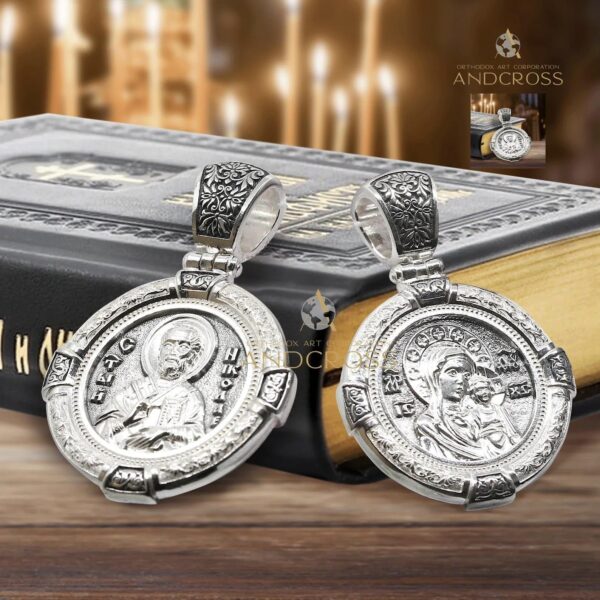
Andcross Orthodox online store offers a wide range of Orthodox products - gift sets, icons, icon cases, books, monastery candles, jewelry and much more. Some of the products of our own production, as well as from other suppliers - monasteries, temples, masters of the entire Orthodox world.
Andcross Orthodox Online Store - Established in 1999
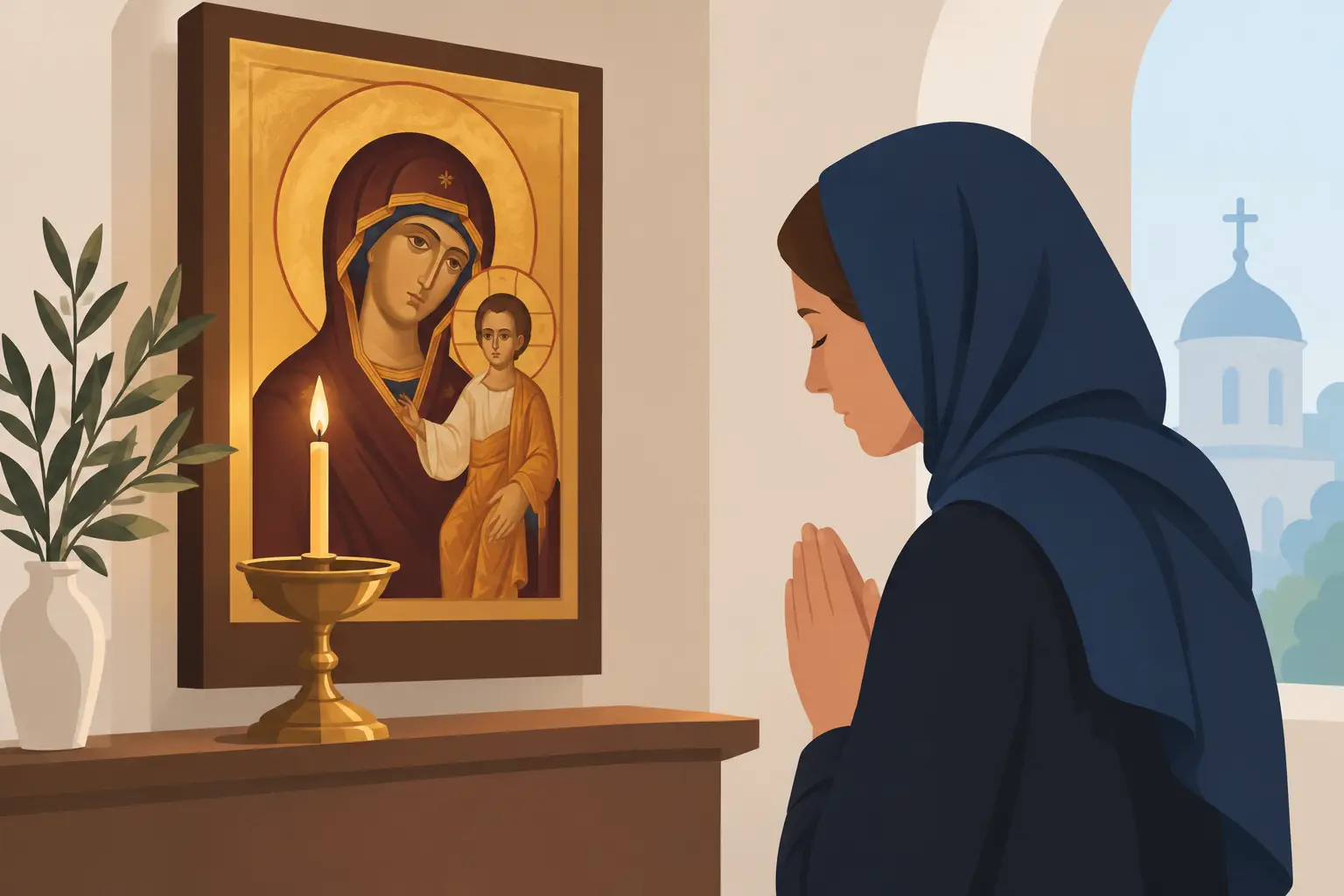
A newly received icon is not merely placed on a wall because its colors are beautiful or its frame suits a room. It is received with reverence, often blessed, and given a place in prayer. Orthodox icon veneration begins with this truth: the honor shown before an icon is directed beyond wood, paint, silver, or gold plating to the holy person depicted and, ultimately, to God.
For Orthodox Christians, an icon makes the home prayer corner a place of remembrance and communion. Before the image of Christ, His Most Pure Mother, or a beloved saint, the faithful stand, make the sign of the Cross, light a candle or lamp, and pray. The icon does not replace God. It helps gather a wandering heart before God.
The Church carefully distinguishes between worship and veneration. Worship belongs to the Holy Trinity alone: Father, Son, and Holy Spirit. No created object, saint, angel, or image receives the worship due to God.
Veneration is honor. When a Christian bows before an icon, kisses it, or lights a candle before it, he is not worshiping paint or metal. He is offering respect to Christ, to His Mother, or to the saint whose life bears witness to Christ. The outward gesture expresses an inward confession of faith.
This distinction is not a later convenience. It is rooted in the mystery of the Incarnation. The eternal Son of God truly took flesh from the Virgin Mary and became visible in history. He was seen, touched, and known by those around Him. Because Christ became man without ceasing to be God, He may be depicted according to His human appearance. An icon of Christ confesses that God the Word truly came in the flesh.
The holy icons also proclaim that matter can serve God. Water in Baptism, bread and wine in the Eucharist, oil in anointing, and the wood of the Cross all testify that creation is not rejected. It is called to sanctification. An icon, made through prayerful labor and according to Church tradition, can become a visible witness to this sacred reality.
The Church gave a clear confession of faith concerning icons at the Seventh Ecumenical Council in Nicaea in 787. The council defended the veneration of holy images against iconoclasm, the rejection and destruction of icons.
Its teaching is often expressed simply: the honor shown to an image passes to its prototype. In other words, reverence before an icon of the Savior is offered to Christ Himself. Respect shown to an icon of Saint Nicholas is offered to Saint Nicholas, who now lives in Christ. Orthodox Christians do not believe the board possesses independent power, as though it were a charm. Grace is never mechanical, and an icon is never an object for superstition.
This is why canonical imagery matters. An Orthodox icon is not religious decoration shaped only by personal taste. Its forms, inscriptions, gestures, colors, and composition serve the Church’s confession. The calm face of a saint, the Gospel held by Christ, the three stars on the Mother of God’s garments, or the cross in a martyr’s hand speak a theological language that has been received and preserved through generations.
A person may have a fine hand-painted icon, a silver-covered icon, or a small printed icon for travel. The material and workmanship deserve proper respect, especially when an icon is made with skilled craftsmanship and traditional care. Yet the value of prayer is not measured by price, size, or ornament.
An icon should never be treated as a guarantee of health, success, travel safety, or financial gain. Christians ask for God’s mercy and the saints’ intercessions with humility, accepting that God’s will is wiser than their own desires. The faithful may pray before an icon for protection, healing, peace in the home, or help in a difficult decision, but prayer remains a relationship of trust rather than a transaction.
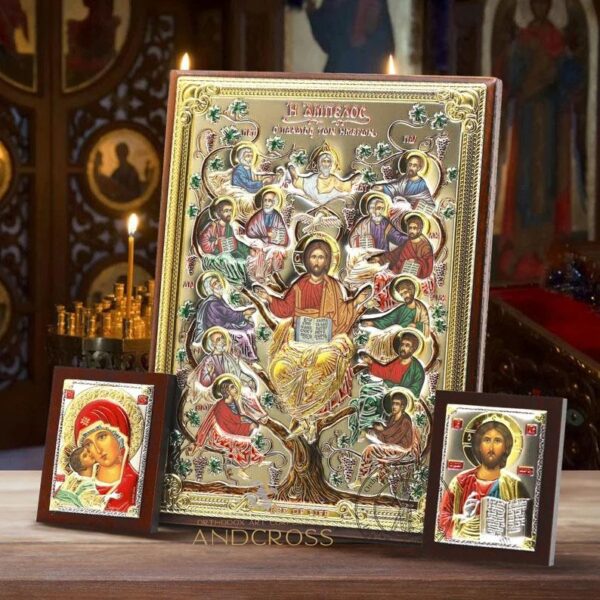
A home icon corner gives a household a visible center for prayer. Traditionally, it is kept in a clean and respectful place, often on an eastern wall when practical. A family may begin with an icon of Christ and an icon of the Mother of God, then add the patron saint of family members, feast-day icons, or saints especially meaningful to their life and heritage.
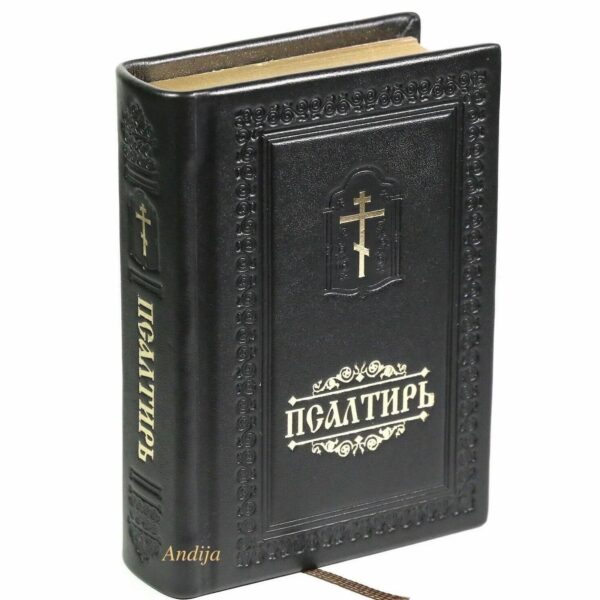
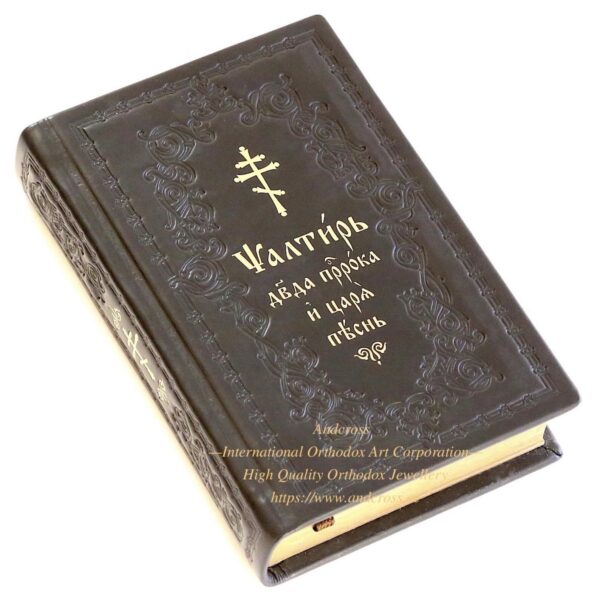
There is no need to create an elaborate icon corner all at once. A small, reverently kept pair of icons can serve a new Orthodox Christian well. Those with more space may include a cross, a candleholder, a prayer book, a Psalter, and additional icons. What matters is that the place encourages regular prayer rather than becoming a display arranged only for visitors.
A simple practice can be enough. Stand before the icons in the morning or evening, make the sign of the Cross, and begin with the Trisagion prayers or the Jesus Prayer: “Lord Jesus Christ, Son of God, have mercy on me, a sinner.” Read a portion of the Psalms, remember the living and departed by name, and ask the Mother of God and the saints to pray for you.
Children also learn through these quiet actions. When they see parents light a candle with care, kiss an icon respectfully, and ask forgiveness after an argument, they learn that faith belongs not only to church services but to the life of the home.
When selecting an icon for personal prayer, a baptism, wedding, memorial, name day, or feast day, begin with the person and purpose. An icon of the patron saint is a fitting gift for baptism or a name day. Christ Pantocrator and the Mother of God are enduring choices for a family’s prayer corner. An icon of the Guardian Angel may be appropriate for a child, while an icon of a saint connected with a profession, need, or family tradition can carry particular meaning.
The source of an icon also deserves consideration. Orthodox buyers often seek images made according to established canons, with clear inscriptions and faithful iconography. Handmade work, monastery-made articles, and icons produced by experienced Orthodox craftspeople can reflect the care appropriate to a sacred image. A well-made metal oklad or silver setting may protect and adorn an icon, but it should never conceal the face and blessing of the holy figure it honors.
For a gift, practical details matter as well. Consider the icon’s dimensions, whether it is suitable for a tabletop or wall, its material, and whether it arrives in a proper gift case. A smaller icon is often easier for travel, a desk, or a first prayer corner. A larger icon may be better suited to a family home. At Andcross, icons and devotional gifts are selected with attention to traditional symbolism, craftsmanship, and the needs of Orthodox homes worldwide.
If an icon is intended for liturgical use, a church, or a special commission, it is wise to speak with a priest about the appropriate saint, image type, inscription, and placement. Customs can differ among parishes and Orthodox traditions. The essential faith remains the same, while local practice may guide details.
An icon should be kept clean, dry, and away from direct heat, moisture, and smoke buildup. Do not place it casually among ordinary decorations, and avoid setting unrelated items on top of it. If a candle is used nearby, keep it stable and attended. Fire safety is part of responsible devotion.
When an old icon is damaged, do not throw it away. Ask a priest or knowledgeable church worker how it should be handled. The same care applies to worn paper icons, prayer cards, and blessed devotional articles. Their material may be humble, but they have served prayer and should be treated accordingly.
The deepest reverence for an icon is shown not only by a kiss or a bowed head, but by a life turned toward the One depicted. Place the icon where you will see it often, stand before it faithfully, and let its silent witness call the heart back to prayer.



Use this form to find things you need on this site