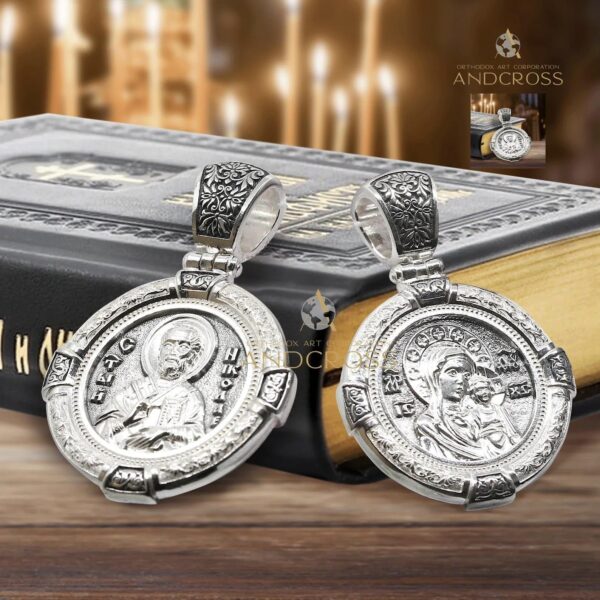
Andcross Orthodox online store offers a wide range of Orthodox products - gift sets, icons, icon cases, books, monastery candles, jewelry and much more. Some of the products of our own production, as well as from other suppliers - monasteries, temples, masters of the entire Orthodox world.
Andcross Orthodox Online Store - Established in 1999
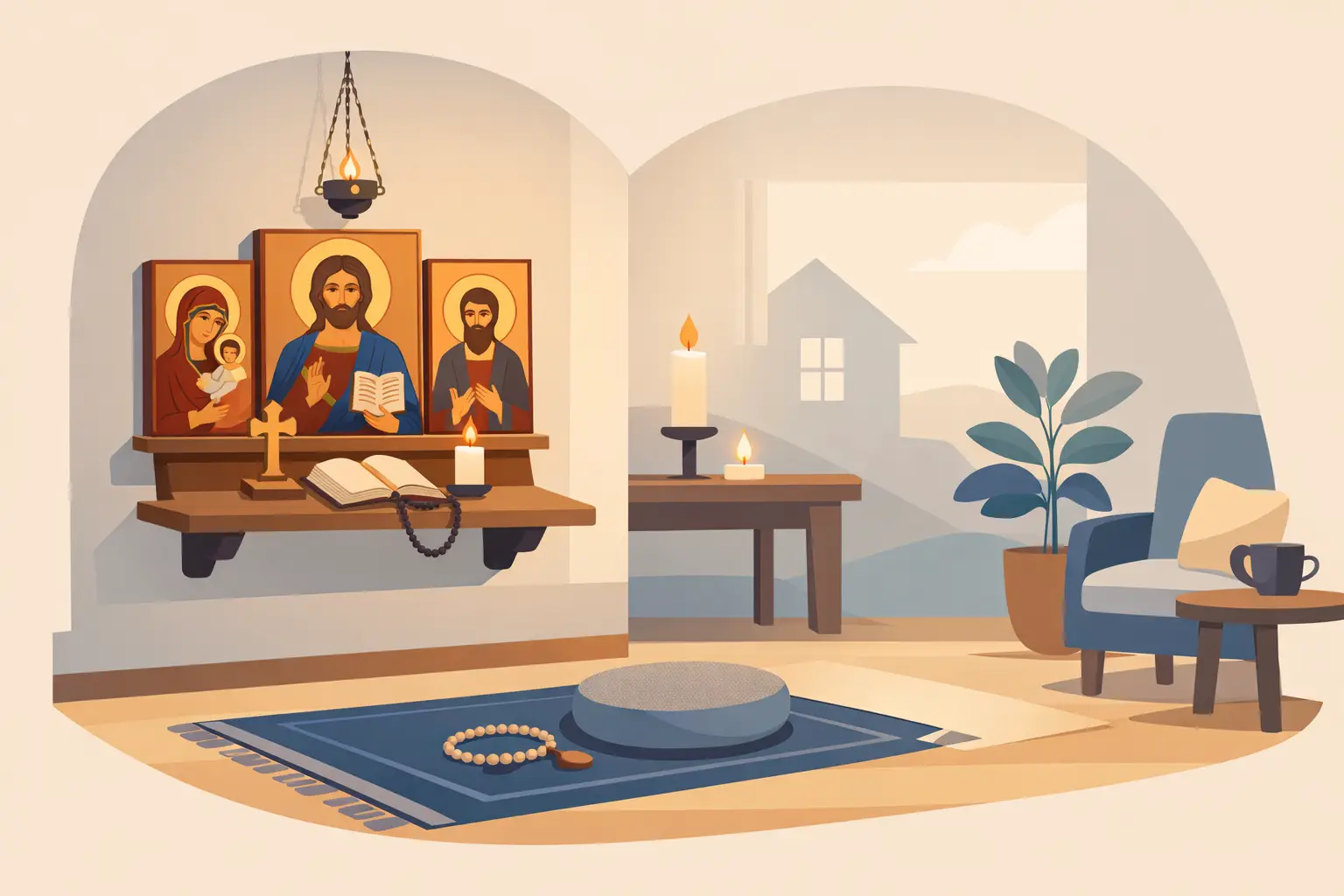
A home becomes quieter when it has a place set apart for prayer. An icon corner is not simply a display of religious art or a decorative shelf. It is a small domestic witness to the Kingdom of God, where the family stands before Christ, His Most Pure Mother, and the saints. If you are learning how to set up an icon corner, begin not with the question of what looks impressive, but with the desire to pray faithfully.
For many Orthodox Christians, the icon corner is where morning and evening prayers are read, where a candle is lit on feast days, and where names are remembered before God. It may be humble: two icons on a clean shelf in a small apartment. It may also grow over years as baptismal icons, family heirlooms, prayer books, and images of beloved saints are received. Its value is found in prayer, reverence, and a rightly ordered heart.
Traditionally, Orthodox Christians place the icon corner on an eastern wall, facing the rising sun and the East from which we await the coming of Christ. This is a meaningful custom, but it should not become a burden. In many American homes, apartments, and shared living spaces, an eastern wall may be impractical or unavailable. Choose the most peaceful, clean, and accessible place you can.
A corner of the living room, a dedicated wall in the bedroom, or a small shelf near a prayer area can serve well. Avoid placing icons where they are likely to be knocked over, crowded by everyday clutter, or used as a backdrop for entertainment. The prayer corner need not occupy much space, but it should be treated with care.
Before arranging anything, clean the area and consider how you will stand there. Leave enough room for a person or family to make the sign of the Cross, bow, and read from a prayer book. A small table, wall shelf, or corner shelf is often more practical than placing icons directly on furniture used for other purposes.
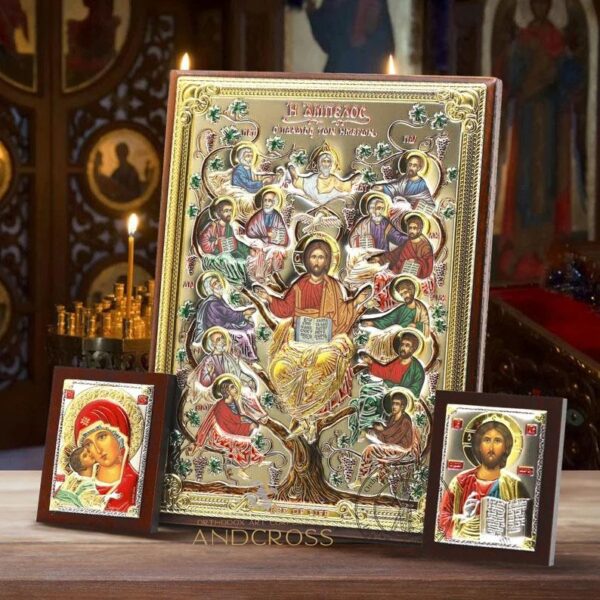
The central icons in an Orthodox home are usually the icon of Christ and the icon of the Theotokos. Christ is commonly placed to the right as you face the icons, while the Theotokos is placed to the left. This reflects the traditional arrangement seen in the church and keeps Christ at the center of the home’s prayer.
If your first icon corner contains only these two icons, it is complete enough for prayer. Do not delay beginning because you are waiting for a large collection or an elaborate arrangement. A carefully made icon of the Savior and an icon of the Mother of God, reverently placed, offer a true beginning.
A Cross may be placed above the icons or in a central position. A wall cross, a hand cross, or a small crucifix can remind the household that every prayer is offered through the saving Cross of Christ. If you have a blessed baptismal cross, it is ordinarily worn rather than displayed, but a devotional cross made for the prayer corner may be fitting.
Place icons securely. Larger icons should be supported by a stable shelf or mounted according to their weight. Smaller icons can stand on an easel or rest against the wall only if there is no danger of falling. Fine silver, gold-plated, and hand-painted icons deserve protection from moisture, direct heat, and careless handling. Their outward beauty is offered in honor of the holy person depicted, not as an object of luxury.
After Christ and the Theotokos, select icons connected to the life of your family. An icon of your patron saint is a natural choice. Parents may place the patron icons of their children in the corner, especially after baptism. Married couples often keep icons given at their wedding, while families may honor saints whose feast days, names, or intercessions have particular meaning in their lives.
St. Nicholas, St. George, St. Seraphim of Sarov, St. Xenia of St. Petersburg, St. John of Kronstadt, and guardian angels are beloved in many Orthodox homes. The choice depends on your spiritual ties, parish tradition, and family heritage. Greek, Russian, Serbian, Romanian, Antiochian, and other Orthodox traditions share the same faith while often preserving distinctive iconographic styles.
It is better to choose fewer icons of sound Orthodox tradition than to fill a wall quickly with images of uncertain origin. Look for canonical imagery, clear identification of the saint, and respectful craftsmanship. A printed paper icon can be prayerful and suitable, while a hand-painted, silver, or gold-plated icon may become a lasting family gift. Material does not determine holiness, but careful workmanship can express love and reverence.
When purchasing an icon as a baptism, wedding, feast day, or memorial gift, consider its intended place in the recipient’s prayer life. A compact icon in a gift case may be ideal for a new household. A larger wedding pair of Christ and the Theotokos may be better for a newly married couple. Andcross offers traditional Orthodox icons and devotional articles made for such prayerful occasions, including gift-ready pieces that can be kept for years.
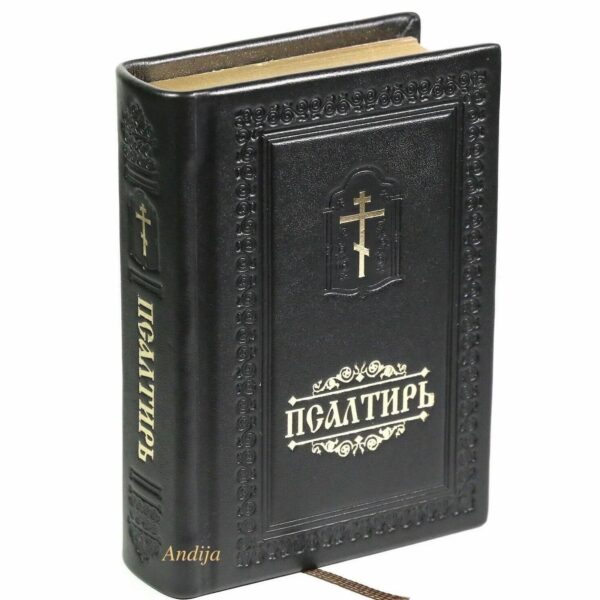
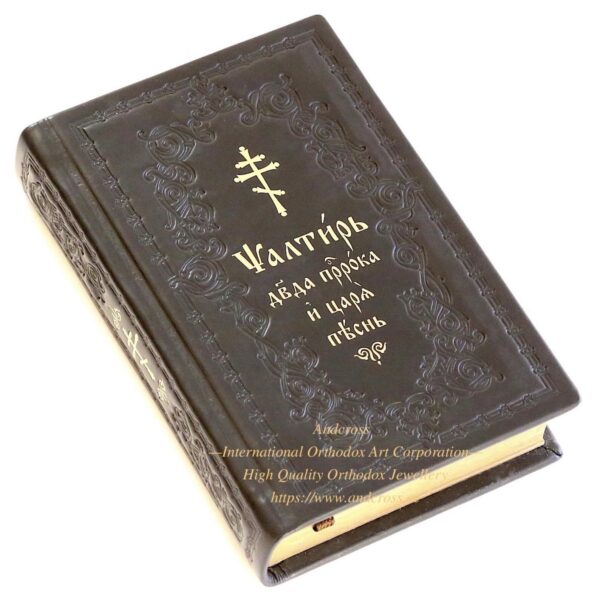
A prayer corner becomes lived-in through use. Keep a prayer book nearby, along with a Psalter or Gospel if these are part of your daily rule. A small analogion or book stand can make reading easier, particularly during longer evening prayers. If space is limited, a clean drawer or basket beneath the icon shelf can hold these items respectfully.
Candles and an oil lamp are traditional additions, especially on Sundays, feast days, and during family prayer. Use them with attention and common sense. Never leave a flame unattended, keep it away from curtains and low shelves, and use a stable candleholder. In homes with young children, pets, or limited ventilation, an electric vigil lamp may be the wiser choice. The purpose is prayerful attentiveness, not creating a hazard.
You may also place a small container for prayer ropes, a list of living and departed loved ones, holy water, or blessed bread received at church. Keep such items orderly. The icon corner should not become a storage place for every religious object in the house. A few well-kept items allow the mind to settle and the heart to turn toward God.
There is no need to imitate a church iconostasis in a private home. Home icon corners vary widely according to space, family custom, and resources. What matters is that icons are kept clean, upright, and away from ordinary clutter. Do not place drinks, bills, remote controls, or unrelated objects on the same shelf.
Dust the icons gently with a soft, dry cloth. Avoid chemical cleaners, excess water, and abrasive polishing materials, especially on metal-mounted icons or pieces with delicate finishes. If an icon is old, damaged, or inherited, treat it respectfully and seek appropriate advice before attempting repairs. Sacred images should never be discarded casually.
As your collection grows, resist the urge to arrange every icon at the same level without order. Keep Christ and the Theotokos prominent. Place patron saints and feast icons beneath or beside them. A small icon corner can feel more prayerful when it has clear order and breathing room than when it is crowded.
The icon corner should invite prayer rather than make family members feel they must perform perfection. Begin with a short rule that can be kept: the Trisagion prayers, the Lord’s Prayer, a Psalm, or a brief prayer before leaving the house. Parents can teach children to make the sign of the Cross before the icons and to remember those who are sick, traveling, or departed.
For converts and those building an Orthodox home for the first time, simplicity is a blessing. Speak with your priest if you have questions about blessings, family customs, or a prayer rule suited to your circumstances. He can offer pastoral guidance that no shelf arrangement can replace.
The most beautiful icon corner is not necessarily the largest or most costly one. It is the place where a candle is lit with attention, the Gospel is opened, forgiveness is asked, and Christ is remembered amid the ordinary work of the home.



Use this form to find things you need on this site