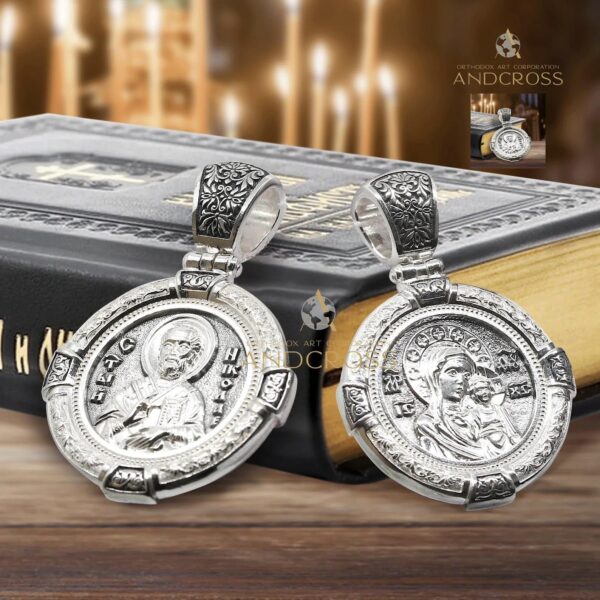
Andcross Orthodox online store offers a wide range of Orthodox products - gift sets, icons, icon cases, books, monastery candles, jewelry and much more. Some of the products of our own production, as well as from other suppliers - monasteries, temples, masters of the entire Orthodox world.
Andcross Orthodox Online Store - Established in 1999
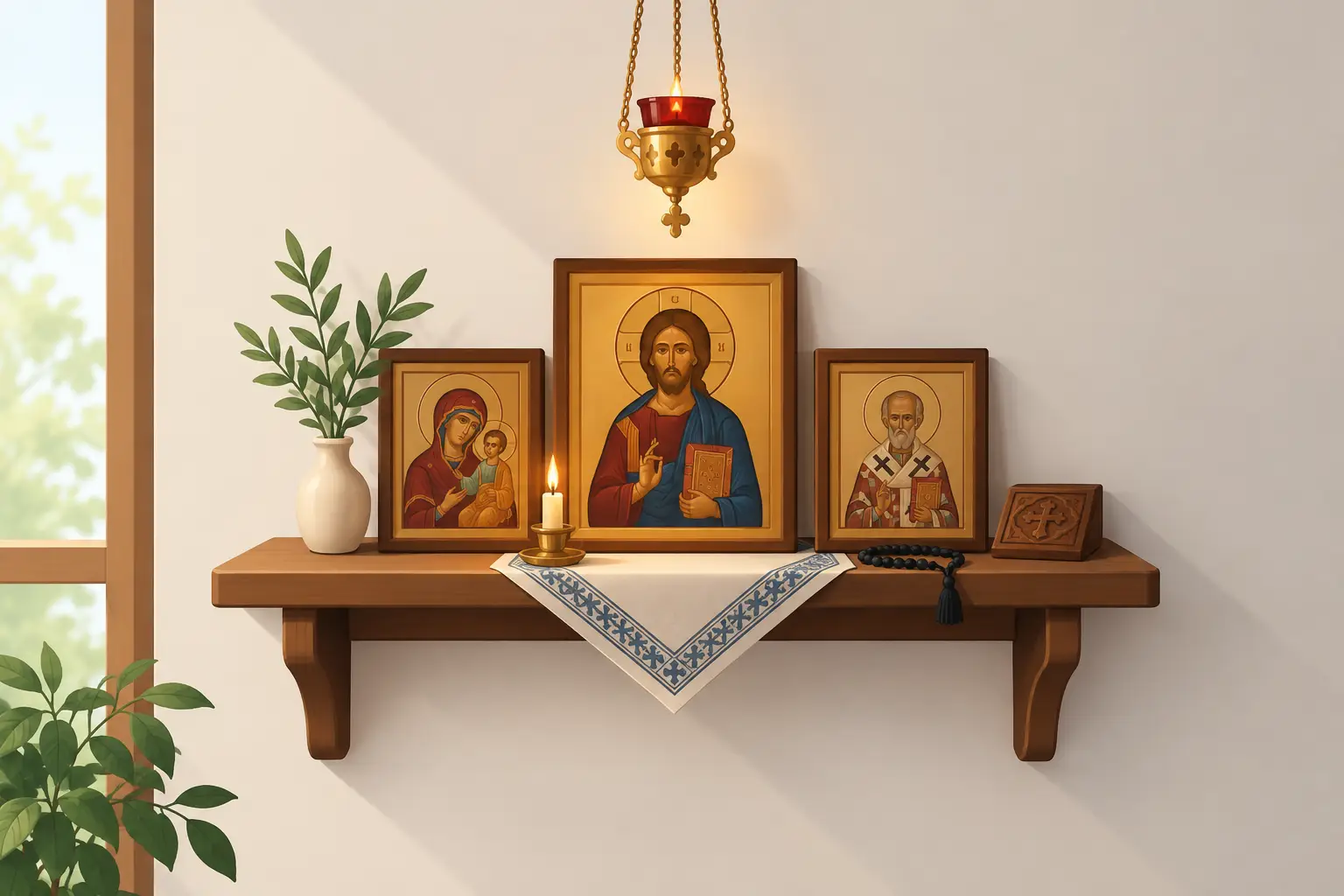
A prayer shelf is not simply a place to display beautiful sacred objects. It is a small, reverent center of prayer within the home: a place where the family stands before Christ, remembers the saints, reads the Scriptures, and brings both gratitude and sorrow before God. To arrange an Orthodox prayer shelf well, begin not with decoration, but with the purpose of prayer.
The shelf may be modest – even a small wall shelf in an apartment – or it may be part of a larger icon corner. What matters is that its order directs the heart toward the Lord and treats holy images and prayer books with proper honor.
Traditionally, Orthodox Christians pray facing east when possible, recalling Christ as the Light of the world and awaiting His glorious coming. If the layout of your home allows it, place the prayer shelf on an eastern wall. Yet a faithful prayer corner should never be postponed because an east-facing wall is unavailable. A clean, peaceful place where you can stand without distraction is better than an ideal direction that is impractical.
Choose an area away from television screens, household clutter, and places where objects may be knocked down. A bedroom, living room, study, or a quiet section of the dining room can all serve well. In a small home, a high shelf or a dedicated corner of a bookcase may be the wisest arrangement.
The shelf itself should be stable and strong enough to hold icons, books, and a lamp or candle safely. Natural wood, carved shelves, and simple metal brackets often suit a traditional home icon corner, but the material matters less than cleanliness, durability, and reverence. Avoid placing icons directly on the floor or mixing them casually among ordinary decorations.
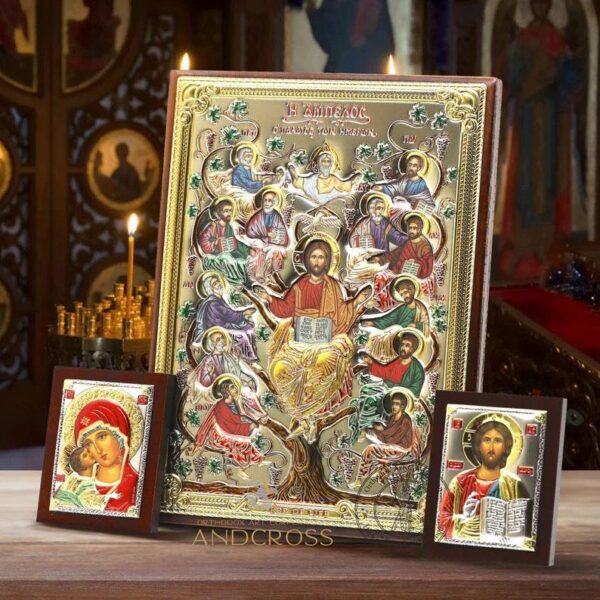
The icon of our Lord Jesus Christ is the heart of the arrangement. In a traditional pair of icons, Christ is placed to the right of the person praying, while the Most Holy Theotokos is placed to the left. Since the faithful face the icons, this means that the icon of Christ appears on the left side when viewed from across the room.
An icon of the Savior and an icon of the Theotokos are a fitting beginning for nearly every Orthodox prayer shelf. The image of Christ reminds us that prayer is offered to the Holy Trinity through Him. The image of His Mother bears witness to the Incarnation and invites her loving intercession.
If space permits, place the icons slightly above the other sacred items. A central icon of Christ, with the Theotokos beside Him, gives clear spiritual order without making the shelf crowded. Some families use a triptych, a carved icon stand, or a small icon case to protect especially treasured icons.
Below or beside the central icons, place icons of the saints whose prayers are especially close to your household. This may include a family patron saint, the saint received at baptism, Saint Nicholas, Saint George, Saint Seraphim of Sarov, Saint Xenia of Saint Petersburg, or a local saint honored in your parish tradition.
There is no need to gather many icons at once. A carefully chosen icon of a patron saint can mean more in daily prayer than a crowded collection arranged only for appearance. As a family grows, icons received for baptisms, name days, weddings, and memorials may naturally find their place on the shelf.
An icon of the feast of the day or season may also be placed in a visible position. During Pascha, for example, the Resurrection icon can be given prominence. On a saint’s feast day, the family may place that saint’s icon forward as a reminder to read the life of the saint and offer prayers.
A hand cross may be placed before the icons or on a small stand. It should not be treated as an ornament. The Cross is the sign of Christ’s victory over sin and death, and its presence gives the prayer shelf a deeply Orthodox focus.
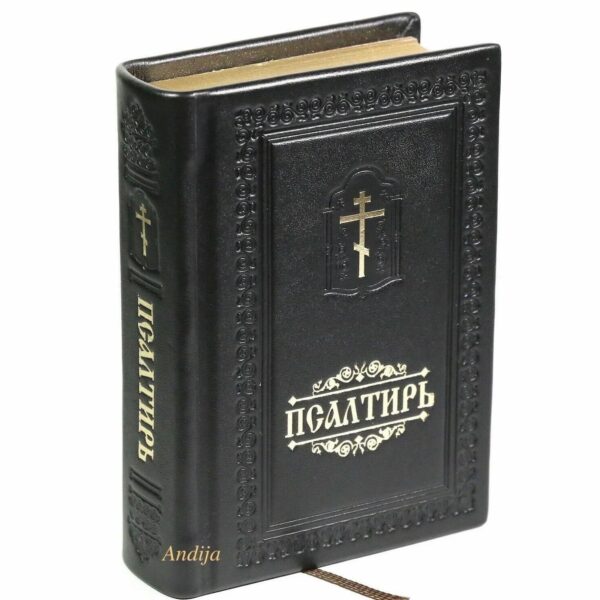
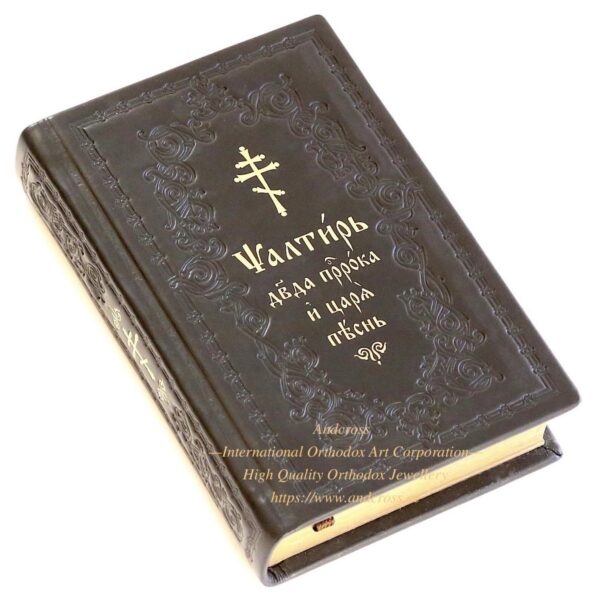
A Gospel Book, Psalter, prayer book, or Bible may be kept on the lower shelf or beside the icons, where it can be reached easily during morning and evening prayers. If you have a finely bound Gospel or a prayer book received as a gift, protect it from candle wax, oil, and dust. A bookstand can be helpful for regular readings.
When arranging several books, do not stack unrelated household papers, keys, or electronics on top of them. The prayer shelf should remain distinct from the daily accumulation of objects that belongs elsewhere in the home.
A beeswax candle or oil lamp is a beautiful expression of prayer. The flame recalls Christ, the true Light, while the rising incense or warmth of the candle can help gather the mind before prayer. Monastery candles, made with care and used reverently, are especially fitting for home prayer.
Safety, however, is part of reverence. Keep an open flame away from icons, cloth coverings, books, dried flowers, curtains, and low shelves. Place candles in stable, nonflammable holders and never leave them burning unattended. If children or pets are present, an electric votive light may be the prudent choice for daily use.
A small censer may be used when appropriate, particularly on feast days or during family prayer, but it requires the same care. Incense should never turn a prayer corner into a theatrical display. Its purpose is to accompany prayer with the offering of the senses to God.
A clean embroidered cloth, often called a rushnyk in Slavic tradition, may be placed beneath or around icons. This is a beloved custom, not a requirement. White, red, gold, or feast-colored textiles can add dignity, provided they do not obscure the icons or create a fire risk near candles.
Fresh flowers may be offered before icons on great feasts, name days, or family celebrations. Keep them simple and remove them when they fade. A prayer shelf should communicate attentiveness, not neglect.
Some Orthodox homes keep a small container for holy water, a bottle of blessed oil received from a shrine, or prayer ropes near the icons. These should be stored neatly and used according to the guidance of the Church. Holy objects are not charms. Their place in the home calls the faithful to repentance, prayer, and trust in God’s mercy.
The most beautiful shelf cannot replace standing before God. Arrange it so that prayer is easy to begin: leave room to make the sign of the Cross, keep the prayer book accessible, and avoid filling every surface with items that require moving before you can pray.
For a single person, a small icon of Christ, the Theotokos, a cross, a candle holder, and a prayer book may be sufficient. For a family, a wider shelf may hold baptismal icons, patron saints, a Gospel, and a place for commemorative prayer lists. Both arrangements can be faithful. The measure is not size or cost, but whether the corner helps the household pray with humility and regularity.
If you are new to Orthodox life, ask your priest for guidance on local customs and on the use of particular devotional items. Traditions differ among Greek, Russian, Antiochian, Romanian, Serbian, and other Orthodox communities, while the central confession remains the same: Christ is among us.
A thoughtfully made icon shelf, whether simple or richly crafted, becomes dear through use. Light the candle when you can, open the prayer book, remember those entrusted to your prayers, and stand quietly before the holy icons. In that faithful daily return, the home is gently taught to belong to God.



Use this form to find things you need on this site