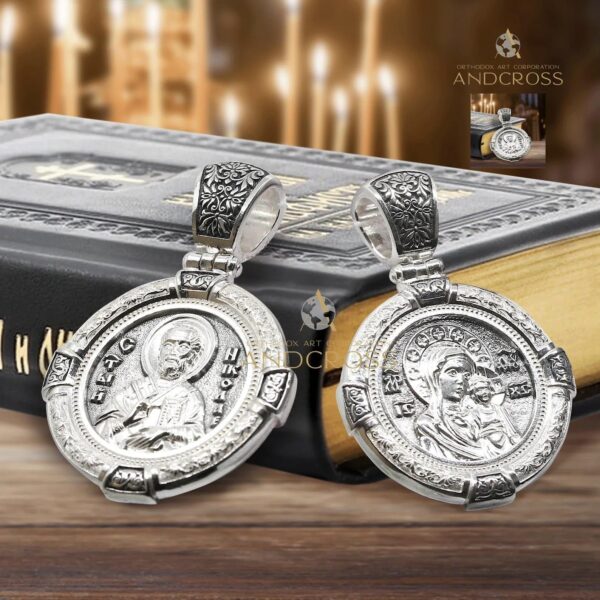
Andcross Orthodox online store offers a wide range of Orthodox products - gift sets, icons, icon cases, books, monastery candles, jewelry and much more. Some of the products of our own production, as well as from other suppliers - monasteries, temples, masters of the entire Orthodox world.
Andcross Orthodox Online Store - Established in 1999
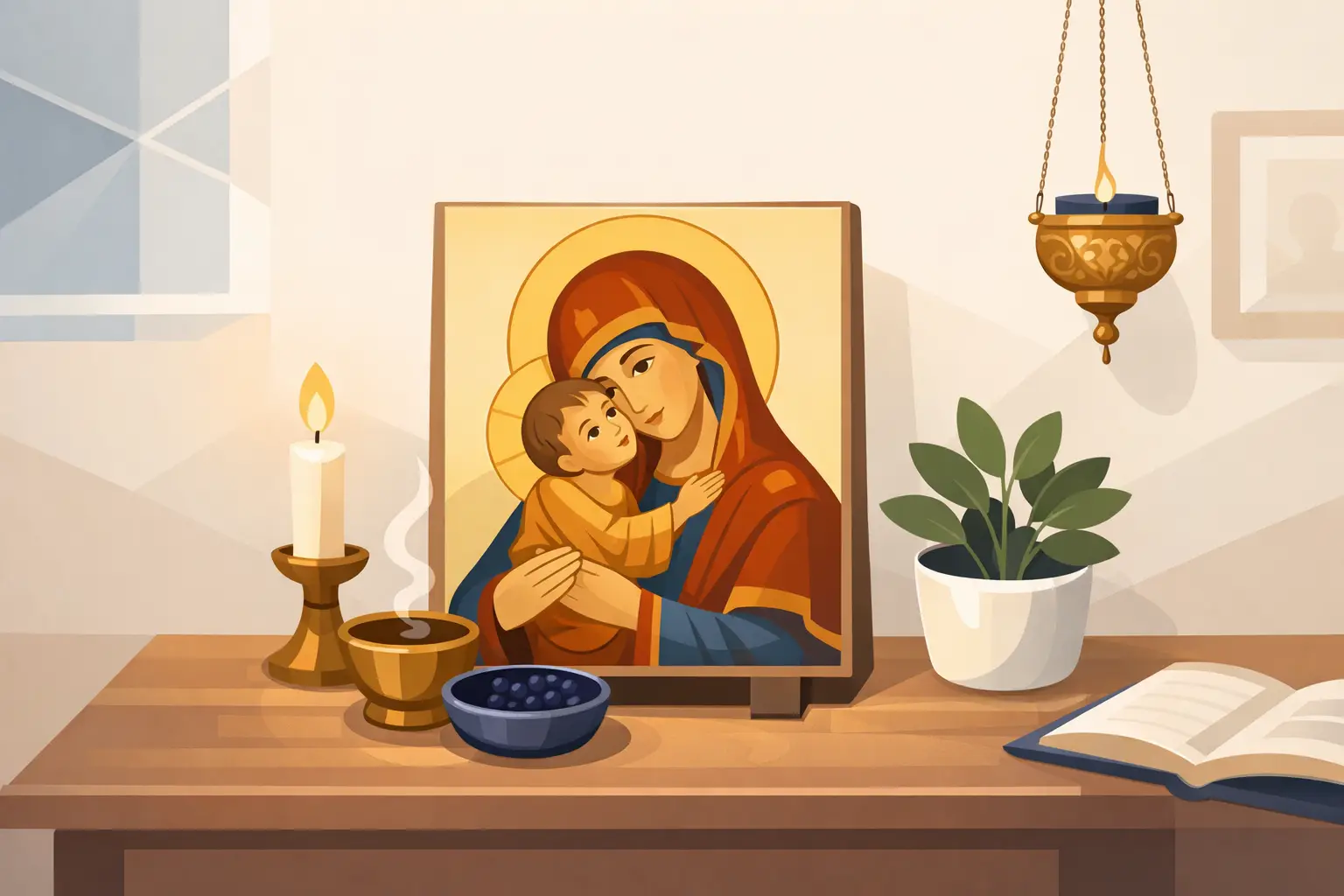
A Theotokos icon for home is not chosen in the same way as a decorative religious picture. It is received as a sacred image of the Mother of God, who points every faithful person toward her Son, Jesus Christ. Whether you are establishing your first icon corner, preparing a wedding or housewarming gift, or adding to an inherited family collection, the right icon should invite prayer, honor Orthodox tradition, and remain worthy of reverent use for many years.
The word Theotokos means “God-bearer.” The Church confesses this title because the Virgin Mary gave birth to Jesus Christ, true God and true man. Her icon therefore belongs naturally in the Orthodox home, usually alongside an icon of Christ the Savior. Before deciding on size, finish, or style, it helps to understand what the image expresses and how it will serve the prayer of your household.
An Orthodox home is not made holy by possessions alone. Prayer, repentance, mercy, and the reading of Scripture give a home its Christian character. Yet icons provide a visible and faithful focus for that life of prayer. Standing before an icon of the Mother of God, we do not worship wood, metal, or paint. We honor the person depicted and ask her maternal intercessions before Christ.
For this reason, an icon of the Theotokos is often placed to the left of the icon of Christ when facing the home icon corner. This arrangement reflects the familiar order found on an Orthodox iconostasis. If space is limited, a single carefully chosen icon may begin the corner with dignity. There is no need to wait until every detail is perfect before beginning a regular rule of prayer.
Traditionally, Orthodox families place icons on an east-facing wall when possible, so that they may pray facing east. In apartments and modern homes, however, this is not always practical. A clean, quiet, and respected place is preferable to forcing an inconvenient arrangement. Keep the icon away from clutter and from places where it may be treated casually. A small shelf, a secure wall space, or a dedicated prayer table can all be fitting.
The first question is not, “Which icon matches the room?” but, “Which image will help this family pray?” Orthodox iconography is governed by sacred tradition rather than changing fashion. Canonical imagery carries the Church’s confession of Christ and His Mother through recognizable forms, inscriptions, gestures, and symbols.
The Hodegetria, often called “She Who Shows the Way,” depicts the Theotokos presenting Christ with her hand. Her gesture teaches the central truth of every Marian icon: she directs us to Him. This type is especially fitting for a home where parents desire to keep Christ at the center of family life.
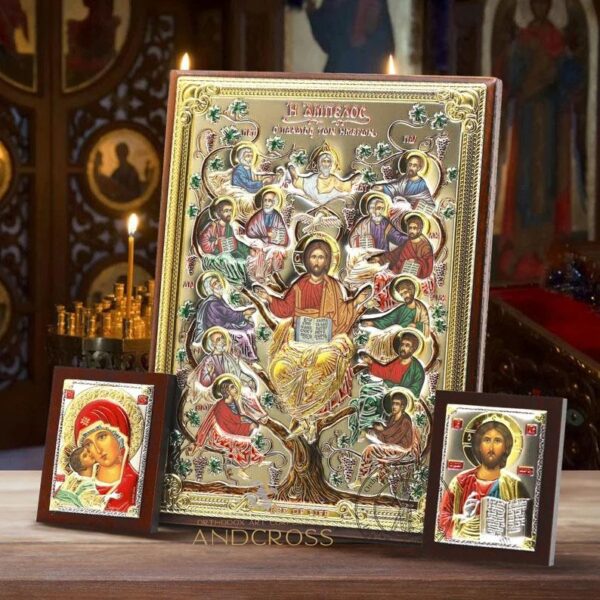
The Eleousa, or “Tender Mercy,” shows the Mother of God with the Christ Child close to her cheek. The tenderness of this image is not sentimental. It reveals both maternal love and the sorrow she will bear at the Cross. Families often choose this form for its quiet consolation and its reminder of the mercy of God.
Icons known by particular historical names, such as the Kazan Mother of God, Vladimir Mother of God, or Iveron Mother of God, are also deeply loved throughout Orthodox lands. Each has a distinct visual tradition and devotional history. A family may choose one because of cultural heritage, a parish feast, a baptismal name, or a longstanding personal devotion. Any choice should remain rooted in reverence, not superstition. An icon is not a charm or a promise that hardship will never come. It is a call to entrust hardship, joy, and daily labor to Christ through the prayers of His Most Pure Mother.
A small icon can be entirely suitable for a bedside table, office, travel prayer set, or a beginning icon corner. Larger formats are often better for a family prayer space, where the image can be clearly seen by several people. Measure the intended place before ordering, especially if the icon will stand in a case or be paired with an icon of Christ.
Materials should be selected with both beauty and use in mind. A printed icon mounted on wood can be an accessible and reverent choice when made with clear canonical imagery. Hand-painted icons bring visible brushwork and the particular character of traditional icon painting. Silver, gold-plated, or metal-covered icons offer a formal, gift-worthy presentation and protect parts of the image with detailed relief work. A well-made oklad, or metal cover, should honor the icon rather than hide the holy faces and hands.
For baptism, a wedding, an anniversary, or a memorial gift, presentation matters. A secure gift case, clear dimensions, durable materials, and careful workmanship make the gift easier to receive and preserve. Andcross offers Orthodox icons and devotional goods with attention to traditional imagery, detailed metalwork, and gift-ready presentation, including options suited to personal prayer and meaningful family occasions.
When buying an icon online, photographs alone may not show everything. Read the description for the icon’s dimensions, base material, finish, and method of production. If an icon includes a silver cover, look for the stated silver purity or a clear explanation of the metalwork. If it is described as handmade, the description should identify whether the work involves painting, embossing, casting, or another artisan process.
Pay attention to the inscriptions. On many Greek-style icons, the Mother of God is identified by the abbreviation ΜΡ ΘΥ, meaning “Mother of God.” Slavic and Russian traditions may use Church Slavonic inscriptions. These differences can reflect a family’s tradition without changing the Orthodox faith expressed by the image.
It is also wise to distinguish between a consecrated item and an icon that has not yet been blessed. Practices vary between parishes and jurisdictions. If you wish, ask your parish priest to bless a newly purchased icon, particularly before placing it in a new home or prayer corner. The blessing does not turn an object into something magical. It sets the icon apart for faithful use and places the household’s devotion under the Church’s prayer.
Once the icon is home, place it with attention. If it rests on a shelf, make sure it is stable and not crowded by unrelated objects. A small lampada, candleholder, prayer book, or cross may belong nearby if the space can be kept safely. Never leave an open flame unattended, and avoid placing candles where heat or smoke can damage an icon’s surface or metal cover.
Avoid hanging sacred images in bathrooms, directly above a television, or in places where they are likely to be knocked over or obscured. This is not about creating a strict list of forbidden rooms. It is about preserving a distinction between what is set apart for prayer and what is treated as ordinary household decoration.
For routine care, use a soft, dry cloth on frames or metal coverings. Do not apply household cleaners, water, oils, or polishing compounds to the painted surface. Silver can naturally tarnish over time, but aggressive polishing may harm fine details or adjacent icon parts. When an icon needs more than gentle dusting, consult a knowledgeable conservator or the maker rather than experimenting with cleaning products.
The most fitting place for an icon of the Theotokos is ultimately the place where someone will stand before it and pray. A brief morning prayer, the Trisagion prayers, an akathist, or a simple request such as, “Most Holy Theotokos, save us,” can gather the heart when words are few.
Begin with the icon you can receive reverently, place it with care, and return to it faithfully. Over time, the quiet presence of the Mother of God in the home icon corner can become a gentle reminder that every room, every burden, and every joy may be offered to Christ.



Use this form to find things you need on this site