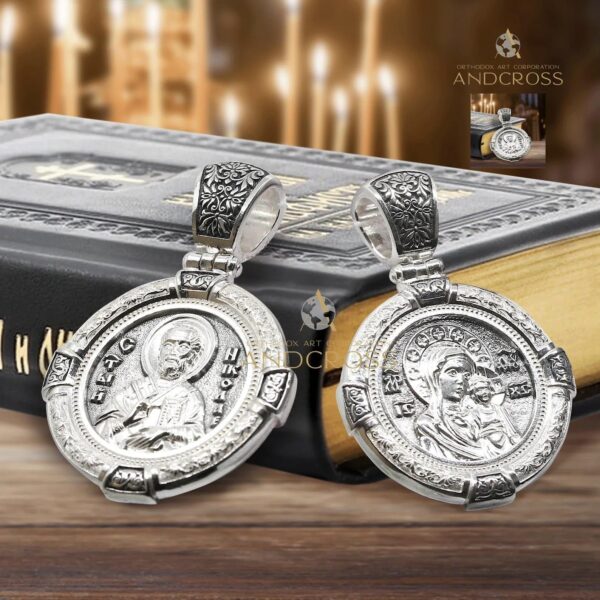
Andcross Orthodox online store offers a wide range of Orthodox products - gift sets, icons, icon cases, books, monastery candles, jewelry and much more. Some of the products of our own production, as well as from other suppliers - monasteries, temples, masters of the entire Orthodox world.
Andcross Orthodox Online Store - Established in 1999
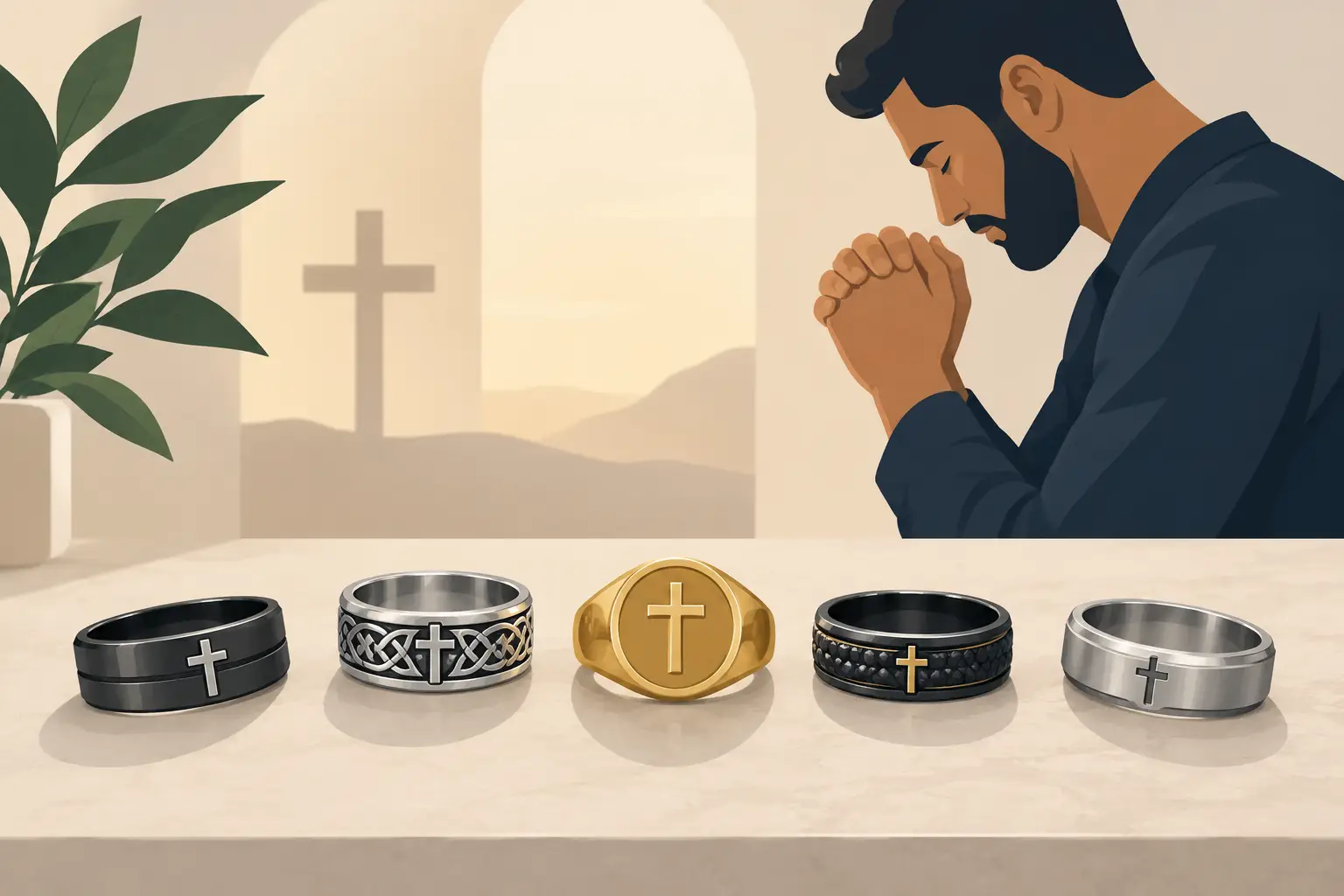
A religious ring is not merely an accessory. Worn through work, travel, and the ordinary demands of life, it can bring the mind back to Christ with a quiet glance or touch. The best religious rings for men are therefore not chosen only for their appearance. They should carry a true Orthodox symbol, be made with care, fit the wearer’s life, and be received as a humble reminder of prayer rather than a charm.
For many Orthodox men, a ring becomes a personal expression of the faith received at baptism and lived in the Church. It may bear the Cross, the name of Christ, a short prayer, or an image held dear by the wearer. Its value lies first in what it directs the heart toward.
A worthy religious ring joins sacred meaning with honest craftsmanship. Fine silver, gold, or gold-plated metal can endure regular wear and preserve carefully formed details. A poorly made ring may lose its finish, snag on clothing, or allow an inscription to fade until its spiritual message can no longer be read.
The design should also be clear and faithful to Orthodox tradition. Religious jewelry is most meaningful when its symbols are recognizable, reverent, and not altered merely to follow fashion. A cross should retain its proper form. Greek letters, Church Slavonic inscriptions, and images of saints should be rendered with attention to the tradition from which they come.
There is also a practical matter: a ring must be wearable. A wide, heavily raised design may be striking, but it can be inconvenient for someone who works with tools, exercises often, or wears gloves. A slimmer band with a recessed engraving is usually more comfortable for daily use. The best choice depends on whether the ring is intended for everyday prayerful wear, Sundays and feast days, or as a treasured gift kept for special occasions.
The symbol should be chosen with purpose. A man may be drawn to a ring because of his baptismal saint, family heritage, or a prayer he returns to during difficult seasons. There is no need to collect symbols simply because they are popular. One well-chosen ring can accompany a lifetime of prayer.
A cross ring is among the most direct choices. It keeps the central confession of Christian life close at hand: Christ’s victory over death. Some rings feature a raised Orthodox cross, while others use an engraved cross set into a plain silver or gold band. Engraved designs often suit daily wear because they are protected from hard knocks.
When selecting an Orthodox cross, look for a form that respects the tradition familiar to the wearer. The three-bar cross is especially beloved in Russian and Slavic Orthodox communities, while other canonical cross forms may be preferred according to parish and heritage. The ring does not need to be ornate to be reverent.
A ring inscribed with the Jesus Prayer offers a particularly personal devotional focus. The prayer, Lord Jesus Christ, Son of God, have mercy on me, a sinner, belongs to the daily prayer life of countless Orthodox Christians. A shortened inscription, Greek letters, or Church Slavonic text may be used when space is limited.
Such a ring is not a substitute for a prayer rope, a prayer rule, or attentive participation in the services of the Church. Yet it can be a gentle prompt. During a difficult conversation, while waiting in traffic, or before beginning work, the wearer may silently return to the Name of Jesus.
The traditional Greek Christogram IC XC, meaning Jesus Christ, is compact, ancient, and immediately connected to Orthodox iconography. It works especially well on a signet-style ring, where the letters can be deeply engraved into a flat face.
A Christogram ring suits men who prefer a discreet design while still wanting a distinctly Christian confession. It may also be combined with the words NIKA, meaning conquers, reflecting the familiar inscription seen on Orthodox icons of Christ.
A ring with a saint’s image may be chosen in honor of a patron saint, a beloved family saint, or a saint whose life offers particular encouragement. Because iconographic details on a ring are necessarily small, the workmanship matters greatly. A finely made image should remain legible and dignified, not reduced to a vague decorative pattern.
Rings bearing the image or monogram of the Most Holy Theotokos are also chosen by Orthodox faithful seeking her maternal intercession. This choice is deeply devotional and should be treated with the same reverence one gives to any sacred image.
Sterling silver remains a classic material for men’s religious rings. Its cool, restrained appearance suits both engraved and raised Orthodox designs, and it develops a natural patina over time. Many men appreciate that silver is substantial without being overly formal, making it appropriate for regular wear.
Gold offers a different character. Yellow gold has a warm traditional presence, while white gold can appear more understated. Gold is often selected for baptismal gifts, wedding-related gifts, anniversaries, or a ring intended to become a family keepsake. Its higher cost can be justified when the ring is being made to order or given for a significant spiritual occasion.
Gold-plated rings provide the appearance of gold at a more accessible price. They can be a thoughtful choice, but they require gentler care. Plating may gradually wear on areas that rub against skin, tools, or other rings. For a man who works with his hands every day, solid silver or gold is usually the more durable decision.
At Andcross, custom religious rings may be produced in silver, platinum, and several gold colors, allowing the symbol and material to be chosen together rather than treated as separate decisions.
A ring that constantly pinches or turns on the finger will soon be left in a drawer. Proper sizing is especially important for wider bands, which often feel tighter than narrow ones. If the ring is being given as a surprise, a current ring worn on the same finger is the most reliable guide for size.
In many Orthodox cultures, rings are commonly worn on the right hand, which is also used in making the sign of the Cross. Personal and local customs vary, however. A religious ring may be worn on any finger that is comfortable and respectful, particularly when a wedding ring already has an established place.
Consider the wearer’s daily work before choosing a prominent design. Men in construction, medicine, food service, or mechanical trades may need to remove rings for safety and hygiene. In that case, a ring can still have a meaningful place during prayer, church attendance, and time at home.
A religious ring is fitting for a baptism, name day, birthday, graduation, wedding anniversary, or a quiet occasion when someone needs encouragement. For a convert entering the Orthodox Church, a ring bearing the Cross or the Jesus Prayer can be a lasting reminder that faith is learned through patient daily practice.
When choosing a gift, begin with the recipient’s spiritual life rather than his wardrobe. His patron saint, jurisdictional background, preferred metal, and work habits will help guide the decision. A gift box and careful presentation add dignity, especially when the ring marks a sacramental or family occasion, but the symbol itself should remain central.
If there is uncertainty about an inscription, icon, or the appropriate use of a sacred image, asking the recipient’s priest is wise. A priest can offer pastoral guidance rooted in the life of the local parish.
Religious jewelry should never be treated as a guarantee against hardship or danger. The Cross is not magic, and no ring replaces repentance, confession, prayer, fasting, mercy, or the Holy Mysteries. Its proper role is simpler and more profound: it helps the wearer remember Whom he belongs to.
Care for the ring accordingly. Remove it when harsh chemicals, heavy labor, or unsafe conditions could damage it. Clean silver gently with an appropriate cloth, and avoid abrasive products on gold-plated surfaces or finely detailed iconographic work. If the ring has been blessed, treat it with the respect due to an object set apart for prayer.
The right religious ring will not call attention to itself more than it calls the heart toward God. Chosen with faith, worn with humility, and joined to a life of prayer, it can become a small but steadfast companion on the Christian path.



Use this form to find things you need on this site