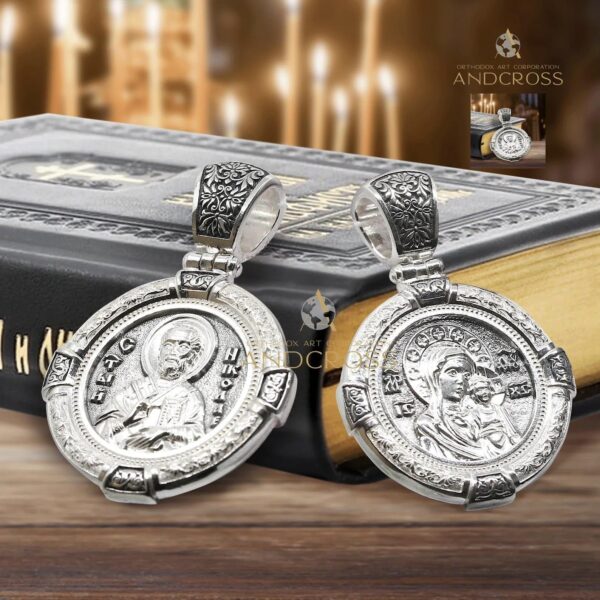
Andcross Orthodox online store offers a wide range of Orthodox products - gift sets, icons, icon cases, books, monastery candles, jewelry and much more. Some of the products of our own production, as well as from other suppliers - monasteries, temples, masters of the entire Orthodox world.
Andcross Orthodox Online Store - Established in 1999
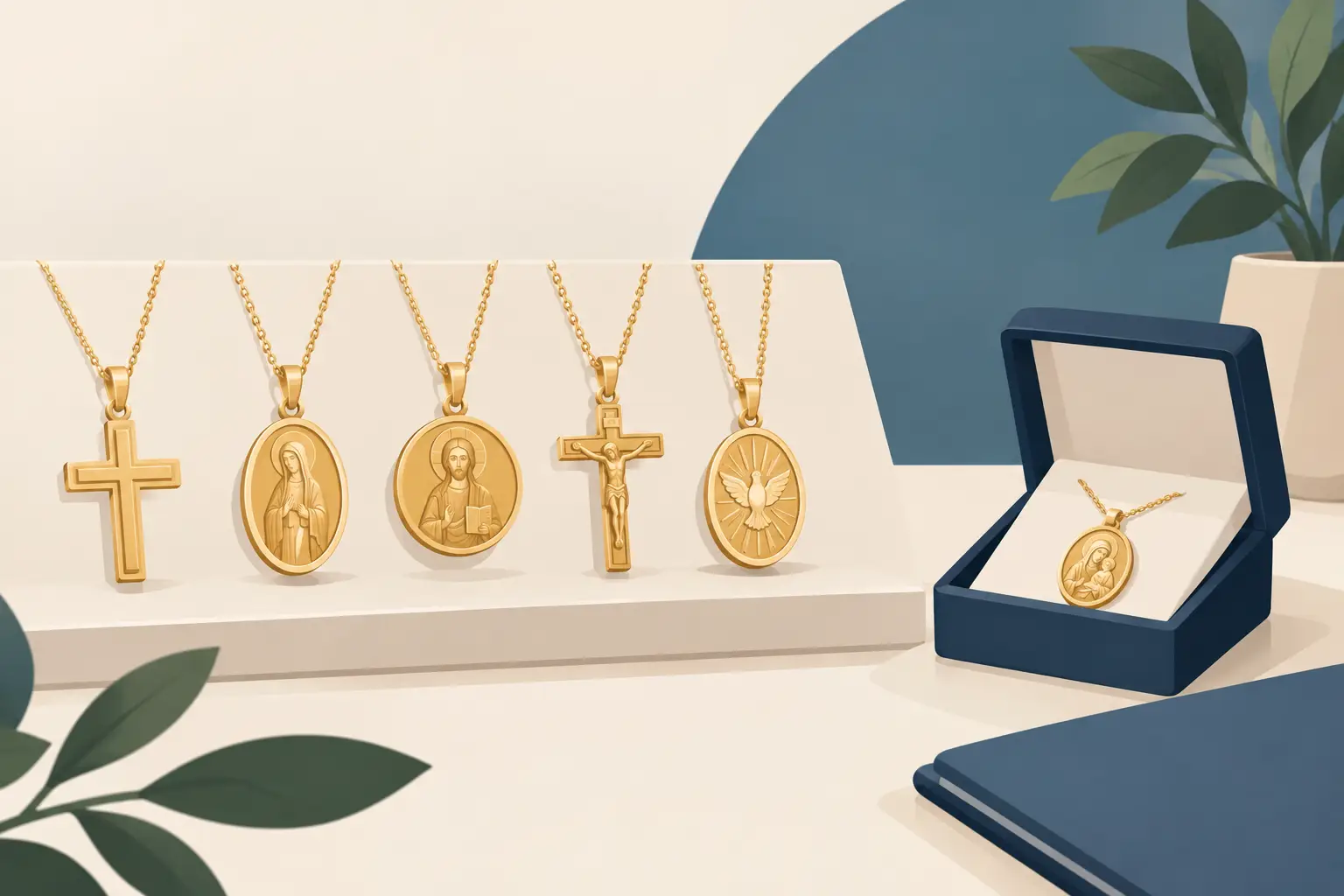
A small icon worn close to the heart can become a quiet reminder to pray: before a difficult conversation, while traveling, or in the ordinary work of the day. Icon pendants are not simply religious accessories. They bring the holy image of Christ, the Mother of God, an angel, or a saint into a personal and portable form, made for reverent daily wear.
For Orthodox Christians, choosing such a piece begins with more than appearance. The image, inscription, material, and workmanship all matter. A pendant may be selected for one’s patron saint, given at Baptism, offered to a godchild, or chosen as a meaningful gift for a feast day. The right piece should be beautiful, durable, and faithful to the sacred tradition it represents.
An icon is not decoration in the ordinary sense. It is a sacred image that directs the mind and heart toward the person depicted and toward God. When an icon is made as a pendant, that same purpose remains. Its smaller scale changes how it is carried, not what it signifies.
This is why canonical imagery is especially important. Traditional Orthodox icon pendants portray Christ, the Most Holy Theotokos, guardian angels, the Holy Trinity where appropriate, and saints in recognizable forms. Inscriptions may use Church Slavonic, Greek, or English, depending on the design and tradition. A carefully made image preserves the dignity of the icon even when rendered in silver, gold, or a finely detailed metal relief.
The pendant is not a charm and should not be treated as one. Orthodox Christians wear sacred images with faith, ask the saint’s prayers, and place their trust in the Lord. A medal or pendant can be a strong personal reminder of that relationship, but it does not replace prayer, repentance, participation in the Divine Liturgy, or the spiritual counsel of one’s priest.
For many people, the most natural choice is an icon of their baptismal or patron saint. A pendant bearing the image of Saint Nicholas, Saint George, Saint Seraphim of Sarov, Saint Matrona of Moscow, or another beloved saint makes a deeply personal gift. It expresses the Christian hope that the saint will intercede before God and encourage the wearer in a life of faith.
A guardian angel pendant is another fitting choice, particularly for children, Baptisms, birthdays, and moments of transition. The image recalls the Church’s teaching that God appoints an angel to guard and guide each faithful person. For a traveler or someone beginning a new chapter, this can be an especially tender and appropriate gift.
Pendants of Christ and the Theotokos are often chosen for daily devotion. Christ Pantocrator, the Savior Not-Made-by-Hands, the Kazan Mother of God, and the Vladimir Mother of God are among the images cherished throughout the Orthodox world. The best selection depends on the person’s prayer life and spiritual connection, rather than on fashion alone.
If you are buying for someone else and do not know their patron saint, a guardian angel, Christ, or the Theotokos is usually a respectful choice. For a more specific saint, confirm the recipient’s baptismal name or ask a close family member. This small care makes the gift more personal and avoids guesswork.
Some names correspond to more than one saint. In those cases, the recipient’s name day or family tradition may help identify the correct patron. Converts may also have received a saint’s name at Chrismation that differs from their civil name. A seller with knowledge of Orthodox devotional goods can help clarify options, but a priest or the recipient remains the best authority for a personal patron-saint question.
The material of an icon pendant affects both its appearance and how it will be worn. Sterling silver is a classic choice. Its bright, restrained finish suits traditional relief work and can be worn every day with reasonable care. Silver also develops a soft patina over time, which many people appreciate as part of a well-loved devotional object.
Gold-plated and gold-filled styles offer a warmer appearance and can make a memorable gift for a Baptism, wedding, anniversary, or major feast. Solid gold, available in yellow, white, or rose tones, is a lasting choice for those seeking a family heirloom or a custom-made piece. Platinum may be considered for its strength and quiet, enduring beauty, although it is a more substantial investment.
There is no single material that is spiritually superior. A humble silver pendant can be as prayerful and precious in use as gold. The decision often comes down to budget, skin sensitivity, frequency of wear, and whether the pendant is intended as an everyday companion or a special-occasion gift.
Look closely at the practical details. The bail should be strong enough for the chosen chain or cord. A very small pendant may suit a child or someone who prefers discreet wear, while a larger relief icon allows greater detail in the face, halo, and inscription. Weight matters too. A substantial pendant can feel reassuringly well made, but it should remain comfortable for daily use.
Fine Orthodox metalwork is recognized in the details. The features of the saint should be clear rather than generic. Haloes, crosses, garments, and inscriptions should be carefully defined. On a well-made relief pendant, the image has depth and balance instead of looking flat or mechanically blurred.
Pay attention to the reverse as well. Many pendants include a cross, prayer, decorative border, or maker’s mark on the back. These details can add meaning and confirm that the design has been thoughtfully finished from every side. For precious metals, clear information about purity, such as 925 sterling silver, should be available.
Handmade work may show slight variations from one piece to another. That is not necessarily a flaw. When the form and iconography are executed with care, those small differences can reflect the character of artisan work rather than mass production. Andcross works with its own workshop as well as monasteries, temples, and Orthodox craftspeople, helping customers find pieces rooted in this tradition.
This question deserves a careful answer. Some Orthodox devotional items are sold as consecrated, especially when they come from a monastery or temple. Other pendants are made with reverence but have not been blessed. Practices can differ by parish and jurisdiction.
If a pendant has not been consecrated and you would like it blessed, bring it to your priest and ask respectfully. Do not assume that every religious item has received a blessing simply because it bears a sacred image. A clear product description should distinguish between a consecrated item, a monastery-made item, and a devotional object that may be blessed by your parish priest.
The blessing is not a product feature to collect. It is an act of the Church, received with faith and gratitude. Treat the pendant accordingly: keep it clean, avoid wearing it in circumstances that would be disrespectful, and if it becomes damaged beyond repair, ask your priest how it should be handled.
An icon pendant is especially fitting for Baptism, Chrismation, a name day, graduation, marriage, or a time when someone needs encouragement. Gift-ready presentation matters because these occasions are often family milestones. A proper case protects the piece and gives it the dignity expected of a sacred gift.
When choosing for a child, consider a smaller, smooth-edged pendant and a secure chain or cord appropriate to the family’s preferences. For adults, a larger silver or gold icon may be welcome, especially if it bears a patron saint or a beloved image of the Theotokos. If you are uncertain about chain length, selecting the pendant separately gives the recipient freedom to wear it on an existing chain.
A short handwritten note can make the offering more meaningful. Rather than treating the piece as a token of luck, write that you chose it in honor of the saint, the feast, or the recipient’s new beginning. This keeps the gift centered on prayer and love.
Choose an image that calls the wearer toward Christ, and let the pendant be used with the reverence its holy subject deserves. Worn quietly and cared for well, it can accompany a person for many years as a reminder that the saints pray with us and that God is near.



Use this form to find things you need on this site