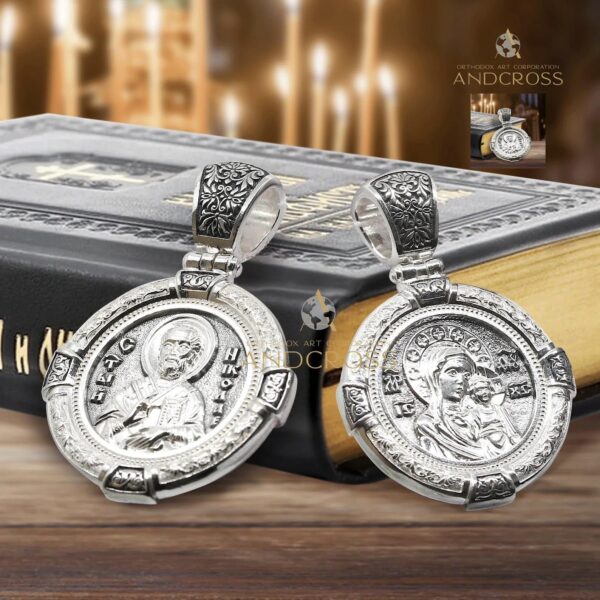
Andcross Orthodox online store offers a wide range of Orthodox products - gift sets, icons, icon cases, books, monastery candles, jewelry and much more. Some of the products of our own production, as well as from other suppliers - monasteries, temples, masters of the entire Orthodox world.
Andcross Orthodox Online Store - Established in 1999
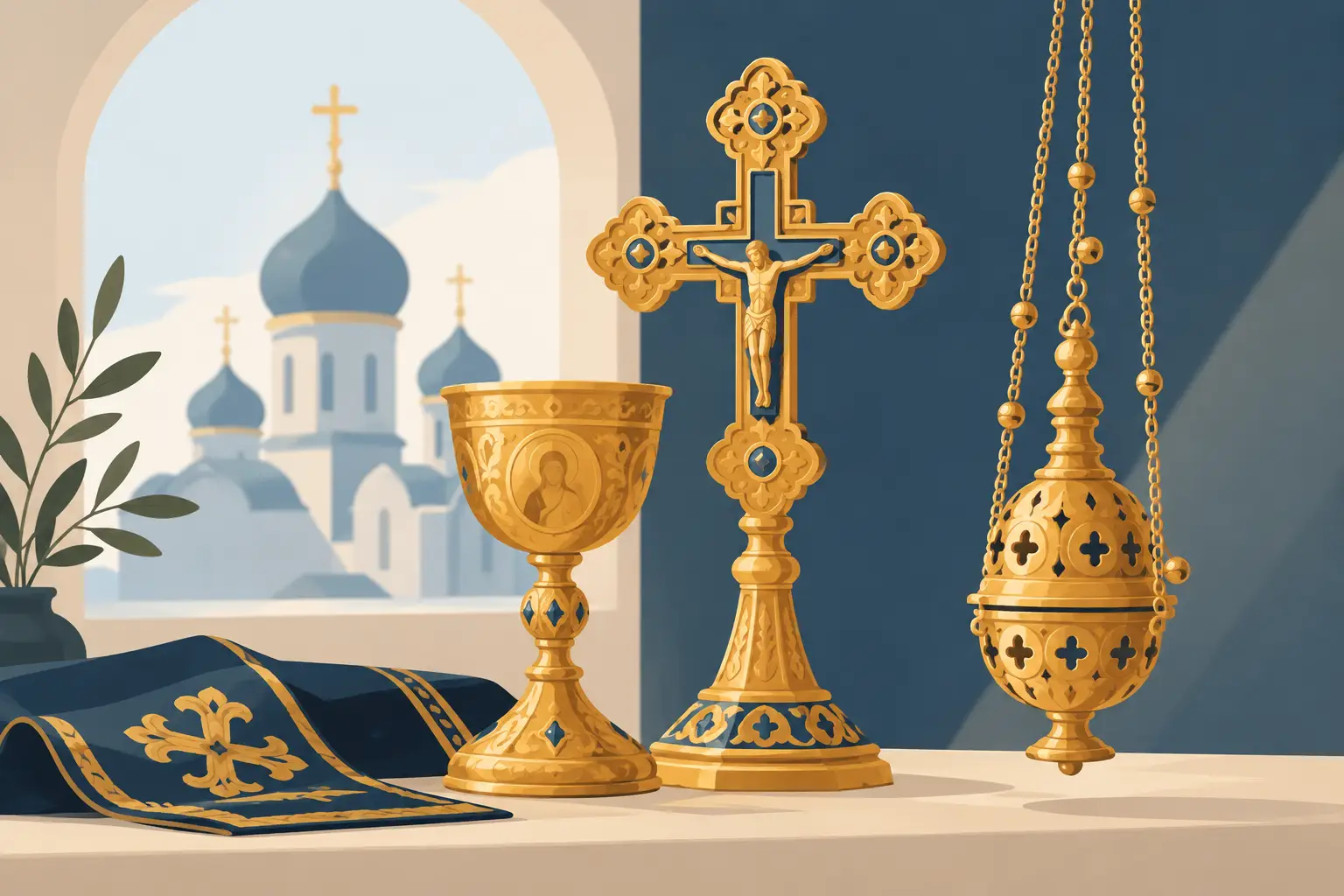
A cross worn against the heart, a silver icon in the home prayer corner, the quiet glow of a lampada before a beloved saint – sacred metalwork enters Orthodox life not as ornament alone, but as a visible witness to faith. Its value is found in more than weight, shine, or rarity. When an object bears the Cross, the image of Christ, the Mother of God, or the saints according to the tradition of the Church, it can direct the mind and heart toward prayer.
For Orthodox Christians, choosing a metal cross, icon, pendant, or gift is therefore an act that deserves attention. Material quality matters. Craftsmanship matters. Yet reverence for the holy image, fidelity to canonical forms, and the intended place of the object in a Christian life matter even more.
Sacred metalwork is the skilled shaping of precious and durable metals for objects connected with Orthodox worship, prayer, and Christian remembrance. It includes pectoral and baptismal crosses, icon oklads and frames, small travel icons, medalions, rings, lampadas, church vessels, censers, and other devotional articles. Some pieces are made for the temple; others belong in the home or accompany a person throughout the day.
Metal has long been used in the life of the Church because it unites beauty with endurance. Gold evokes honor and the uncreated light of God in Orthodox artistic language. Silver brings a clear, luminous dignity and has been widely used for crosses, icon coverings, and liturgical objects. Brass, bronze, and carefully made gold-plated finishes can also serve beautifully when the work is honest, well executed, and appropriate to its purpose.
The material itself is not magical. An Orthodox Christian does not place faith in metal as a charm. Rather, the Cross is honored because of Christ’s saving sacrifice, and an icon is venerated because it points beyond itself to the person depicted. The object helps focus prayer; it does not replace repentance, worship, or life in the Church.
Among all forms of Orthodox sacred metalwork, the cross holds a singular place. It is not merely religious jewelry. Worn with humility, the baptismal cross is a daily confession that the Christian belongs to Christ. Many faithful receive one at Baptism and continue to wear it throughout life, often beneath their clothing.
Orthodox cross designs vary by tradition. The familiar eight-pointed Russian Orthodox cross includes the upper inscription bar and the slanted footrest. Greek, Byzantine, Serbian, and other forms also carry their own recognizable history. Some crosses bear the Crucifixion; others feature the image of Christ, the Theotokos, a guardian angel, or brief prayers in Church Slavonic, Greek, or English.
A well-made cross should be clear in its imagery and comfortable for daily wear. For a child, a modest silver cross with softened edges and a secure bail may be the wisest choice. For an adult baptism, a more detailed cross in sterling silver, gold, or gold plating can become a lasting keepsake. The best choice depends on the occasion, the wearer, and the spiritual meaning the family wishes to mark.
There is also a practical distinction between a cross intended for regular wear and one designed as a special gift or heirloom. A fine gold cross with detailed relief may be appropriate for a milestone, while a simpler silver cross may better withstand everyday use. Neither is spiritually superior because of price. What matters is that it is treated with reverence and worn or kept with a sincere Christian purpose.
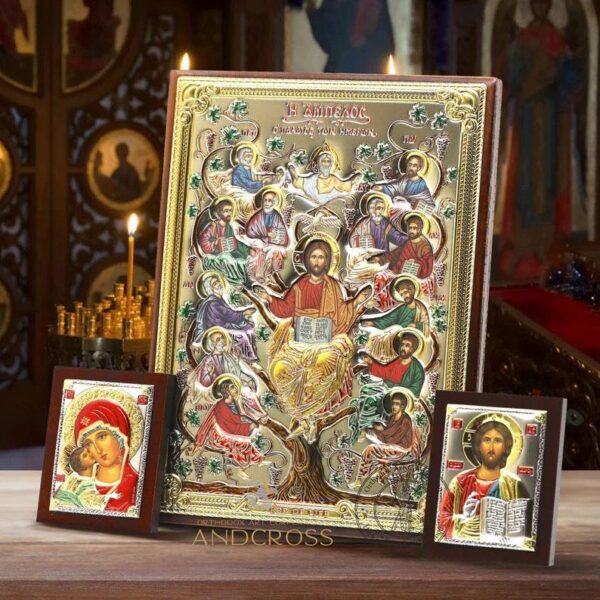
Metalwork has a longstanding place in Orthodox icon tradition. Silver or gold-plated icon frames, known as oklads or rizas, may cover selected areas of an icon while leaving the faces and hands visible. These coverings honor the holy person represented and protect the painted surface. Their raised floral patterns, halos, borders, and repoussé details can add a sense of solemnity without changing the icon’s theological center.
A metal icon should never overwhelm the image it protects. The face of Christ, the Mother of God, or the saint remains the focus of prayer. When selecting such an icon for a home, look first for a faithful image and clear inscription. Then consider the craftsmanship of the metal setting, the icon’s size, and whether it suits an icon corner, bedside table, office, or place of travel.
Small silver icons and enamel icons are especially fitting for baptisms, name days, weddings, and memorial gifts. An icon of a patron saint can give a personal occasion lasting spiritual depth. For someone beginning an Orthodox home prayer rule, an icon of Christ and an icon of the Theotokos are often a natural foundation. A patron saint icon may then be added in time.
Sacred objects deserve careful workmanship because they bear holy images and serve prayer. Fine engraving should remain legible. A cast cross should have balanced proportions and clean details. Chains, clasps, bails, and settings should be made for the real demands of use, especially when an item is purchased for a child or worn every day.
It is equally wise to understand what is being offered. Sterling silver commonly refers to 925 silver. Gold pieces may be solid gold, gold plated, or gold filled, and these are not the same. A gold-plated icon or cross can offer a beautiful and accessible finish, but buyers should expect it to need gentler care than solid gold. Silver naturally tarnishes over time; this is normal and can usually be addressed with proper cleaning suited to the piece.
For icons with delicate finishes, enamel, or mounted elements, harsh polishing compounds are not always appropriate. Soft handling, a dry cloth, and storage away from moisture and household chemicals will protect many devotional articles. If an object is especially old, handmade, or richly detailed, professional advice may be preferable to aggressive cleaning.
Traditional craftsmanship also means knowing when a design should remain simple. Not every sacred item needs stones, elaborate ornament, or a large scale. A restrained silver cross can carry profound beauty. At the same time, a carefully crafted gold icon gift set may be entirely fitting for a wedding, anniversary, or significant family blessing. The occasion and the recipient should guide the choice.
A sacred gift is most meaningful when it corresponds to the person’s life in the Church. For Baptism, a cross and small icon are enduring choices. For a name day, an icon of the patron saint or a pendant bearing that saint can be especially personal. For a wedding, paired icons of Christ the Teacher and the Mother of God are traditional gifts of prayer for the new household.
Memorial occasions call for particular tenderness. A small cross, icon, prayer rope, candleholder, or devotional piece may offer consolation, but it should never feel like a display of luxury. A simple object chosen with prayerful attention often speaks most clearly. If the recipient is grieving, an icon of Christ, the Theotokos, or a saint connected to comfort and healing can remain a quiet companion long after flowers have faded.
For those buying from a distance, specifications are part of responsible selection. Confirm dimensions, metal type, finish, chain length where applicable, and whether a gift case is included. If the item is intended for a child, ask whether its size and construction are suitable. If it is a custom commission in silver, platinum, yellow gold, white gold, or rose gold, allow time for careful production rather than treating sacred craftsmanship as a rushed purchase.
At Andcross, devotional metalwork is selected and made with attention to Orthodox symbolism, traditional forms, and the practical needs of gift giving. Whether a piece comes from a workshop, monastery source, or Orthodox craftsperson, its purpose remains the same: to serve a life turned toward God.
A sacred object finds its true place not in a box or display case, but in the rhythm of prayer. Let the cross be worn with gratitude, let the icon be greeted with reverence, and let the beauty of careful metalwork remind the heart of the beauty to which every Christian is called.



Use this form to find things you need on this site