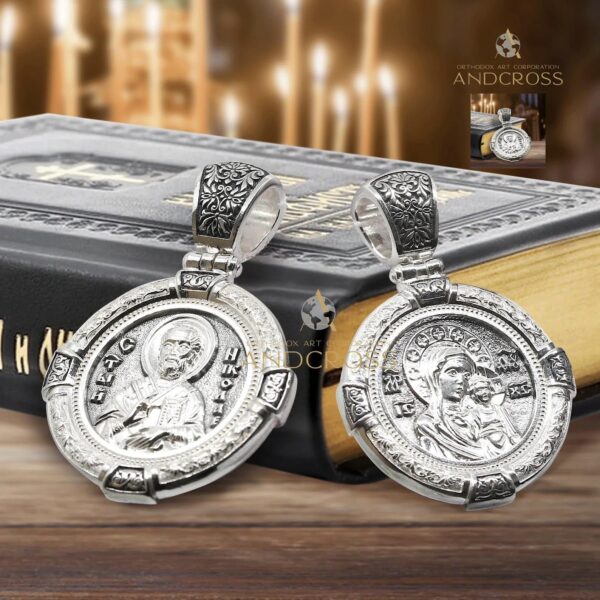
Andcross Orthodox online store offers a wide range of Orthodox products - gift sets, icons, icon cases, books, monastery candles, jewelry and much more. Some of the products of our own production, as well as from other suppliers - monasteries, temples, masters of the entire Orthodox world.
Andcross Orthodox Online Store - Established in 1999
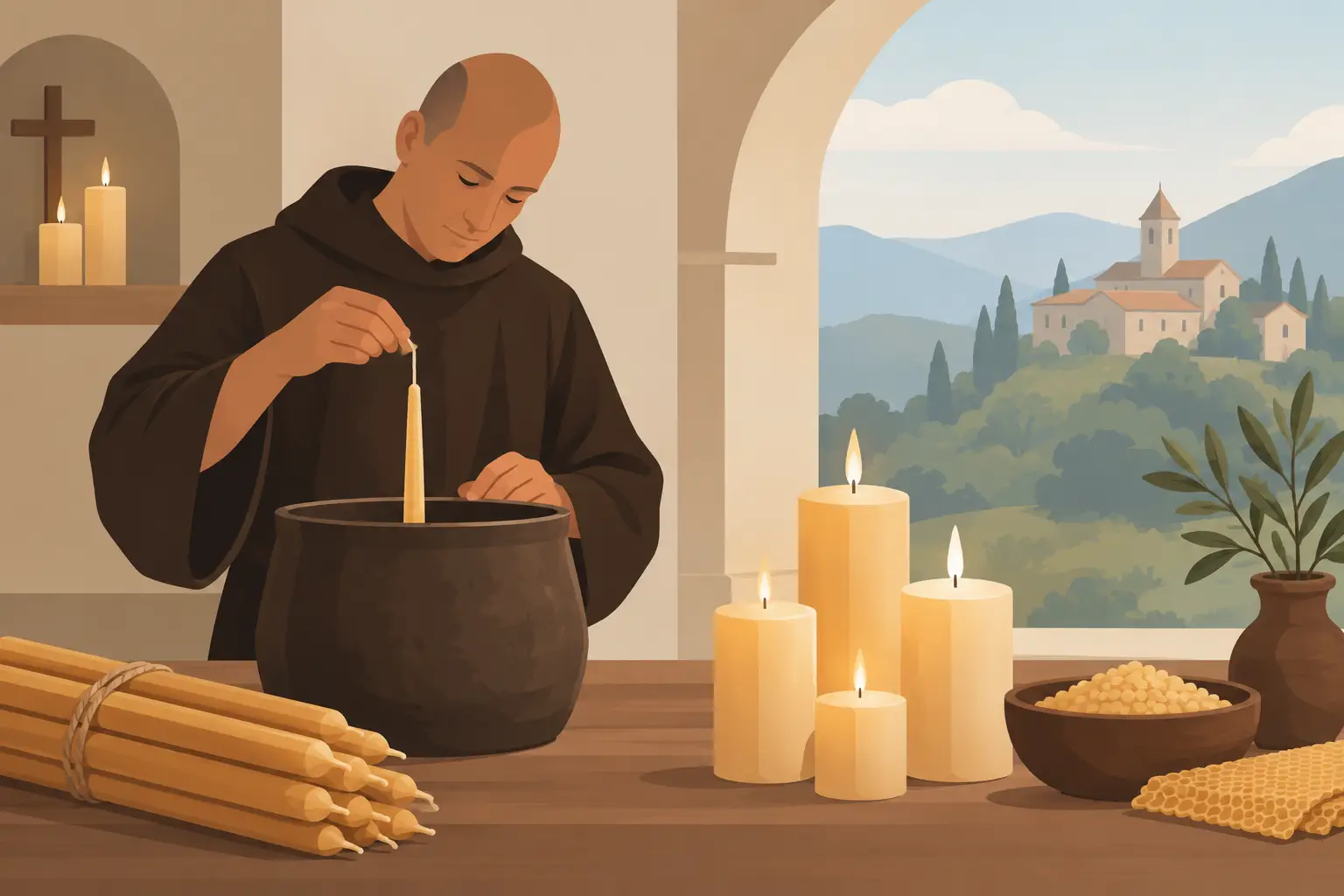
A candle before an icon is a small offering, but it is never merely decoration. Its living flame accompanies the Christian’s prayer, recalling Christ the Light of the world and the call to let faith shine before others. This guide to monastery made candles explains what distinguishes them, how to choose them thoughtfully, and how to use them with reverence in the home or church.
A monastery-made candle is generally produced within a monastic community or prepared through the labor of monks, nuns, or a workshop closely connected with a monastery or temple. The phrase should not be treated as a guarantee that every step occurred inside monastery walls. Practices vary by community, country, and available materials. What matters is a truthful description of origin, a connection to Orthodox devotional life, and workmanship suitable for prayer.
For many Orthodox Christians, the value of such a candle rests partly in this connection. Monastic labor is traditionally joined to prayer, obedience, and the support of the community. When one purchases candles from a monastery or a trusted Orthodox source, the purchase may also help sustain a monastic community, its church, charitable work, hospitality, or daily needs.
Still, a monastery-made candle is not a charm, and its spiritual worth is not measured by price, scent, or place of origin alone. The candle serves prayer. A simple taper lit with humility before an icon may be a more sincere offering than an elaborate candle used without attention to God.
The use of lamps and candles belongs deeply to Orthodox worship. In church, candles are placed before icons, at the Gospel, near the Cross, and before relics. At home, they may be lit in the icon corner during morning and evening prayers, on feast days, at memorial prayers, or when a family brings a particular need before God.
The flame speaks quietly of several realities at once. It is a sign of Christ, who illumines darkness. It represents the prayer offered from the heart. As the candle is consumed, it also suggests sacrifice: something of our own is offered to God in love and faith.
A candle does not replace prayer, repentance, confession, mercy, or participation in the Divine Liturgy. It supports the attention of the body and mind. For a convert building an Orthodox prayer rule, this can be especially helpful. Lighting a candle at the beginning of prayer creates a deliberate pause, drawing the household away from hurry and toward stillness.
Material is one of the first practical questions when selecting monastery candles. Traditional church candles are often made from beeswax, valued for its warm color, gentle honeyed fragrance, and longstanding liturgical association. Pure beeswax is usually softer and more costly than paraffin, and its natural variation is part of its character. One batch may appear more golden than another, particularly when made by hand.
Paraffin candles are common because they are economical, stable, and readily available in uniform sizes. They can be appropriate for regular home use, especially when a household burns candles frequently. Blended waxes combine qualities of both materials and may offer a dependable burn at a more accessible price.
There is no need to make material into a test of personal piety. In some parishes, pure beeswax may be preferred for worship; in others, practical considerations govern what is used. If you are buying candles for a church, ask the priest or parish candle attendant about the local practice. For a home icon corner, choose candles that are well made, burn cleanly when properly trimmed, and fit your candleholder securely.
Natural beeswax may have a light fragrance of honey or wax. Strongly perfumed candles, however, are usually better reserved for ordinary household use rather than the icon corner. Orthodox prayer is not dependent on creating an atmosphere through fragrance. A clean, modest candle helps keep the focus where it belongs: before Christ, His Most Holy Mother, and the saints.
The right size depends on where and how long you plan to pray. Thin tapers are well suited to a brief morning or evening rule. Medium candles can be practical for longer prayers, feast days, or family observances. Thicker candles often burn longer, but they require a stable holder and greater attention while lit.
When selecting candles online, look for clear information about dimensions, approximate quantity, wax composition, and intended use. Diameter matters as much as height. A candle that is too narrow for the holder may lean or fall; one that is too wide may be forced into place and become difficult to remove.
For a home prayer corner, it is wise to keep both everyday tapers and a few longer-burning candles. The everyday supply encourages consistency. The longer candles can be set aside for Great Feasts, a name day, a baptism anniversary, or an evening when the family is praying for someone who is ill or departed.
Color may also have a place, depending on custom. Natural gold or yellow beeswax is widely used throughout the Orthodox world. Colored candles can be associated with particular feast-day traditions in some communities, but local practice differs. If you are uncertain, natural beeswax candles are a fitting and traditional choice.
Set the candle in a nonflammable holder placed on a level, heat-resistant surface. Keep it away from curtains, paper icons, hanging fabrics, shelves, and the reach of children or pets. Never leave a lit candle unattended, even for a short time.
Before lighting it, make the sign of the Cross and begin your prayers simply. You may light a candle before the icon of Christ, the Theotokos, your patron saint, or an icon connected to the day’s feast. There is no need for complicated words. The Jesus Prayer, the Trisagion prayers, a Psalm, or a prayer from the heart may accompany the flame.
If you are praying for the living or departed, avoid turning the candle into a mechanical signal. Speak the name before God with love. For the departed, the most meaningful offering remains prayer, remembrance at the Divine Liturgy when possible, almsgiving, and a Christian life shaped by mercy.
Even a carefully made candle benefits from proper care. Keep the wick short, generally about one-quarter inch, before lighting. A wick that is too long can produce excess smoke, a large unstable flame, or soot around the holder. If the candle begins to smoke, extinguish it safely, allow it to cool, trim the wick, and relight it if appropriate.
Avoid placing candles in a draft. Air movement makes the flame burn unevenly and can cause dripping. Tapers should stand upright, while thicker candles should be allowed to form a small wax pool across the top during their first use when possible. This helps prevent tunneling, where the center burns down while a tall rim of unused wax remains.
It is also good to keep candle wax from collecting on icons, icon covers, and embroidered cloths. A simple brass, ceramic, or glass holder with a wide base protects both the prayer corner and the candle. If wax drips onto a sacred image, remove it gently and respectfully rather than scraping aggressively.
Because terms such as “church candle” and “monastery candle” are used broadly, purchase from a seller who describes products plainly. A trustworthy Orthodox retailer should identify the wax when known, provide sizes or dimensions, explain whether candles are handmade or monastery sourced, and package them carefully for delivery.
Andcross offers Orthodox devotional goods with attention to traditional craftsmanship and monastic sourcing, helping families find candles and sacred articles suited to prayer, feast days, and meaningful gifts. When purchasing candles as a gift, consider including a suitable candleholder or selecting a presentation that protects the tapers during shipping.
A candle is humble by nature. Kept near the icons, lit attentively, and joined to a sincere prayer, it can become a faithful part of the household’s daily offering to God.




Use this form to find things you need on this site