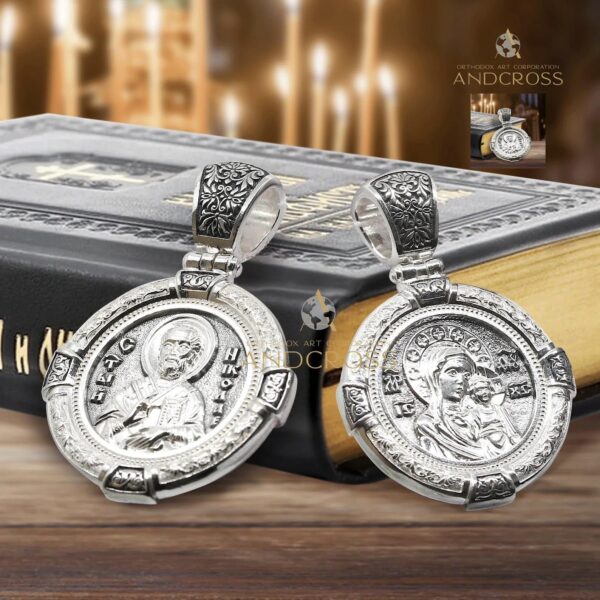
Andcross Orthodox online store offers a wide range of Orthodox products - gift sets, icons, icon cases, books, monastery candles, jewelry and much more. Some of the products of our own production, as well as from other suppliers - monasteries, temples, masters of the entire Orthodox world.
Andcross Orthodox Online Store - Established in 1999
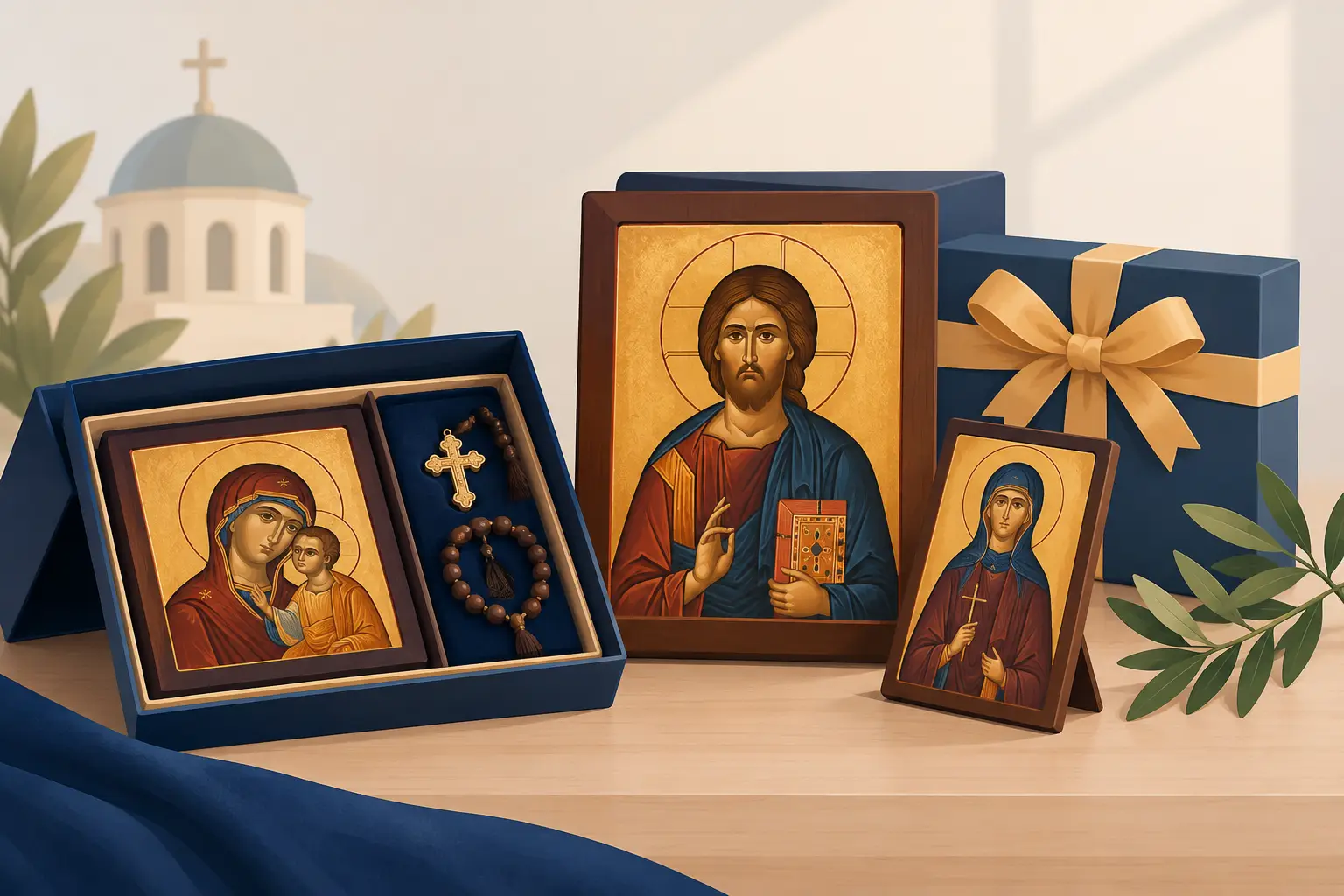
A well-chosen icon gift set does more than mark an occasion. It gives the recipient a visible companion for prayer and a sacred image that may remain in the family for many years. This guide to icon gift sets is intended for those choosing an Orthodox gift with care, whether for a baptism, wedding, name day, feast day, house blessing, or a loved one beginning an icon corner.
An icon is not simply religious decoration. In Orthodox tradition, it bears witness to the Incarnation and directs the heart toward Christ, the Mother of God, the saints, and the holy events of the Church. For that reason, the best gift set is not necessarily the largest or most ornate. It is the one that is faithful in image, fitting for the recipient, and made with reverence.
The occasion helps determine the icon, but the recipient’s spiritual life should guide the final choice. A person who has recently entered the Church may benefit from a foundational image of Christ or the Theotokos. Someone with a well-established prayer rule may treasure the icon of a patron saint, a feast-day image, or a set designed for the home icon corner.
For a baptism or chrismation, an icon of the recipient’s heavenly patron is an especially personal offering. If the baptismal name honors Saint Nicholas, Saint George, Saint Olga, Saint Mary of Egypt, or another saint, the corresponding icon creates a lasting connection to that saint’s intercession. A small prayer rope, cross, or prayer book can make the gift more complete, provided the set remains simple enough to be used rather than stored away.
For a wedding, the traditional pairing of Christ the Savior and the Most Holy Theotokos is deeply meaningful. These wedding icons are often presented as a matched set, sometimes in a folding case or gift box. They belong in the couple’s home and accompany their shared prayer through the changing seasons of marriage. A wedding gift should be dignified and durable, with workmanship worthy of its place in the home.
Name days call for particular attention to the saint. This is often more thoughtful than selecting a general image based only on appearance. When several saints bear the same name, confirm the recipient’s patron and feast day if possible. A gift buyer who is unsure may discreetly ask a close family member, godparent, or priest.
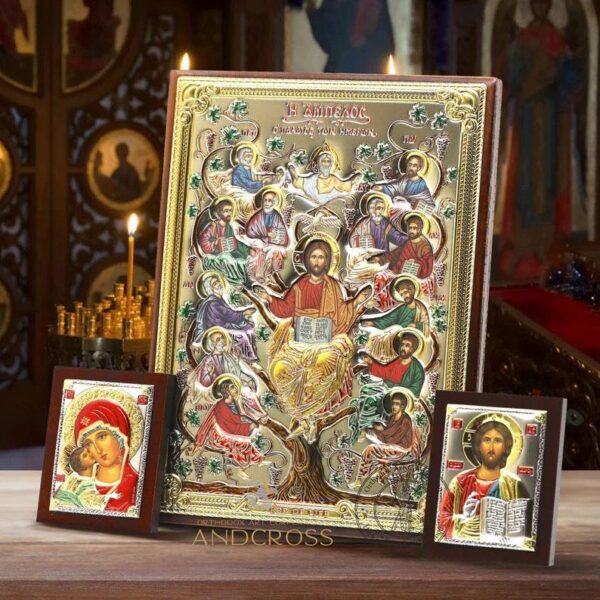
The most suitable set depends on its purpose. Some sets center on a single icon in a presentation case. Others bring together two icons, an Orthodox cross, a small Gospel, a prayer book, or a prayer rope. More is not always better. Each object should have a clear devotional place.
A single icon is a wise choice for a patronal feast, a birthday, a memorial offering, or a first Orthodox gift. Gift-ready presentation protects the icon and gives the moment of giving the appropriate care. A compact icon can be kept at a bedside, carried when traveling, or placed in a small prayer corner.
Choose an image that invites regular prayer: Christ Pantocrator, the Theotokos of Kazan, the Guardian Angel, the Holy Trinity where appropriate to the recipient’s tradition, or the person’s patron saint. The canonical title and imagery matter. A clearly identified saint makes the gift more meaningful and helps the recipient learn the saint’s life and prayers.
Paired icons of Christ and the Mother of God are among the most enduring Orthodox gifts. They are appropriate for newlyweds, anniversaries, and families establishing a new home. In some families, such icons are handed down from parents to children, becoming part of a household’s spiritual inheritance.
Consider size carefully. A very small pair is convenient for a travel case or modest apartment. A larger set may be better for a home icon corner, but it needs a secure place on the wall or shelf. The gift should suit the recipient’s living space as well as the significance of the occasion.
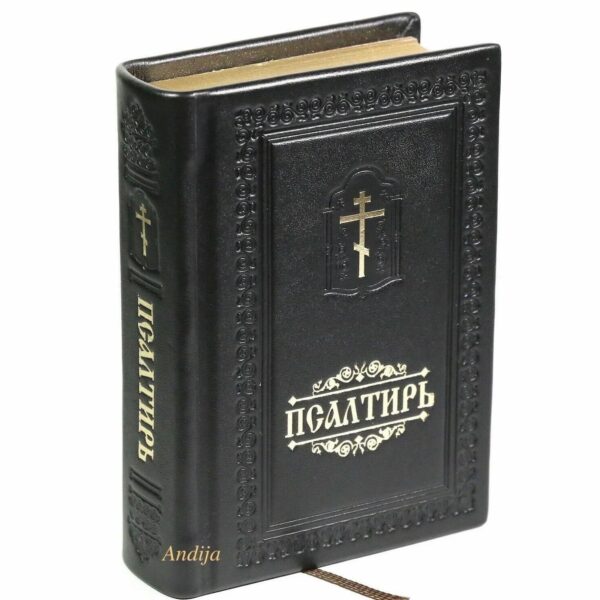
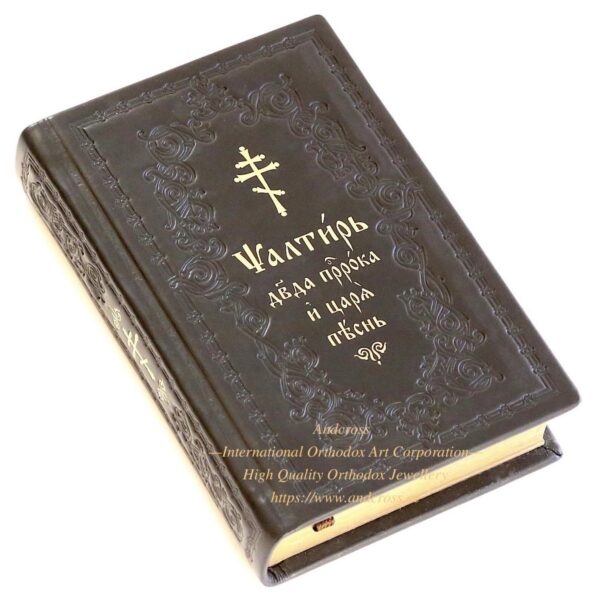
An icon paired with a prayer book, Psalter, Gospel, or prayer rope can serve someone who is developing a more regular rule of prayer. This can be a fitting gift for a convert, a godchild, or a college student living away from home. It is best to select texts in a language the recipient can prayerfully read, rather than choosing an edition solely for its appearance.
A prayer-centered set requires sensitivity. If the recipient already has a beloved prayer book or uses a parish-recommended translation, an additional book may not be necessary. In that case, a patron icon and a quality cross may be the more useful offering.
Icon gift sets are available in painted wood, printed panels, silver and gold-plated coverings, enamel details, and other traditional forms. The material affects appearance, cost, weight, and long-term care, but it should never distract from the sacred image itself.
Silver icons and icons with refined metalwork have a formal presence that suits baptisms, weddings, anniversaries, and major feast-day gifts. Silver purity, plating, embossed details, and the quality of the icon’s protective covering should be described clearly before purchase. Gold-plated accents can offer warmth and splendor, while a carefully made wooden icon may be the more traditional and approachable choice for daily use.
Handmade workmanship also matters. An icon or devotional object made by skilled Orthodox craftspeople, a monastery workshop, or a temple source carries a connection to living tradition that many families value. Yet handmade does not mean identical. Fine variations in wood grain, icon finish, and metal detail are part of the character of artisan work.
Durability deserves consideration, especially for children. A small icon in a sturdy case may be better than a delicate object with protruding decoration. For travel, choose a compact format that closes securely. For a household gift, a larger icon with a stable backing and protected surface may be preferable.
When giving an Orthodox icon, faithful representation is essential. The names, inscriptions, attributes, and composition should correspond to the Church’s received iconographic tradition. This does not mean every icon must look identical. Local schools and historic styles may differ, but the image should remain recognizable and theologically sound.
Read the description before selecting a set. Confirm the saint or feast depicted, the dimensions, materials, and whether a case is included. If an item is described as consecrated, monastery-made, or sourced from a temple workshop, those details should be stated specifically rather than assumed. A respectful seller will provide concrete information about craftsmanship and presentation.
For an icon of a patron saint, check the spelling of the name and the saint’s identity. This is especially useful with names such as John, Mary, Catherine, Alexander, and Anna, which may refer to several saints. Thoughtful accuracy is one of the finest forms of care in religious gift-giving.
A sacred gift should be presented with simplicity and respect. A fitted gift case, wooden box, or protective velvet-style presentation can be appropriate, especially for silver or gold-plated icons. The purpose is not luxury for its own sake, but protection and readiness for a meaningful occasion.
If you include a card, keep the message sincere. For a baptism, you might ask the recipient’s patron saint to intercede for a life rooted in Christ. For a wedding, offer prayers that the new household may be strengthened in faith, peace, and mutual love. For a name day, remember the saint whose prayers accompany the recipient.
Avoid treating the icon as a good-luck charm or an object meant to guarantee worldly success. Orthodox Christians venerate icons because honor passes to the person depicted. The icon calls the recipient to prayer, repentance, gratitude, and trust in God. That understanding gives even a modest set greater value than an expensive but impersonal gift.
When purchasing online, compare dimensions to an object already in the home so the scale is clear. Review photos for the front, back, case, and metal details. Confirm whether the listed price includes the gift box and ask about custom options if you need a particular saint, inscription, metal finish, or matching cross.
For an important date, allow time for careful packing and international delivery. Custom silver, platinum, or gold work may require additional production time, especially when a piece is made to order. It is better to order early than to rush a sacred gift selected for a baptism, wedding, or feast.
Andcross offers icon gift sets and Orthodox devotional articles shaped by traditional craftsmanship, with options suited to personal prayer and formal giving. When selecting any sacred item, clear descriptions, responsive customer care, and secure presentation are practical signs that the gift will arrive ready for its purpose.
The right icon gift set is one the recipient can return to in quiet prayer long after the celebration has passed. Choose it with attention to the saint, the occasion, and the life into which it will be received, and let the gift become a gentle invitation to remember God each day.



Use this form to find things you need on this site