Andcross Orthodox online store offers a wide range of Orthodox products - gift sets, icons, icon cases, books, monastery candles, jewelry and much more. Some of the products of our own production, as well as from other suppliers - monasteries, temples, masters of the entire Orthodox world.
Andcross Orthodox Online Store - Established in 1999
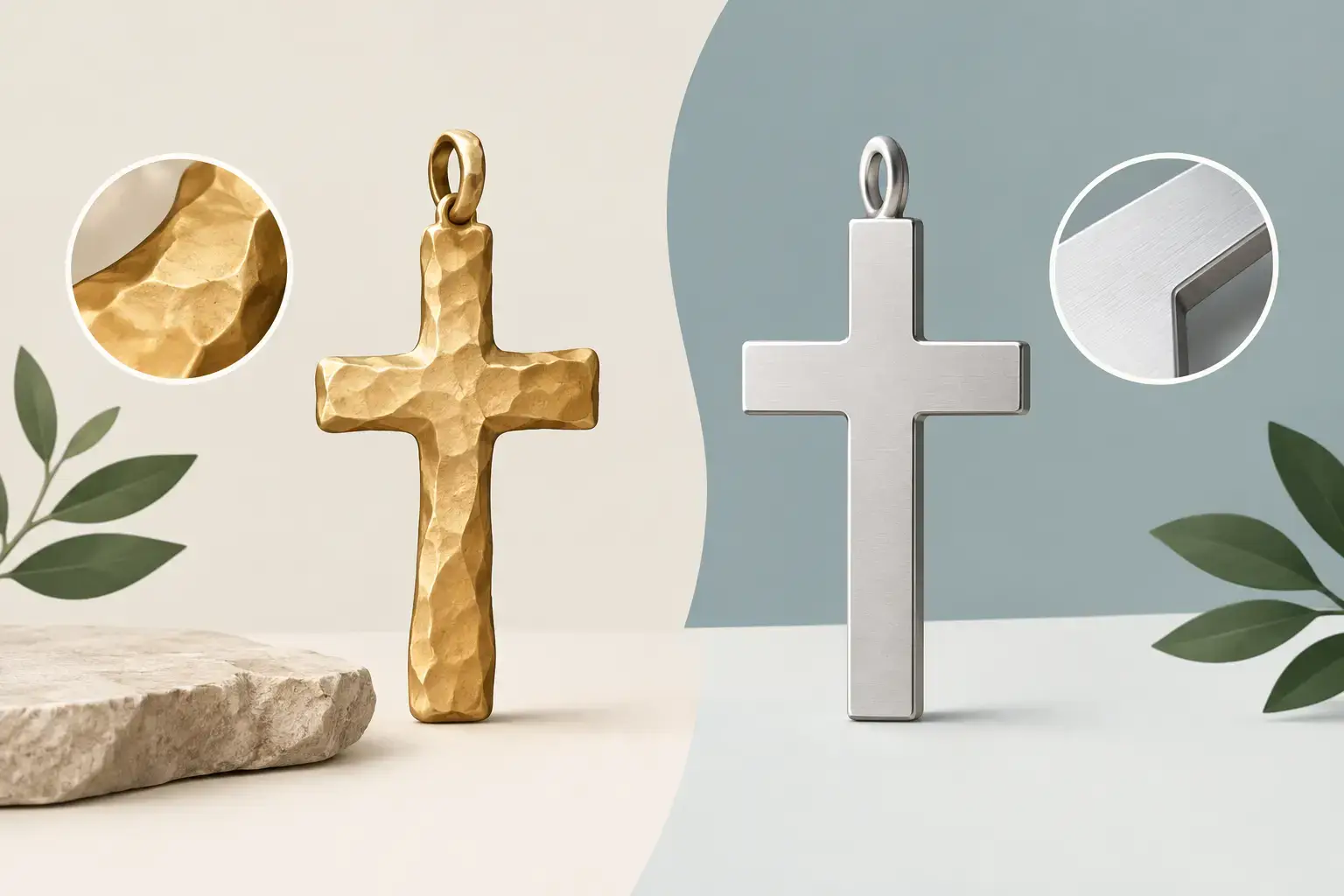
A cross worn close to the heart is not chosen as ordinary jewelry. In considering hand-cast versus stamped crosses, an Orthodox Christian is often seeking more than a finish or a price point. The question is how a cross is made, how it will endure daily prayer and wear, and whether its form honors the sacred image it bears.
Both methods can produce a beautiful and worthy Orthodox cross. A stamped cross may be light, precise, and accessible. A hand-cast cross may have greater depth, substance, and the individual character of traditional metalwork. The right choice depends on the intended wearer, the metal, the design, and the place the cross will hold in one’s life.
A hand-cast cross begins with a model, often shaped or refined by a master craftsman. Molten metal is poured into a mold, then the piece is cleaned, finished, polished, and sometimes engraved, oxidized, or fitted with additional details by hand. Depending on the workshop and design, casting may use sterling silver, gold, bronze, or other suitable metals.
The result is usually a cross with real dimension. The Crucifixion, the Savior, the Mother of God, saints, the instruments of the Passion, Church Slavonic inscriptions, or ornamental borders can be formed in relief rather than merely pressed into a thin surface. This depth matters especially in the traditional Russian Orthodox eight-pointed cross, where a small pendant may contain a rich confession of faith.
A well-made cast cross often feels substantial in the hand. Its edges can be softened and finished for comfortable daily wear, while the front and back may both carry carefully modeled sacred imagery. The back of an Orthodox cross may bear the prayer “Save and Protect,” a troparion, or another traditional inscription. Such details deserve clear, legible execution, not an indistinct impression.
Hand-cast does not automatically mean that every stage is performed by one person or that every cross is completely unique. Casting is a traditional workshop process, and several pieces may be made from the same approved model. What distinguishes a quality hand-cast piece is the care given to the model, metal thickness, cleanup, finishing, and fidelity to the canonical design.
A stamped cross is formed when a sheet of metal is pressed into a die under pressure. The process can efficiently reproduce a design with consistent outlines and surface detail. Many stamped crosses are made in two halves that are joined together, creating a hollow pendant; others are made as a single thin piece.
Stamped production has genuine advantages. Because it uses less metal and allows repeatable production, it can make Orthodox crosses more affordable for families, godparents, parishes, and those buying a first baptismal cross. A stamped cross can also be very light, which may be especially comfortable for a child or for someone who prefers a discreet cross beneath clothing.
The limitation is usually depth. Fine images and inscriptions must be compressed into a shallower surface, so the details may appear softer than those on a carefully cast pendant. Thin hollow construction also requires greater care. A cross that is bent, crushed, or repeatedly pulled by a heavy chain may be harder to restore than a solid cast piece.
This does not mean stamped crosses are lesser in spiritual meaning. The Cross is venerable because it is the sign of Christ’s saving sacrifice, not because a particular manufacturing method has been used. A blessed stamped cross may serve its owner faithfully for many years. The practical distinction is one of construction, detail, durability, and cost.
For daily wear, begin with the life of the person receiving the cross. A solid or substantial hand-cast silver cross is often an excellent choice for an adult who wants a lifelong devotional piece. It generally withstands regular handling well, and its raised details can retain their presence after years of wear when the workmanship and metal quality are sound.
A stamped cross may be the wiser choice when lightness is the first concern. For a baptism, a small child, or a gift that must stay within a modest budget, a carefully made stamped cross can be appropriate and meaningful. Its lighter weight may also suit a fine chain better than a heavier cast pendant.
The chain and bail should never be overlooked. A durable cross needs a bail that is securely formed and proportionate to the pendant. A heavy cast cross placed on a very delicate chain creates unnecessary strain. Conversely, a small lightweight cross can look lost on an overly thick chain. When selecting a cross, consider the complete piece: pendant, bail, chain, clasp, and the comfort of the wearer.
Orthodox crosses often contain sacred images that deserve reverent clarity. On a cast pendant, the face of Christ, the letters IC XC, the inscription INBI, the skull at Golgotha, and the slanted footrest may be rendered with stronger relief. On crosses bearing saints or the Mother of God, casting can give the folds of vestments, halos, and inscriptions more visible definition.
Yet scale matters. A very small cast cross cannot carry unlimited detail, and a larger stamped cross can still have an attractive, orderly design. Rather than assuming that one method is always superior, look closely at the actual iconography. Are the inscriptions readable? Are the lines clean? Does the image remain prayerful and balanced rather than crowded or decorative for its own sake?
“Handmade” is not a substitute for specifications. When purchasing a precious-metal cross, ask about metal purity, dimensions, approximate weight, and whether the pendant is solid or hollow. Sterling silver, commonly marked 925, provides a respected balance of beauty and everyday practicality. Gold crosses should be described by karat and color, whether yellow, white, or rose gold.
A cast cross is often thicker and heavier, but thickness alone does not guarantee quality. Poorly finished casting can leave rough areas, weak points, or blurred details. Likewise, a stamped cross can be carefully made from good metal with strong seams and a well-secured bail. The most trustworthy choice is one with honest material descriptions, clear photographs, and workmanship that reflects respect for the holy image.
A baptismal cross is a gift of lasting spiritual significance. It may be worn from childhood into adulthood, kept near an icon corner, or later passed down within a family. For this reason, many godparents choose a hand-cast cross in silver or gold when the budget allows. Its solidity and traditional relief make it particularly suitable as an heirloom gift.
Still, the best baptismal cross is not necessarily the heaviest or most expensive one. A small stamped cross of good quality can be gentler for an infant to wear and easier for parents to keep safe until the child is older. A simple canonical design, a secure chain, and a presentation case often matter more than ornament.
For an adult birthday, name day, wedding, memorial offering, or return to the faith, consider the recipient’s spiritual practice and personal style. Some people are drawn to a richly detailed cast cross with the Crucifixion and prayer on the reverse. Others prefer a modest, light cross that can remain hidden under clothing. A sacred gift should invite prayer, not burden its wearer with something impractical.
No workshop process replaces the Church’s blessing. A cross made with excellent craftsmanship is still an object prepared for devotion; its fullest use is found when it is blessed according to Orthodox practice and worn with faith. If a cross has already been consecrated or blessed, that should be stated clearly. If not, it may be brought to a priest for blessing.
Treat the cross with reverence whether it is cast or stamped. Avoid wearing it casually as a fashion accessory, and do not place it where it may be damaged or treated carelessly. When cleaning silver, use gentle methods and avoid harsh chemicals that can harm an oxidized finish or obscure fine sacred details. If a cross needs repair, choose a jeweler or workshop that understands both precious metal and the respect due to religious objects.
At Andcross, traditional Orthodox symbolism, material quality, and gift-ready presentation are considered together because a cross is meant to be received with reverence and kept with care. Whether you choose a detailed hand-cast pendant or a well-made stamped cross, let its canonical image, honest craftsmanship, and intended prayerful use guide the decision. The cross that becomes part of one’s daily life is not merely worn – it is a quiet reminder to turn the heart toward Christ.



Use this form to find things you need on this site