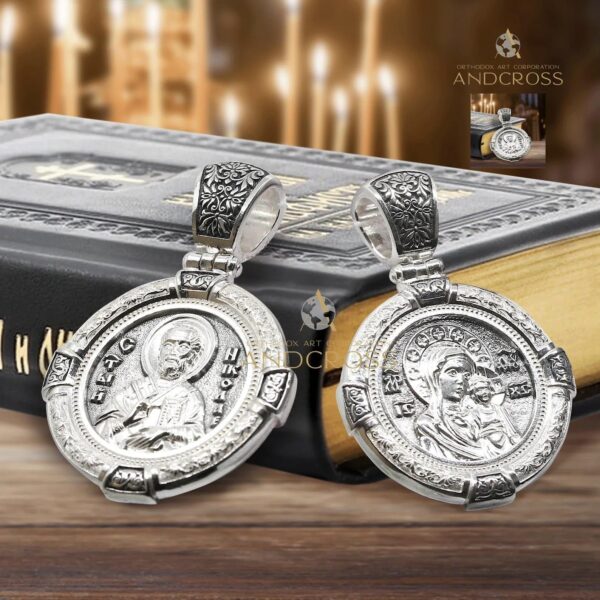
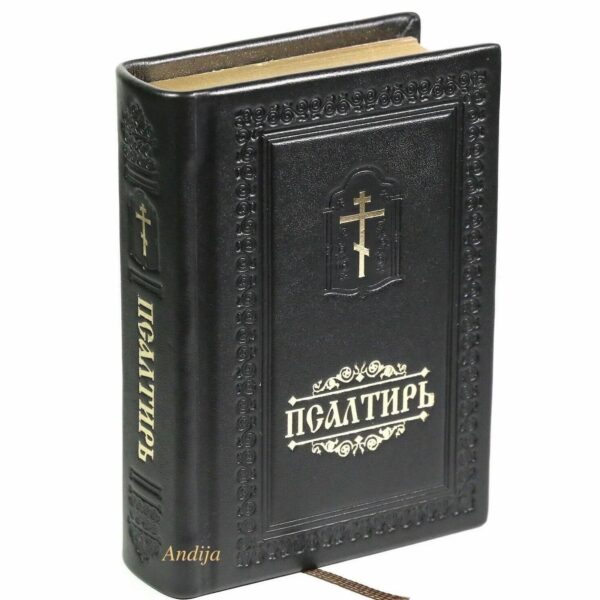
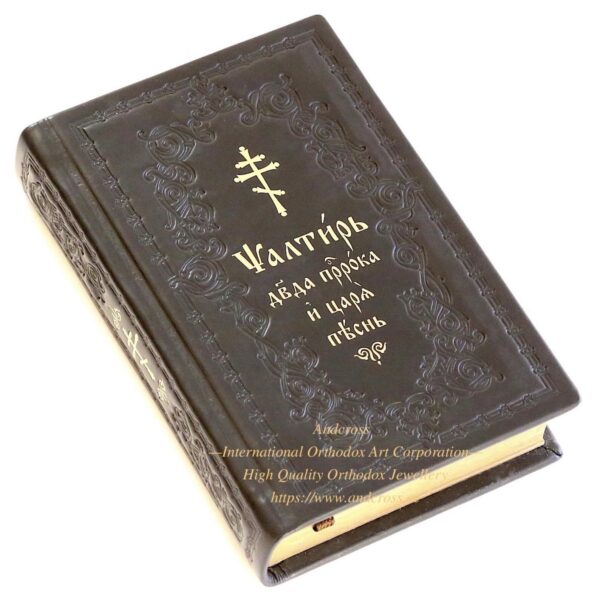
Andcross Orthodox online store offers a wide range of Orthodox products - gift sets, icons, icon cases, books, monastery candles, jewelry and much more. Some of the products of our own production, as well as from other suppliers - monasteries, temples, masters of the entire Orthodox world.
Andcross Orthodox Online Store - Established in 1999
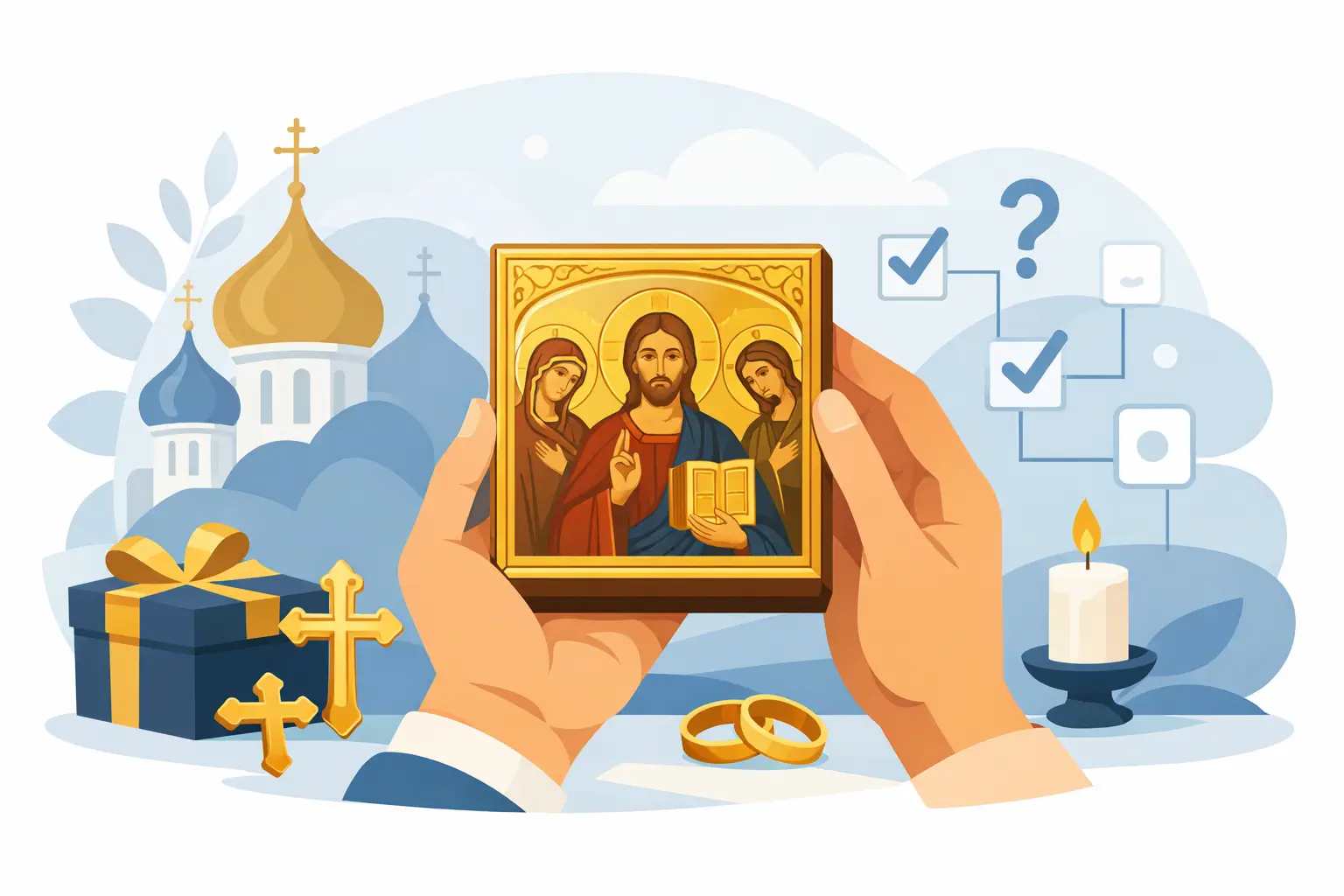
A gold Orthodox icon gift is not chosen in the same way as ordinary jewelry or home decor. Its beauty matters, but its first purpose is prayer. Whether it is presented at a baptism, wedding, name day, Christmas, or a difficult moment in someone’s life, an icon should help turn the heart toward Christ, His Most Pure Mother, and the saints.
A carefully made icon in a gold-plated or silver-and-gold setting can become a lasting part of a family’s prayer corner. The right choice joins canonical sacred imagery with workmanship worthy of the occasion: a clear iconographic face, a durable finish, meaningful inscription, and a case suitable for giving.
For a personal gift, the recipient’s patron saint is often the most fitting subject. An icon of Saint Nicholas, Saint George, Saint Olga, Saint Xenia of St. Petersburg, Saint Seraphim of Sarov, or another beloved saint is both deeply personal and suitable for daily prayer. If you know the recipient’s baptismal name, ask which saint they honor. This avoids guessing based only on a civil name, since several saints may share it.
For a child’s baptism, a guardian angel icon or the child’s named saint is a traditional and cherished choice. A small gold-toned icon can be kept near the crib at first and later placed in the child’s own icon corner. For a godparent, this is a meaningful way to offer something that can remain with the child for years rather than a gift limited to the day itself.
When the recipient is unknown to you, choose an icon with broad devotional meaning. Christ Pantocrator, the Theotokos of Kazan, the Theotokos of Vladimir, the Guardian Angel, and Saint Nicholas are appropriate for many Orthodox homes. Christ Pantocrator is especially fitting for a household icon corner, while an icon of the Mother of God brings comfort, intercession, and maternal protection to family life.
The occasion guides both the image and the presentation. A wedding icon is traditionally connected with the marriage blessing. Many Orthodox families give an icon pair of Christ the Savior and the Most Holy Theotokos to the bride and groom. The pair expresses the Christian foundation of married life: the couple is called to look to Christ and receive the intercession of His Mother.
For a housewarming, Christ Pantocrator, the Theotokos, or a guardian angel icon is a reverent choice. A home may be new, but the purpose of the icon is not decorative. It establishes a place for prayer and reminds those who live there that their home belongs under God’s mercy.
Memorial gifts require particular sensitivity. An icon of the Savior, the Theotokos, or the deceased person’s patron saint may be given to a grieving family as a quiet expression of prayerful remembrance. Avoid treating it as a sentimental keepsake alone. A simple accompanying note promising prayer for the departed is more fitting than elaborate language.
Name days and feast days are ideal for smaller icons in a gift box. Their scale makes them easy to place on a desk, bedside table, or travel prayer shelf. For a priest, godparent, or close family member, a larger framed icon or an icon made with a precious-metal riza may better reflect the importance of the relationship.
A gold Orthodox icon gift may take several forms, and the difference affects price, appearance, and long-term care. Gold plating is a refined and accessible choice for a devotional gift. It brings warmth and radiance to the icon’s halo, frame, or relief details without requiring the cost of solid gold.
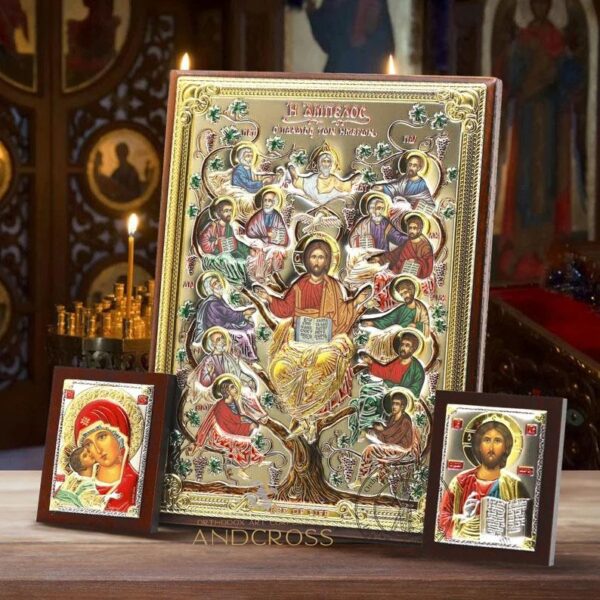
Some icons combine a printed or painted sacred image with a silver or silver-plated covering, often accented with gold plating. These metal coverings, sometimes called rizas or oklads, frame the holy face and hands while honoring the traditional Orthodox use of precious materials for sacred images. Fine relief work can show floral ornament, Byzantine patterns, crosses, vine motifs, or details linked to the saint’s life.
Solid gold is generally reserved for small pendants, custom icons, and exceptional commissions. It is precious and enduring, but it is not automatically the best choice for every recipient. A well-crafted gold-plated icon with a canonical image, protective case, and clear craftsmanship can be a more practical gift for a child, a traveler, or a family beginning an icon corner.
Ask for clear material details before purchasing. The description should state the icon’s dimensions, base material, metal finish, image type, and whether a gift case is included. If silver is used, its purity should be identified where applicable. This kind of information helps the giver understand exactly what is being offered and helps the recipient care for it properly.
Yellow gold has the familiar warmth of traditional sacred ornament and works beautifully with deep blue, burgundy, red, and natural wood tones. White gold or silver-toned details can feel quieter and more contemporary while remaining fully suitable for Orthodox iconography. Rose gold may be chosen for a softer presentation, particularly for an icon intended for a woman or for a baptismal gift, though the recipient’s personal taste should not override the sacred character of the image.
The most important consideration is not fashion. It is whether the metalwork supports the icon rather than distracting from it. The face of Christ, the Theotokos, or the saint should remain clear, prayerful, and faithful to Orthodox tradition.
An icon is a sacred image of the Church, not merely religious-themed art. This is why canonical imagery is central when choosing a gift. The composition, inscriptions, gestures, colors, and attributes of the saint should be recognizable within Orthodox tradition. A saint should not be reduced to a generic portrait, and Christ or the Theotokos should be depicted with the reverence appropriate to holy images.
Pay attention to the small details. A well-made icon has a balanced composition, readable lettering, clean metal edges, secure backing, and a finish that does not appear thin or careless. If the icon includes a stand, check that it can rest securely. If it is intended for hanging, the hardware should be properly placed and strong enough for the icon’s weight.
Handmade work brings welcome variation. Slight differences in the tone of a wooden base, the placement of relief ornament, or the grain of natural materials can show the character of artisan production. What should not vary is the integrity of the sacred image and the quality of its construction.
Some buyers specifically seek icons made in workshops connected with monasteries, temples, or Orthodox craftspeople. This can be especially meaningful, provided the source and materials are described honestly. Consecration is also valued by many Orthodox Christians. If an icon has not been consecrated, it may be brought to a priest for blessing according to local parish practice. Do not assume that every icon is consecrated unless this is clearly stated.
A gift can be beautiful and still be inconvenient if its size does not suit the recipient’s life. Small icons are excellent for baptisms, name days, travel, office desks, and bedside prayer. They are easy to present in a fitted case and can become an everyday companion.
Medium-sized icons are often best for a home prayer corner. They have enough visual presence to be seen clearly during prayer without requiring a large wall or shelf. Larger icons are appropriate for a family home, church setting, wedding blessing, or significant anniversary, but they need a deliberate place of honor.
If the recipient lives in a dormitory, apartment, or shared home, a compact icon may be more thoughtful than a large statement piece. On the other hand, a family establishing a permanent home may treasure a larger icon for generations. The best size depends on how the icon will actually be received, placed, and prayed before.
Gift-ready presentation is not an unnecessary luxury for a sacred item. A sturdy case protects the icon during shipping and gives the recipient a proper place to keep it until it is placed in the home. Velvet-lined boxes, wooden cases, and carefully fitted packaging are especially suitable for gold-plated icons and icons with silver relief work.
When giving the icon, there is no need for a long speech. You may simply say, “May this holy icon be a blessing in your home,” or, “May your patron saint pray for you.” If you are uncertain about Orthodox custom, a sincere and restrained message is better than elaborate wording.
An icon should not be left on the floor, treated as a casual decorative object, or placed among items that may damage it. Encourage the recipient to keep it clean and dry, away from direct sunlight, perfume, harsh cleaning products, and excessive humidity. A soft dry cloth is usually sufficient for gentle dusting of a metal setting.
A gold Orthodox icon gift carries the greatest meaning when it is chosen with knowledge of the person, the feast, and the holy image itself. Let the gift be beautiful enough to honor the occasion, carefully made enough to endure, and prayerful enough to remain close to the recipient long after the wrapping is set aside.




Use this form to find things you need on this site