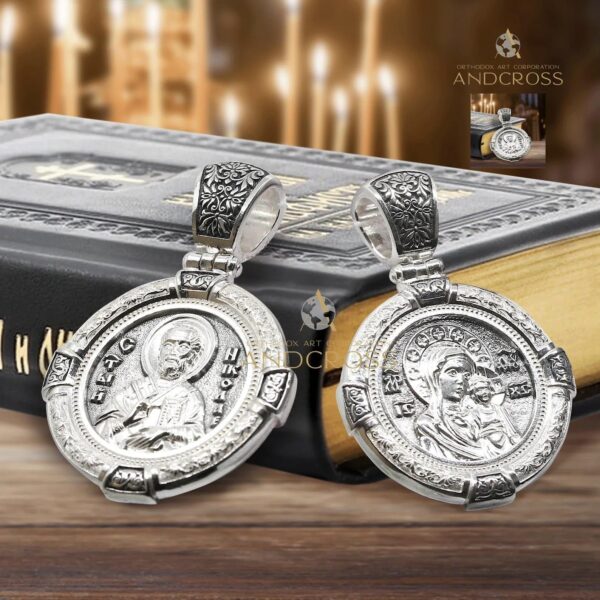
Andcross Orthodox online store offers a wide range of Orthodox products - gift sets, icons, icon cases, books, monastery candles, jewelry and much more. Some of the products of our own production, as well as from other suppliers - monasteries, temples, masters of the entire Orthodox world.
Andcross Orthodox Online Store - Established in 1999
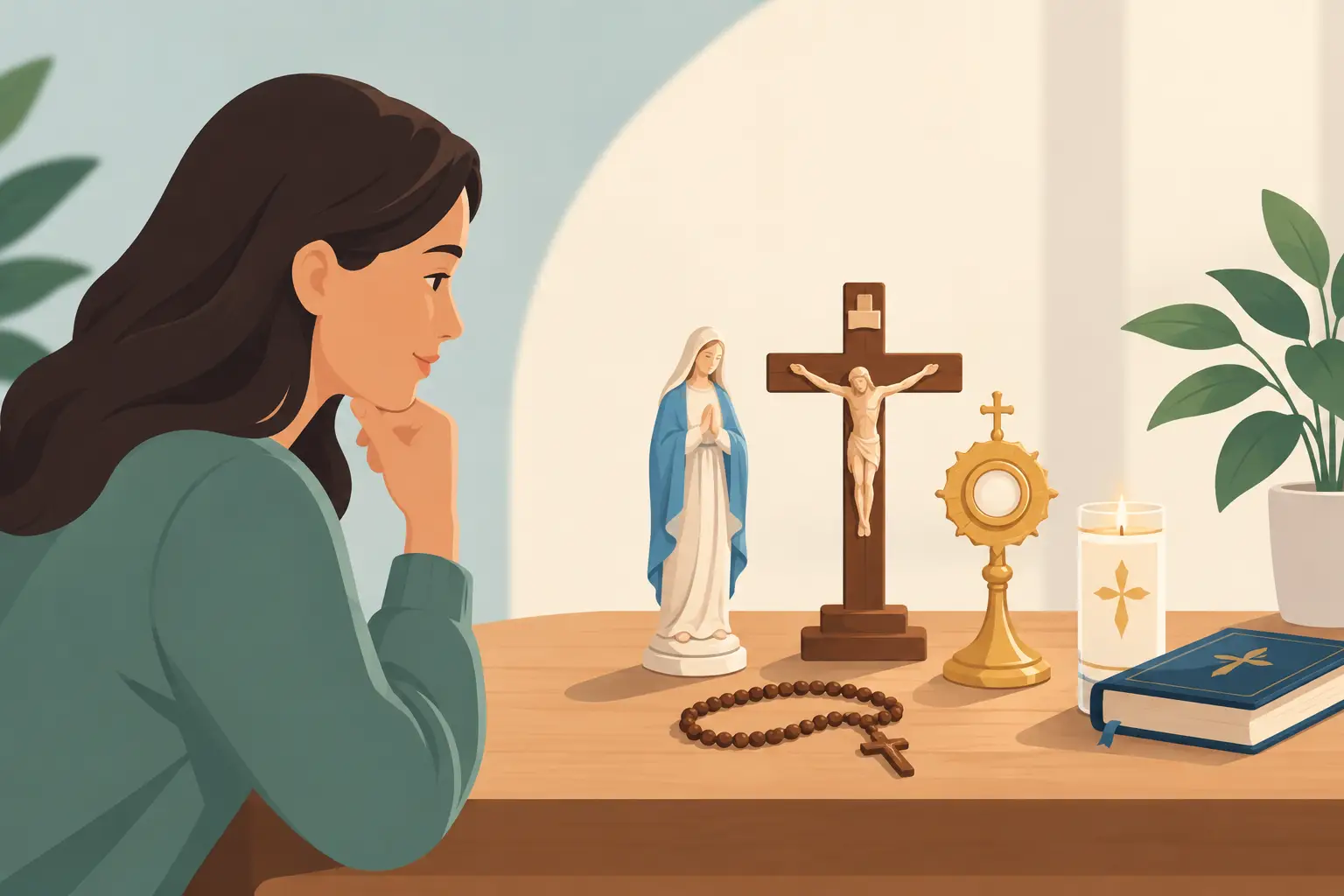
A cross worn close to the heart, an icon placed in the home prayer corner, or a candle lit before a beloved saint should never be chosen as mere decoration. Selecting consecrated devotional items is an act of reverence. The right choice joins practical care – authentic workmanship, proper materials, and a suitable purpose – with a sincere desire to live and pray within the faith of the Church.
For Orthodox Christians, sacred articles help direct the mind and heart toward Christ. They may mark a baptism, strengthen a daily prayer rule, honor the memory of someone departed, or become a gift that quietly accompanies its recipient for many years. Their value is not measured only by silver purity, gold plating, size, or presentation, though these details matter. It is also found in the holy image, the Cross, the prayers of the Church, and the faithful use of the person who receives them.
Consecration and blessing are not marketing descriptions or promises of good fortune. A consecrated or blessed devotional article has been set apart for sacred use through the prayer of the Church. It is therefore treated with respect, kept in a fitting place, and used prayerfully rather than casually.
Practices may differ among parishes and Orthodox jurisdictions. Some items are received already blessed through a monastery, temple, or priest, while other items are purchased and then brought to one’s parish priest for blessing. If there is uncertainty, the wisest course is simple: ask your priest. He can advise whether a particular cross, icon, prayer rope, or other article should be blessed and how it should be used.
This distinction also protects against superstition. An icon is not a charm, and a pectoral cross is not an object of automatic protection apart from faith, repentance, and prayer. Sacred articles call us toward Christ. They are honored because of the holy persons and events they depict, and because they serve the prayerful life of the Church.
Before comparing finishes or dimensions, consider why the item is needed. A baptismal cross has different practical requirements from a large icon for an icon corner. A memorial candle calls for a different choice than a wedding gift. Purpose helps bring clarity to a large and beautiful range of Orthodox devotional goods.
For personal wear, a cross or pendant should be durable enough for regular use and comfortable in size and weight. Silver is cherished for its traditional beauty and daily wear, while gold and gold-plated pieces may be chosen for a milestone gift or a more formal presentation. A child’s baptismal cross should be modest, smooth-edged, and appropriately sized. Adults may prefer a more detailed Russian Orthodox cross, an image of Christ, the Theotokos, or a patron saint.
For the home, an icon should suit both the space and the household’s prayer life. A smaller icon of Christ Pantocrator, the Mother of God, or a patron saint may be ideal for a bedside table or a modest prayer corner. A larger icon can serve as a central image in a family icon corner. Consider whether the recipient already has icons of Christ and the Theotokos, especially when selecting a gift set.
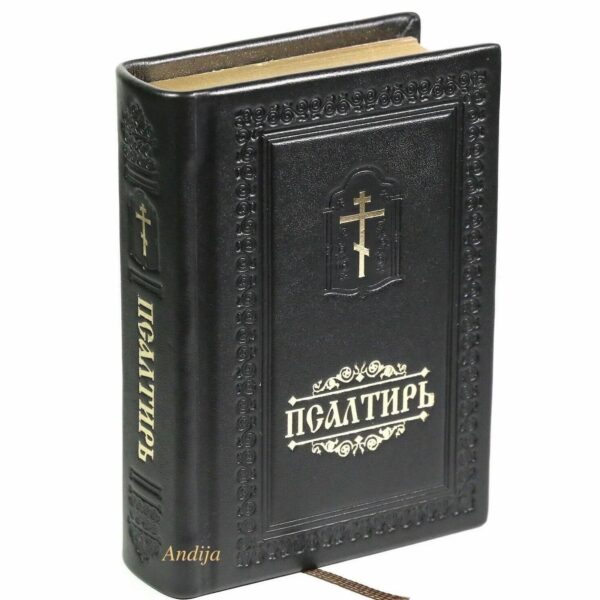
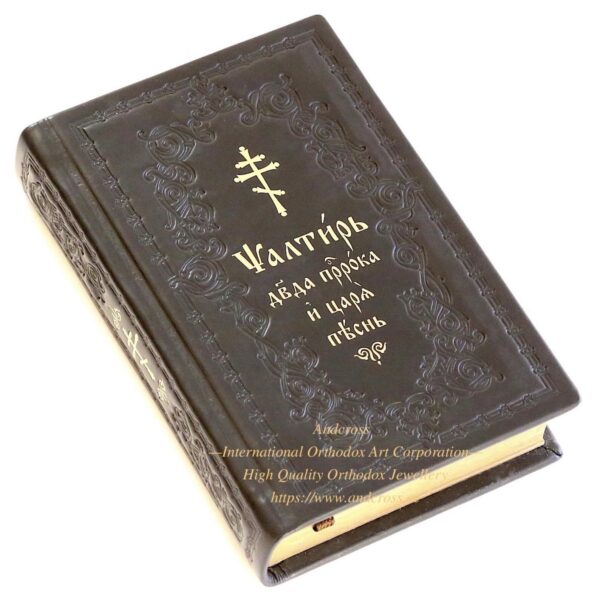
For church observances and remembrance, monastery candles, Psalters, Gospels, and prayer books offer a deeply fitting character. They are chosen not only for beauty but for use: prayer for the departed, preparation for a feast, daily reading, or quiet intercession before an icon.
Orthodox iconography is not simply religious artwork. It is a visual confession of the Incarnation, shaped by the Church’s theology and tradition. When selecting an icon, look first for a recognizable, canonical image and a clear identification of the saint or feast.
The saint’s name matters. If an icon is intended for a namesday, baptism, or personal devotion, confirm the recipient’s baptismal name and patron saint. Names that seem identical in English can refer to different saints, and several saints may share one name. A little care avoids a well-intended but unsuitable gift.
The same discernment applies to crosses. Orthodox crosses appear in several established forms, including the familiar eight-pointed Russian Orthodox cross. Its details carry theological meaning, not ornamental excess. The slanted lower bar, for example, recalls the two thieves crucified with Christ and the judgment expressed at Golgotha. Choose a design that is faithful to tradition and appropriate to the wearer’s background, while remembering that Orthodox Christians across the world may have different local forms of the Cross.
Quality of execution matters because sacred imagery deserves careful treatment. Look for legible inscriptions, balanced proportions, clean relief work, securely set elements, and respectful facial features in icon craftsmanship. Handmade work often bears small signs of the human hand. These are not defects when the workmanship is sound; they can be evidence of a piece made with patient attention rather than mass-produced indifference.
A devotional item should be worthy of its sacred purpose, but the most expensive choice is not always the most fitting one. The right material depends on use, budget, and the occasion.
Sterling silver is a lasting choice for crosses, pendants, rings, and icon settings. It has a quiet dignity, develops character over time, and can be suitable for daily wear when cared for properly. Gold-plated and gold-toned pieces provide warmth and a gift-ready appearance at a more accessible price, though plating requires gentler treatment than solid gold. For heirloom commissions, solid gold, platinum, or custom-made pieces may be appropriate, particularly for baptisms, weddings, or a family gift intended to be passed down.
Examine practical specifications as carefully as the image itself. For jewelry, check the dimensions, metal purity, bail opening, chain compatibility, and whether a chain is included. For icons, consider height, width, thickness, hanging hardware, and whether the piece is framed, mounted, or intended for a stand. These details prevent disappointment and help ensure the item can be used as intended from the day it arrives.
Gift presentation also has a proper place. A well-made case or gift box protects an icon or cross and makes the offering suitable for a baptism, feast day, anniversary, or namesday. Yet presentation should serve reverence, not overshadow it. The most meaningful gift is one chosen with knowledge of the recipient’s faith and offered with a prayerful heart.
The source of a devotional item deserves attention. Articles made in monasteries, supplied by temples, or crafted by experienced Orthodox artisans carry a clear connection to the life of the Church. Established workshop stores can also offer carefully made pieces according to traditional canons, along with the practical assurances needed for an online purchase: accurate descriptions, responsive service, secure payment, and dependable delivery.
Read product information closely. A trustworthy description should identify the saint or image, explain the material and finish, provide measurements, and state whether the item is handmade, monastery-made, blessed, or intended to be brought for blessing. Vague language should invite questions, not assumptions.
For a custom order, communicate the purpose clearly. Mention whether the piece is for a baptism, memorial, wedding, clergy gift, or home icon corner. Specify the saint, desired inscription, metal, dimensions, and deadline. A skilled workshop can guide the design, but sacred details should never be guessed.
A devotional gift is personal. If you do not know whether someone wears a cross, ask discreetly or choose an icon, prayer book, or candle set that can be received without pressure. For a newly baptized Orthodox Christian, a small icon of the Savior, the Theotokos, or the patron saint is often a gentle and enduring gift. For someone mourning a loss, a Psalter, memorial candle, or icon may offer a more fitting expression of prayer than an elaborate piece of jewelry.
When giving a consecrated or blessed article, include a simple word about its purpose. Let the recipient know that an icon belongs in a clean, respectful place and that a cross is not to be treated as an accessory without meaning. There is no need for elaborate explanation. Reverence is often best conveyed through quietness.
A sacred object enters a household as an invitation to prayer. Choose it with care, have it blessed when appropriate, and let its beauty turn the heart not toward possession, but toward the One whom the Church glorifies.



Use this form to find things you need on this site