Andcross Orthodox online store offers a wide range of Orthodox products - gift sets, icons, icon cases, books, monastery candles, jewelry and much more. Some of the products of our own production, as well as from other suppliers - monasteries, temples, masters of the entire Orthodox world.
Andcross Orthodox Online Store - Established in 1999

A prayer book is often opened in the quietest part of a home: before the icon corner at dawn, after a difficult conversation, beside a candle on the eve of a feast, or in remembrance of one who has departed. Orthodox prayer books give words to those moments. They preserve the prayers received by the Church and place them within reach of the faithful, whether one has prayed from childhood or is learning the order of Orthodox life for the first time.
Choosing one well is not simply a matter of finding an attractive cover. The language, contents, print size, binding, and liturgical tradition all affect whether the book will truly serve a daily rule of prayer. A carefully chosen volume can become a trusted companion for many years, used at the family icon corner, carried on a journey, and eventually given to a child, godchild, or loved one.
An Orthodox prayer book is not meant to replace participation in the Divine Liturgy, confession, spiritual counsel, or the prayer of the parish. It supports the prayer offered at home and helps the Christian enter more attentively into the worship of the Church. Its familiar petitions teach the heart to pray not only for personal needs, but also for the whole world, the living and departed, those who suffer, and those who serve God.
Most prayer books begin with the usual opening prayers and include morning and evening prayers, prayers before and after Holy Communion, the canons and Akathists commonly used in private devotion, and prayers for particular needs. Many also contain selections from the Psalms, prayers for travelers and the sick, a rule of preparation for confession, and prayers for departed relatives.
The best book is therefore not always the largest. A complete volume may be invaluable for an experienced reader who follows longer services at home. Yet a smaller daily prayer book, opened consistently, may be the wiser beginning for someone establishing a first prayer rule. Consistency, attention, and humility matter more than the number of pages read.
Before selecting a volume, consider when and how it will be used. A daily prayer book is usually the natural foundation for a home prayer corner. Look for the morning and evening prayers, the Trisagion prayers, the Creed, Psalms, prayers before meals, and prayers for those close to you. Clear section headings are especially helpful when the book is used before work or late at night.
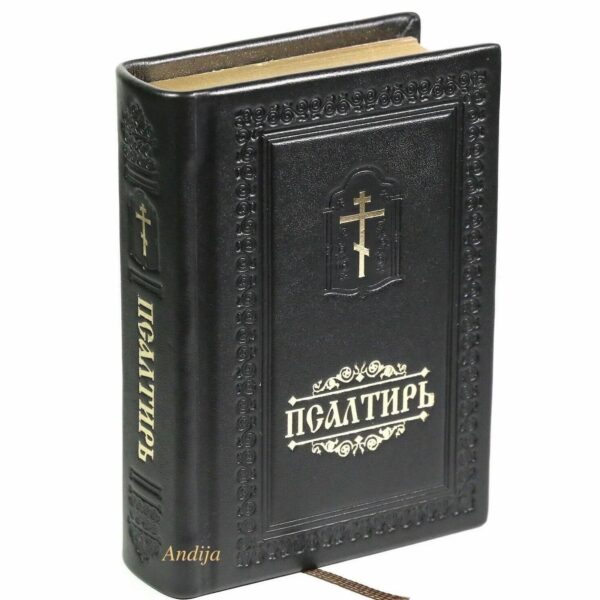
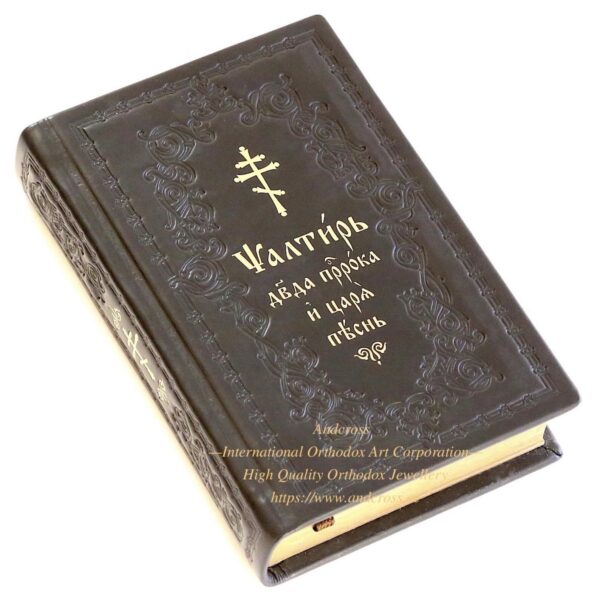
A Psalter has a different place. The Psalms are central to Orthodox worship and personal prayer, offering repentance, gratitude, grief, courage, and praise in words sanctified by centuries of use. Many Orthodox Christians read a kathisma each day or turn to particular Psalms during illness, sorrow, or thanksgiving. A separate Psalter is often easier to use regularly than a prayer book containing only a short selection.
The Holy Gospel also belongs naturally in an Orthodox home. A prayer book teaches established prayers; the Gospel places the words and deeds of Christ before the reader. For many families, reading a short Gospel passage after morning prayers brings a steadier rhythm than attempting an overly ambitious rule.
More specialized books should be chosen for a clear purpose. An Akathist book may be fitting for devotion to the Theotokos, Christ, or a beloved saint. A book of canons can support preparation for Holy Communion. Horologia, service books, and liturgical texts are precious resources for readers who understand their order and have the blessing to use them, but they can be difficult starting points for private prayer.
Prayer books contain more than most people can read every day. This is intentional: the Church gives abundant words for different seasons and needs. It does not mean that every prayer must be read at every occasion.
A priest or spiritual father can help establish a prayer rule suited to one’s circumstances, health, family responsibilities, and experience. A parent caring for young children, a person working long shifts, and a retired reader may each need a different rule. Begin reverently, without haste, and avoid treating prayer as a task to complete. If a book encourages faithful daily prayer rather than discouragement, it is serving its purpose.
For US readers, language is often the first practical decision. English-language Orthodox prayer books make daily use more immediate, especially for converts and for families raising children in English. The words can be understood and prayed with attention rather than merely sounded out.
Church Slavonic, Russian, Greek, Romanian, Serbian, and other traditional-language editions remain deeply meaningful for many Orthodox households. They connect readers to the prayers heard in their parish and to the faith of parents and grandparents. A bilingual edition can be especially valuable when a family wishes to preserve a heritage language while also understanding the text in English.
Translations and arrangements differ among Orthodox jurisdictions. Names, calendar references, wording, and the inclusion of certain prayers may vary. This does not make one prayer book inferior to another. It means that a reader should seek a book consistent with the tradition and parish life in which he or she worships. When uncertain, ask a parish priest or trusted reader which edition is customary.
Prayer is embodied. A book that opens poorly, has fragile pages, or uses print too small to read by lamplight may remain on a shelf no matter how beautiful its contents are. For a book intended for frequent use, a durable sewn or well-made binding is worth considering. A firm cover protects the text during travel and helps the volume endure years of opening at the icon corner.
Print size deserves special attention. Compact prayer books are convenient for a purse, briefcase, or bedside table, but their type can be difficult for older readers or for prayer in low light. A larger-format edition may be more suitable for family use, communal reading at home, or anyone who finds small print tiring.
A ribbon marker, strong paper, clear typography, and gilded or reinforced page edges are not merely decorative details. They can make a devotional book easier and more pleasant to use. Fine craftsmanship honors the sacred text, but practicality should guide the choice. A simple, well-bound volume that is prayed from daily is more valuable than an elaborate edition left unopened.
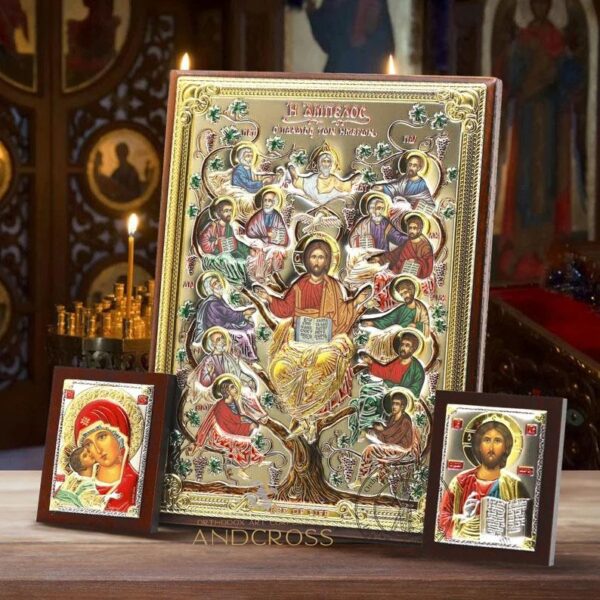
There is no need to gather every Orthodox book at once. A modest, faithful beginning may include a daily prayer book, a Psalter, and a Gospel, placed near the family icons, Cross, and candles. Over time, a reader may add an Akathist collection, a book of lives of the saints, or texts for Great Lent and the Pascha season.
Keep the books respectfully, away from ordinary clutter. In homes with children, allowing them to see parents open the prayer book and make the sign of the Cross quietly teaches more than many explanations. A child may begin by listening to a short Psalm, saying the Lord’s Prayer, or reading one small petition aloud.
Prayer books also make meaningful gifts for baptisms, name days, weddings, and major feast days. For a baptismal gift, an English prayer book with clear daily prayers is often a gracious choice, particularly if the child will grow up in an English-speaking parish. For a godparent, spouse, or parent with strong cultural ties, a Russian, Greek, or bilingual edition may carry special personal meaning. A beautiful icon, cross, or prayer rope may accompany the gift, but the book itself should be selected for the recipient’s real devotional use.
The pages of a prayer book will not remove every distraction or make prayer easy. There will be mornings when the words seem dry and evenings when fatigue limits prayer to the sign of the Cross and a single Psalm. Such moments are not failures. Returning to prayer with honesty is itself an offering.
Choose a book faithful to Orthodox tradition, readable in the language of your heart, and sturdy enough for daily hands. Place it where prayer is offered. Then open it again tomorrow, before the icons, and let the prayer of the Church slowly become your own.



Use this form to find things you need on this site