Andcross Orthodox online store offers a wide range of Orthodox products - gift sets, icons, icon cases, books, monastery candles, jewelry and much more. Some of the products of our own production, as well as from other suppliers - monasteries, temples, masters of the entire Orthodox world.
Andcross Orthodox Online Store - Established in 1999
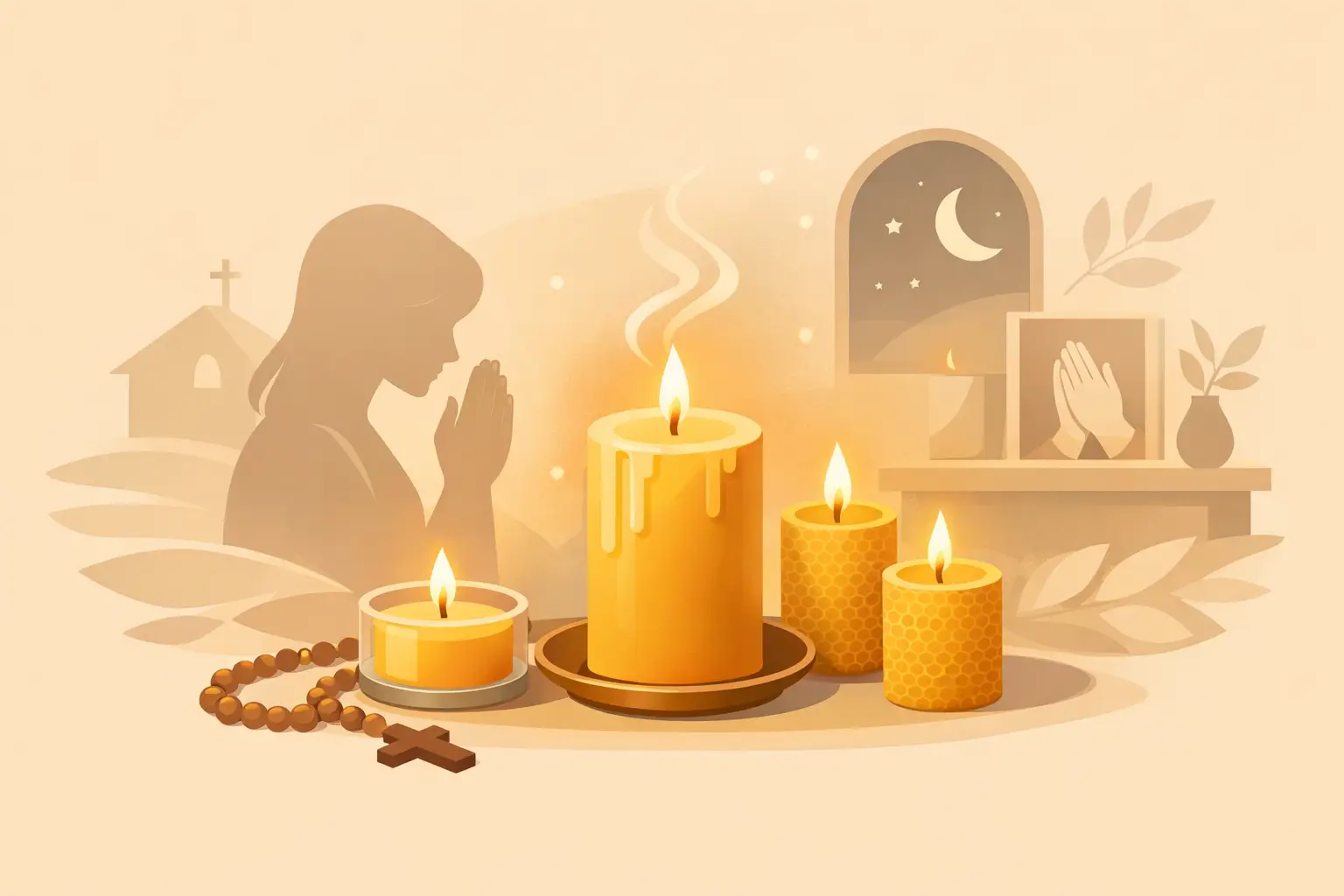
A beeswax candle before an icon is a small offering of attention: a visible flame beside the image of Christ, the Theotokos, or a beloved saint. It can gather a household for morning or evening prayer and mark a feast, memorial, or private petition. Yet beeswax candle safety must always accompany this devotion. A prayer candle is never merely decoration, and its flame should never be left to burn without the care and watchfulness that a sacred corner deserves.
Beeswax is cherished in Orthodox tradition for good reason. Pure beeswax candles have long been associated with prayer, sacrifice, and the offering of one’s best to God. Their warm light and gentle honeyed fragrance can bring peace to a home icon corner. Still, natural material does not mean risk-free material. Safe use depends on the candle’s wick, its holder, its location, and the person tending it.
A candle flame is open fire. Even a narrow taper can ignite a curtain, dried flowers, paper prayer cards, an icon cloth, or accumulated dust if it is placed too closely. Melted wax can also make a holder unstable, particularly when a thin candle is set into a loose socket or softened wax without a firm base.
In a prayer corner, the greatest risks are usually simple ones: a candle burned too close to an icon shelf, a flame beneath a lampada or decorative canopy, or a taper left burning after the family has left the room. These are preventable dangers, but they require a deliberate habit. Reverence is expressed not only in lighting the candle, but also in placing and extinguishing it responsibly.
Beeswax tends to burn more slowly than many paraffin candles, but burn time varies with the candle’s diameter, wick size, drafts, and purity. Do not assume that a small flame will remain small or that a candle will safely burn itself out. A draft can make the flame lean, lengthen, and heat nearby objects far more quickly than expected.
The place where a candle burns matters as much as the candle itself. Set the candleholder on a level, sturdy, heat-resistant surface. Stone, ceramic tile, metal, and a substantial glass tray are generally more dependable than a lightweight wooden shelf, cloth-covered table, or narrow ledge.
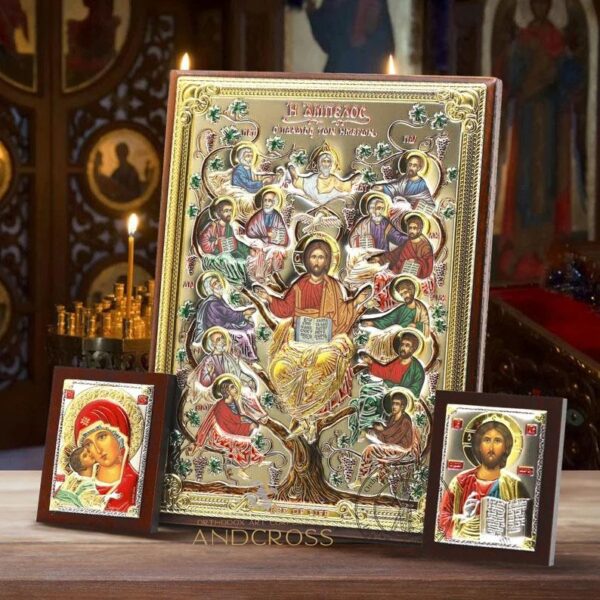
Keep a clear space around the flame. Icons themselves should be honored and protected from soot, heat, and wax. Place the candle in front of the icon corner only when there is generous room between the flame and the icon, shelf, wall hanging, and any paper items. If your icons are arranged in a small shelf shrine, a candle may be safer on a separate stand below or beside it than directly under the shelf.
Avoid placing candles near curtains, blinds, hanging tassels, artificial greenery, dried palms, flowers, or Christmas decorations. These items may look distant when the candle is first lit, but a moving flame and rising heat can reach them. Keep prayer books, memorial lists, matchboxes, and loose paper well away from the candleholder.
A good holder should be nonflammable, broad enough to catch wax, and heavy enough that it cannot tip easily. Brass and other metal candleholders used in Orthodox homes are beautiful and practical when made with a stable base. For slender monastery tapers, use a holder designed for the candle’s width. Never force a candle into a holder by shaving it with a knife while holding it in the air. Instead, secure it carefully while the holder rests on a stable surface, using a small amount of softened beeswax only if the holder is intended for that purpose.
Smoke and heat can gradually affect painted icons, printed icon panels, carved crosses, and wooden shelves. A blackened wall or darkened icon corner is not a sign of deeper devotion. It usually means the candle has been too close, the wick is too long, or the room has poor airflow.
Allow enough distance for heat to rise without touching sacred objects. If a candle repeatedly leaves soot, trim the wick after the wax has cooled and consider whether a draft is causing an uneven burn. A properly burning beeswax candle should have a modest, steady flame rather than a tall, flickering one.
Before lighting a candle, take a moment to check the area. Make sure the holder is upright, the candle is secure, and nothing combustible is nearby. This small pause can become part of the prayerful rhythm of the home.
When lighting a new beeswax taper, keep the wick short, usually about one-quarter inch. A wick that is too long may create excess smoke, a large flame, and a mushroom-shaped carbon buildup. If the candle has been stored in a warm place and has softened, handle it gently so it does not bend or lean in the holder.
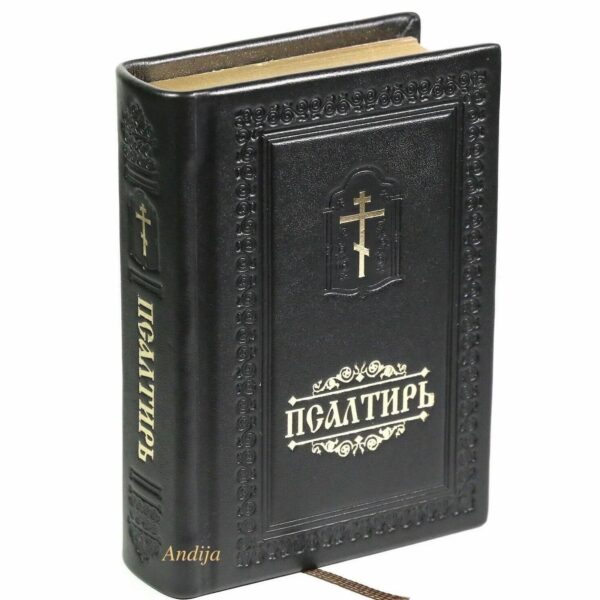
While the candle is burning, remain in the home and check it regularly. A candle may be lit during the Jesus Prayer, before reading the Psalter, at the beginning of family prayers, or during a quiet vigil for someone in need. It does not need to burn continuously to make the prayer sincere. If you must leave the room for an extended time, go to sleep, answer the door, or begin cooking, extinguish it first.
Do not move a lit candle. Hot wax can spill unexpectedly, and even a small movement may send the flame toward clothing, hair, or a nearby icon cloth. If you need to relocate it, extinguish the flame, let the wax cool and firm, then move the holder with care.
For many households, a candle snuffer is the safest way to put out a candle. Gently lowering the snuffer over the flame reduces smoke and avoids scattering hot wax. Blowing out a taper can work, but do so carefully and from a short distance, especially when other candles, paper, or a hanging oil lamp are nearby. Never use water to extinguish hot wax, as it can cause splattering.
Children should learn that prayer candles are sacred and require adult care. Inviting a child to stand with a parent during evening prayers can teach both reverence and good habits, but a young child should not be asked to light, carry, or extinguish a candle alone. Keep matches and lighters stored out of reach.
Pets can be equally unpredictable. A cat climbing an icon shelf, a dog brushing against a low table, or a bird moving through the room can overturn a candleholder in seconds. Place burning candles where pets cannot reach or pass close to them. If this is difficult in a busy household, use a protected lampada designed for safe placement, or reserve open flames for times when an adult can remain present.
Apartment living brings another consideration: smoke detectors and close quarters. Never disable a detector because candle smoke causes an occasional alarm. Instead, improve the candle’s placement, trim the wick, and make certain there is adequate ventilation without creating a direct draft.
A well-made beeswax candle supports safer burning, though no candle can remove the need for supervision. Look for candles with a clean, centered wick, even shape, and a firm finish. A taper that leans from the beginning or has an off-center wick may drip unevenly and burn against one side of the holder.
Pure beeswax is often preferred for its traditional character and natural fragrance. However, beeswax candles may be softer in heat and can bend during warm-weather delivery or storage. Keep them in a cool, dry place away from direct sunlight, radiators, and car interiors. If a candle arrives slightly bent, allow it to rest at room temperature before trying to straighten it, and avoid using a misshapen taper until it can stand securely.
Candles from monasteries and Orthodox workshops are meaningful additions to prayer at home, especially for feast days, memorial prayers, and gifts. Their spiritual association does not change the practical rules of fire safety. Whether the candle is handmade, blessed, plain, or elaborately decorated, it must be placed in a proper holder and attended while lit.
There are seasons when the wisest choice is not to light a candle. A household with an infant, a person with limited mobility, curious pets, oxygen equipment, or severe respiratory sensitivity may need a different practice. Prayer before an icon does not depend on an open flame. The sign of the Cross, a lamp that is safely enclosed, the reading of a prayer, or simply standing quietly before the icon can preserve the same attentiveness.
If you use an oil lamp, follow its own safety instructions with equal care. Keep the reservoir stable, use the appropriate fuel, and never refill it while warm or burning. Do not place a lit oil lamp directly beneath icons or shelves simply because it is enclosed.
A well-kept icon corner should bring calm rather than concern. Light the beeswax candle with prayer, keep watch while it burns, and extinguish it with gratitude when your rule is complete. In this simple discipline, care for the home and reverence for holy things stand together.



Use this form to find things you need on this site