Andcross Orthodox online store offers a wide range of Orthodox products - gift sets, icons, icon cases, books, monastery candles, jewelry and much more. Some of the products of our own production, as well as from other suppliers - monasteries, temples, masters of the entire Orthodox world.
Andcross Orthodox Online Store - Established in 1999

A first prayer book is not meant to become another unread book on a shelf beside the icon corner. It is meant to be opened, held, and gradually made familiar through morning prayers, evening prayers, repentance, thanksgiving, and the quiet turning of the heart toward God. The best prayer books for beginners are therefore not always the largest or most elaborate editions. They are the books that help a person begin praying faithfully within the living tradition of the Orthodox Church.
For a newly received Orthodox Christian, a catechumen, or someone returning to regular prayer, the number of available editions can feel confusing. Some are compact and simple; others contain extensive services, canons, akathists, and prayers for nearly every need. Each has value. The right first choice depends on where a person is in the life of prayer and on the counsel of his or her priest.
An Orthodox prayer book teaches more than words. Its order forms the soul in the Church’s language of praise, confession, intercession, and hope. A good beginner’s edition should include a clear core of morning and evening prayers, prayers before and after Communion, prayers for meals, the Creed, selected Psalms, and common hymns or troparia.
Clarity matters. Look for readable type, sensible organization, and a translation that can be prayed aloud without feeling opaque. A prayer book may be traditional in language, but it should not be so difficult that a beginner abandons it after a few days. Reverence is not measured by struggling through a page one cannot understand.
It is also wise to choose a durable book. Prayer books are used repeatedly, often near candles, incense, icons, and a place set apart for prayer. A well-bound edition with a strong cover and clear printing becomes a steady companion over many years. For a baptism, chrismation, or feast-day gift, a prayer book presented with an icon, cross, or prayer rope can mark the beginning of a serious devotional life.
For most beginners, the best first prayer book is a standard Orthodox daily prayer book from a trusted Orthodox publisher or jurisdiction. It should present the ordinary prayers used by Orthodox Christians at home: the Trisagion prayers, Psalm 50, the Symbol of Faith, morning prayers, evening prayers, and short prayers throughout the day.
The value of this kind of book is its stability. Rather than searching for new words every morning, a person enters a prayer rule that has been received and prayed by generations of Orthodox faithful. The same petitions return day after day, and over time they begin to take root in memory.
A daily prayer book should not be treated as a task to complete perfectly. Beginners sometimes attempt every prayer in a lengthy section and become discouraged when life, illness, work, children, or fatigue interrupt them. It is usually better to pray a small rule with attention than many pages hurriedly. A priest may bless a person to begin with the Trisagion prayers, a Psalm, the Creed, and a few personal petitions, then add more gradually.
A compact Orthodox prayer book is often the most practical first purchase. It travels easily, fits in a bag or bedside drawer, and encourages consistency. Many include daily prayers, Communion prayers, brief services, and prayers for the departed. Its limitation is that it may not contain an extensive collection of canons and akathists, but that is often an advantage at the beginning. The essential prayers are easier to find.
A larger edition can serve someone who already attends services regularly and wants prayers for particular occasions, saints, journeys, illness, confession, or family needs. These books are rich resources, especially in a home where the Orthodox faith is being established across generations.
Still, more content does not automatically make a book better for a beginner. A comprehensive prayer book is most helpful when its basic daily sections are clearly arranged. If its size makes it intimidating, begin with its morning and evening prayers and let the rest remain available for later growth.
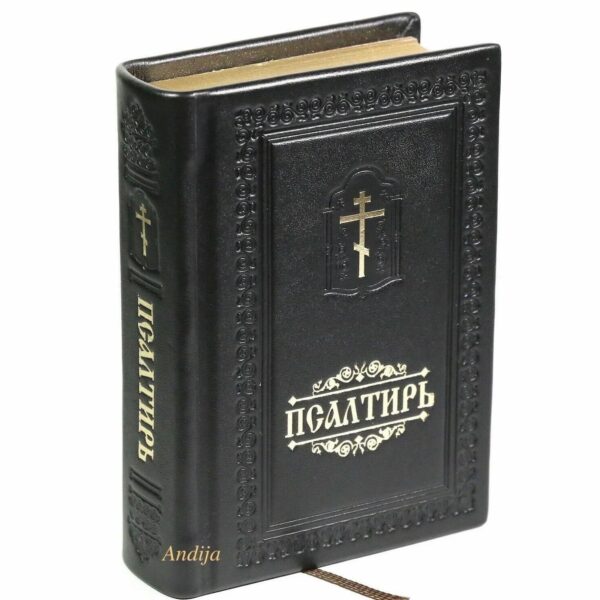
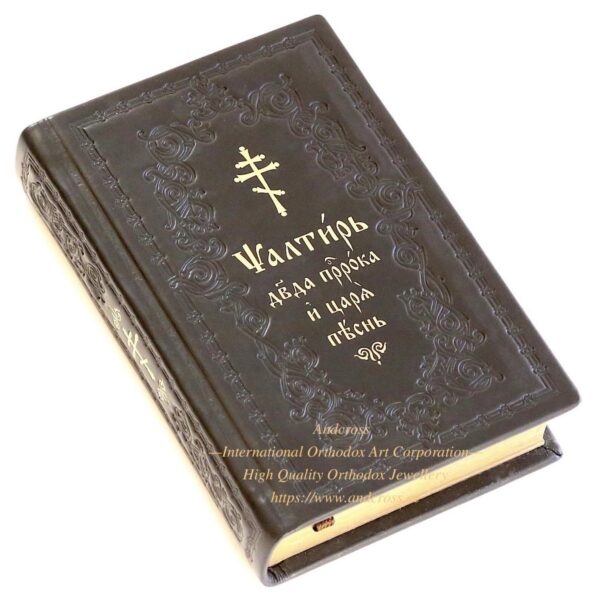
The Psalter is one of the Church’s great schools of prayer. Its words give voice to joy, grief, fear, repentance, trust, and praise. A beginner does not need to read the entire Psalter on a strict schedule to benefit from it. Reading one Psalm daily, or returning often to Psalms 50, 90, and 142, is a sound and prayerful beginning.
A Psalter is especially valuable during sorrow, illness, memorial periods, and times when personal words seem insufficient. Some editions include the kathismata divisions used in Orthodox worship, prayers before and after reading, and commemorations for the living and departed. Such features can be helpful, but they are not a requirement for a first Psalter.
The trade-off is simple: Psalms are not always easy. They contain strong language, lamentation, and images that may feel unfamiliar. Do not set the book aside because every line is not immediately understood. Read slowly, return to the same passages, and ask questions of a priest or experienced Orthodox Christian when needed.
Prayer and the Gospel should remain close together. A prayer book teaches a person how the Church speaks to God; the Gospels reveal Christ, whom the Church worships and follows. For that reason, a New Testament or a separate Gospel book is among the most fitting companions to a beginner’s prayer book.
A daily reading of even a short Gospel passage keeps prayer from becoming merely a private routine. The words of Christ correct, strengthen, and illuminate the heart. Many Orthodox Christians read the Gospel in the morning after prayers or in the evening before the final prayers of the day.
A complete Orthodox study Bible may be useful for someone seeking notes and Old Testament context, while a simple Gospel volume may be better for focused daily reading. Neither replaces the other. The best choice is the one that will be read with humility and regularity.
English-speaking Orthodox Christians will encounter prayer books in several styles of translation. Some use older, more formal English. Others use contemporary language while preserving traditional Orthodox theology and the structure of the prayers. There is no single answer for every household.
If you were received into a parish where a particular prayer book is commonly used, starting with that edition can be helpful. The words will sound familiar at home and during parish prayer gatherings. If English is not your first language, you may also value a bilingual book in Church Slavonic, Greek, Romanian, Arabic, or another language of your Orthodox inheritance. Yet a bilingual edition should support prayer, not make it inaccessible.
Avoid choosing solely by appearance. A leather cover, gilded page edges, or ornate icon on the front may make a prayer book a beautiful gift, but the interior must be usable. When selecting a book for someone else, consider readable print, familiar English, and an edition suited to the recipient’s parish tradition.
A beginner does not need a large library at once. Start with one reliable daily prayer book, a Psalter, and the Gospels or New Testament. This small foundation can sustain years of spiritual growth.
Later, a person may add an akathist book, lives of the saints, a book of canons, or a calendar of daily readings. These are worthy additions, but they should not distract from the first work: standing before God regularly, making the sign of the Cross, and praying with attention.
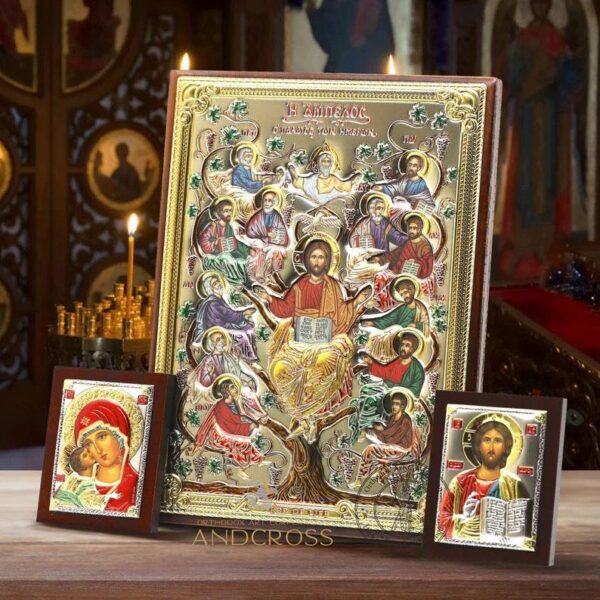
At Andcross, Orthodox devotional books can be chosen alongside icons, prayer ropes, monastery candles, and crosses for a prayer corner or a meaningful religious gift. When giving a prayer book, it is especially fitting to choose one that is sturdy, reverent in presentation, and appropriate to the recipient’s actual stage of life in the Church.
No book can replace pastoral guidance. A priest knows that prayer rules must be fitted to real people, not imposed as burdens. A parent with young children, a person working long shifts, an elderly believer, and a new convert may each need a different beginning.
Bring your prayer book to confession or ask your priest which prayers to start with. He may recommend a short morning and evening rule, a particular Psalm, prayers before sleep, or a period of reading the Gospels. Receive this guidance peacefully. The purpose is not to collect prayers, but to become faithful in prayer.
Choose a book that invites you to return tomorrow. Place it before your icons, open it at the appointed hour, and begin with the prayers you can offer sincerely. A small rule prayed with repentance and gratitude is a precious beginning before God.



Use this form to find things you need on this site