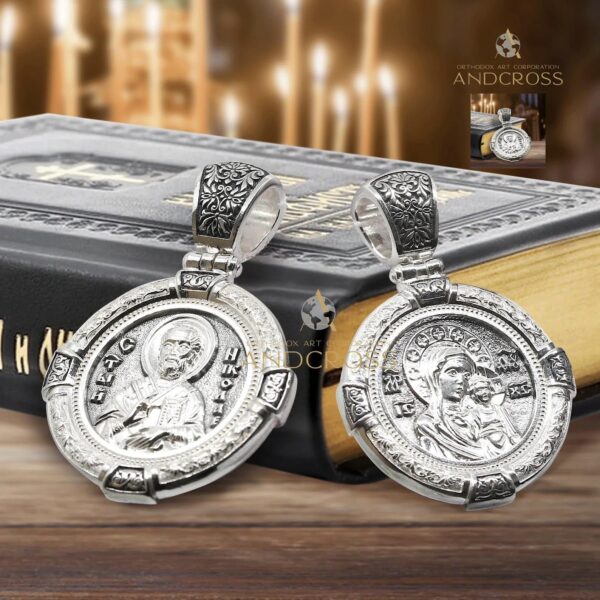
Andcross Orthodox online store offers a wide range of Orthodox products - gift sets, icons, icon cases, books, monastery candles, jewelry and much more. Some of the products of our own production, as well as from other suppliers - monasteries, temples, masters of the entire Orthodox world.
Andcross Orthodox Online Store - Established in 1999
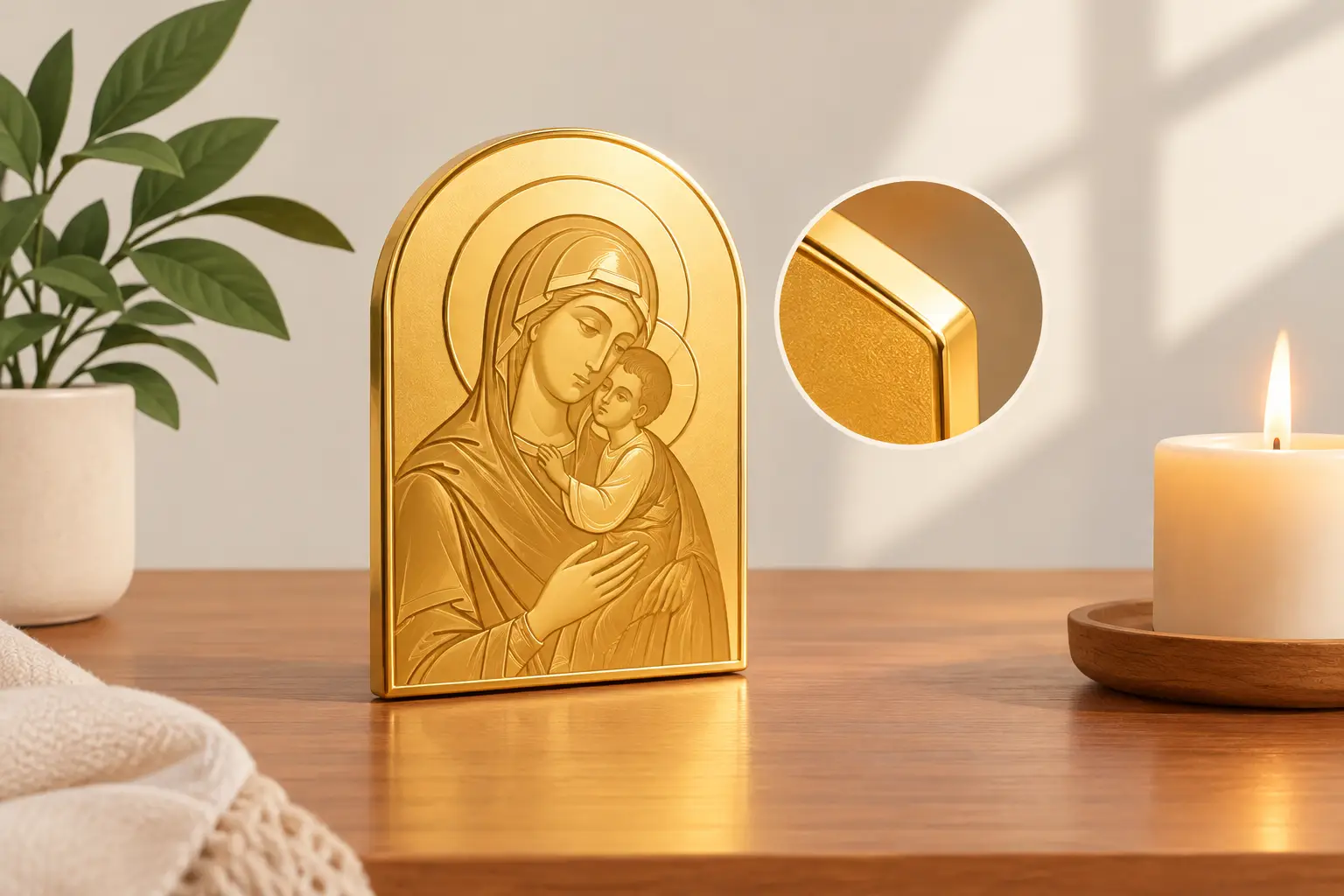
A gold-plated icon may stand for years in a family prayer corner, catching the quiet light of a vigil lamp and remaining beautiful through daily prayer. But are gold-plated icons durable in the practical sense? Yes, when the icon is well made and treated with the reverence due to a sacred object – though gold plating is a finish, not solid gold, and it deserves thoughtful care.
For Orthodox Christians choosing an icon for the home, a baptismal gift, or a memorial offering, durability is not merely about preserving shine. It is about keeping a beloved holy image worthy of prayerful use across the years. Understanding the construction of a gold-plated icon makes it easier to choose wisely and care for it properly.
Gold-plated icons are durable enough for regular display, gifting, and devotional use. Their longevity depends on several practical details: the metal beneath the gold, the thickness and quality of the plating, whether the icon is kept in a protective case or frame, and the conditions in which it is displayed.
Many fine metal icons are made with a silver, brass, or other stable metal base, then finished with a layer of gold plating. The gold gives the icon a warm, luminous appearance associated with honor, divine glory, and the traditional beauty of Orthodox sacred art. Because gold resists tarnish, a properly applied finish can retain its radiance for a long time.
Still, plated gold can gradually wear at the high points of a relief – around a halo, border, blessing hand, or raised ornament – if it is repeatedly rubbed, scratched, or exposed to moisture and chemicals. This is not necessarily a sign of poor workmanship. It is simply the nature of a thin precious-metal layer. A plated icon should be selected for its craftsmanship and sacred purpose, not mistaken for an object that cannot be marked by use or time.
The strongest indication of durability is careful construction. A well-crafted icon has a stable base, cleanly formed details, even plating, and secure assembly between its metal cover, printed or painted image, wood, and backing. The image should sit properly within the setting, without loose edges or poorly fitted components.
The base metal matters because it gives the icon its structure. Silver is valued for its noble character and traditional use in Orthodox icon coverings, while brass and other metals can also provide a dependable foundation when properly prepared and finished. If an icon is described as gold-plated silver, buyers should distinguish between the precious-metal base and the gold layer applied over it.
A solid and well-finished base helps the plating sit evenly and reduces the likelihood of bending, warping, or separation in ordinary handling. Very thin decorative metal, by contrast, can be more easily dented even if its gold color initially appears bright.
Not all gold plating is equal. A carefully applied finish is more resistant to ordinary handling than a very light decorative wash. Fine details also matter: deep relief, distinct facial features, carefully formed halos, and balanced ornamentation reflect the attention of the workshop.
Yet more relief can mean more exposed edges. An icon with richly raised metalwork is beautiful, but it should not be polished aggressively. The very details that give the icon depth and dignity are the places most vulnerable to friction.
Where an icon is kept has as much effect on durability as its material. An icon placed securely in a prayer corner, icon case, or on a stable shelf will generally remain in excellent condition far longer than one moved often between bags, drawers, and crowded surfaces.
Direct sunlight can fade certain printed colors over time. Steam, kitchen grease, bathroom humidity, and frequent temperature changes can affect wood, adhesives, backing materials, and metal finishes. The best setting is clean, dry, and away from direct heat. A prayer corner naturally offers this kind of dignified, protected place.
Most wear is preventable. The chief enemies of a gold-plated finish are abrasion, harsh cleaning agents, moisture, and careless storage. Perfume, hairspray, household sprays, hand lotion, and chemical cleaners may leave a film or react with surrounding materials. This is especially relevant for small icons carried in a purse, placed near jewelry, or given to children without a protective case.
Avoid using silver polish, metal polish, alcohol, abrasive cloths, toothbrushes, or paper towels on the gold-plated surface. Such products may be suitable for some household metals, but they can remove or dull a plated finish. Do not soak an icon in water or attempt to wash it under a faucet, even if dust has gathered in its relief work.
Candles and lamps also deserve wise placement. Orthodox homes rightly honor icons with candles and oil lamps, but an open flame should never be placed so close that heat, soot, or oil can reach the icon. Keep a safe distance, use a stable lampada or candleholder, and clean any accidental residue gently rather than rubbing it into the surface.
Ordinary care should be simple and restrained. Before handling the icon, make sure your hands are clean and dry. When moving it, support it with both hands rather than gripping the raised metal covering or pulling at a hanging loop.
For light dust, use a very soft, dry microfiber cloth and pass it gently over the surface without pressing into the relief. A soft artist’s brush can help remove dust from small crevices around the halo or border. If the icon includes glass, clean only the glass with an appropriate product applied first to a cloth, never sprayed directly onto the icon.
If you notice discoloration, lifting, deep scratches, loose metalwork, or damage after a fall, do not try to repair the icon with glue, polish, or a home metal-treatment kit. A workshop experienced in sacred objects can assess whether the piece needs professional attention. This is particularly important for icons with silver coverings, hand-painted panels, enamel details, or antique elements.
When an icon is not displayed, store it in its original gift box or a clean, dry case. Wrap it in soft, non-abrasive material and keep it apart from chains, keys, and other metal objects. For a baptism, wedding, name day, or feast-day gift, a fitted presentation case does more than make the offering beautiful – it protects the icon during shipping, travel, and the first years of ownership.
A small gold-plated icon can be an especially meaningful gift because it unites visible beauty with a lasting call to prayer. Choosing a canonical image of Christ, the Most Holy Theotokos, a guardian angel, or a patron saint gives the gift personal spiritual purpose beyond its material value.
An icon is not valued only for an untouched finish. It is a holy image, honored as a witness to the Incarnation and approached with prayer. A minor mark acquired through many years in a faithful home does not diminish the saint depicted or make the icon less worthy of veneration.
At the same time, care is itself an expression of reverence. We protect an icon not from anxiety over an object, but from love for what it represents. The same attentiveness shown in placing an icon in a clean prayer corner, lighting a candle safely, and keeping it free from neglect helps preserve it for children and grandchildren.
When selecting a gold-plated icon, look beyond the word “gold.” Ask what metal forms the base, whether the workmanship is detailed and secure, how the icon is packaged, and where it will be kept. A well-made gold-plated icon, cared for gently, can remain a radiant companion in prayer and a meaningful Orthodox gift for many years.




Use this form to find things you need on this site