Andcross Orthodox online store offers a wide range of Orthodox products - gift sets, icons, icon cases, books, monastery candles, jewelry and much more. Some of the products of our own production, as well as from other suppliers - monasteries, temples, masters of the entire Orthodox world.
Andcross Orthodox Online Store - Established in 1999

A prayer book written in the sacred Slavic language of the Church is not merely a text to own. An Old Church Slavonic prayer book places familiar Orthodox prayers before the reader in the sound and rhythm that have formed the worship of Slavic Orthodox peoples for centuries. For many faithful, opening one at the icon corner recalls childhood, a monastery vigil, the prayers of grandparents, or a first encounter with the beauty of the Orthodox services.
Yet choosing such a book deserves care. The most handsome binding cannot make an edition suitable for every reader, and the largest collection of prayers is not always the book that will be used faithfully each morning and evening. Language, script, contents, printing quality, and intended use all matter.
The name “Old Church Slavonic” is commonly used in English to describe the language found in traditional Slavic Orthodox books. Strictly speaking, the earliest Old Church Slavonic belongs to the mission of Saints Cyril and Methodius in the ninth century. Most Russian, Serbian, Bulgarian, and other Slavic liturgical books used today are written in later forms of Church Slavonic, shaped by centuries of ecclesiastical use and local tradition.
For the person praying from the book, this distinction need not become an academic obstacle. What matters is that Church Slavonic is a liturgical language, received and preserved in the life of the Church. Its words are meant to be prayed, chanted, heard, and gradually understood within Orthodox worship. It carries the theology, penitence, praise, and tenderness of the services in a concentrated form.
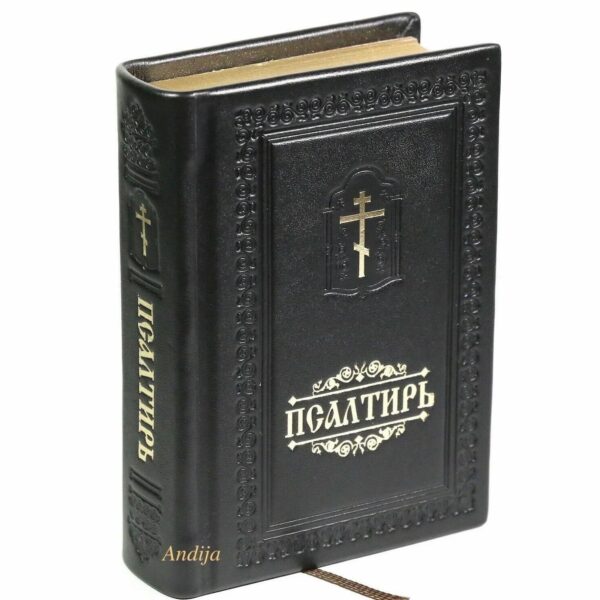
A Church Slavonic prayer book should therefore be approached with the same reverence given to an icon or a Gospel book. It may be kept near the home icon corner, handled with clean hands, and used as a companion for a regular rule of prayer. The book itself is not a charm. Its value is found in the prayer it helps the Christian offer with attention, humility, and repentance.
A fluent speaker or reader of Russian, Ukrainian, Serbian, Bulgarian, or another Slavic language may find Church Slavonic immediately familiar, even when individual forms require practice. For heritage Orthodox families, such a book can preserve a living connection with the prayers heard in parish life. It is especially meaningful when a parent or grandparent can pray aloud with younger family members and pass on both the words and the manner of prayer.
It can also serve converts and English-speaking Orthodox Christians who are drawn to the tradition but do not yet read the language easily. In this case, a bilingual edition, or a Church Slavonic book used beside an English prayer book, is usually the wiser choice. The purpose is not to prove devotion by struggling through every line. Prayer calls for presence before God. Understanding grows over time, but a prayer rule should remain possible on ordinary days, not only when there is leisure for study.
A monolingual Church Slavonic edition may be well suited to someone who attends services in Slavonic, sings in a choir, studies the language, or has received guidance from a priest or spiritual father. For a beginner, a smaller book with the daily prayers clearly arranged can be more fruitful than a large volume containing many services that remain unopened.
The title alone does not tell you what is inside. Orthodox prayer books vary substantially by publisher, jurisdiction, and local custom. Before selecting one, consider the prayers you actually hope to use.
A practical daily prayer book generally includes the Morning Prayers, Evening Prayers, prayers before and after Holy Communion, a canon of repentance, prayers for the departed, and prayers for particular needs. Some editions also include the Akathist to the Sweetest Lord Jesus Christ, the Akathist to the Most Holy Theotokos, the rule of Saint Seraphim of Sarov, the hours, and selections from the Psalter.
For a home prayer rule, clear organization is often more valuable than sheer quantity. Look for visible section titles, readable type, page numbering, and a binding that can be opened without damaging the spine. A ribbon marker is a modest but useful feature when the book is used daily. If the volume is intended as a gift, a durable cover, careful printing, and a fitting presentation case honor both the recipient and the sacred content.
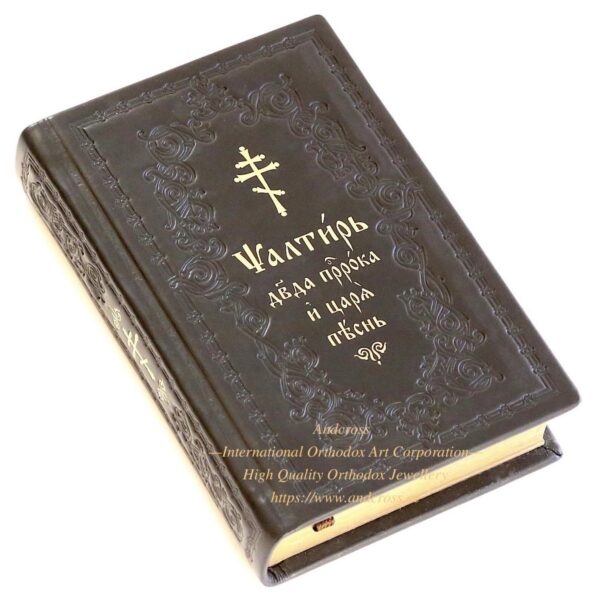
The first practical question is script. Many Church Slavonic books are printed in Cyrillic, often with traditional letters and stress marks. These features are beautiful and useful for correct reading, but they can feel unfamiliar to someone whose only alphabet is Latin. A transliterated edition can help at the beginning, though it does not fully replace learning to recognize the Church Slavonic letters.
A bilingual edition gives the reader the strongest support. It allows the Slavonic text to remain present while an English translation clarifies the sense. Not every English translation will use the same wording as another prayer book, and that is not necessarily a problem. Orthodox translations balance literal accuracy, liturgical language, and readability in different ways.
If the book is for a child, a new convert, or someone returning to the faith after many years, choose legibility over rarity. If it is for a reader already comfortable in Church Slavonic, a traditional edition with full rubrics and accents may be the better companion.
Prayer books sometimes reflect a particular Russian, Serbian, Old Believer, or other local tradition. Their order of prayers, spelling, calendars, and supplementary devotions may differ. These differences do not mean that one book is automatically superior. They do mean that it is wise to choose an edition close to the worshipping life of your parish when possible.
For texts used publicly in church, follow the direction of the priest, choir director, or parish tradition. A personal prayer book is for the home and the heart, but Orthodox prayer is never detached from the Church. When uncertain about a canon, a communion preparation rule, or a lengthy devotion, ask for pastoral guidance rather than imposing a demanding rule upon yourself.
Do not wait until every word is understood. Begin with a small, stable portion: the Trisagion prayers, the morning prayers, or a brief evening rule. Read slowly enough to avoid treating the words as a task to finish. If pronunciation is difficult, listen carefully during services and learn a few recurring words at a time.
Church Slavonic often opens its meaning gradually. Repeated phrases begin to settle in the memory: “Glory to Thee, O God,” prayers to the Holy Trinity, petitions for mercy, and hymns to the Mother of God. Keep an English translation nearby when needed. Understanding the meaning deepens attention; repeating the sacred language strengthens continuity with the worshipping Church.
There is also a trade-off between a richly appointed volume and a book that travels easily. A large leather-bound prayer book may become a cherished part of a home icon corner or an exceptional baptism, name-day, or feast-day gift. A compact edition may be the one actually carried on a trip, taken to confession, or opened before sleep. Both have their place.
An Old Church Slavonic prayer book makes a meaningful gift when it is chosen with the recipient’s prayer life in mind. For a godchild, a newly married couple, a seminarian, a choir singer, or a loved one honoring family roots, the best edition is not simply ornate. It is one they can return to often.
At Andcross, sacred articles are selected with respect for Orthodox tradition and the life of prayer. Whether a prayer book is paired with a prayer rope, a small cross, or an icon for the home, the gift should invite quiet faithfulness rather than become a decorative object left unopened.
Place the book where prayer can begin without delay: beside an icon, a candle, and the Cross. Then let one page, read with contrition and thanksgiving, become the beginning of a prayer rule that endures.



Use this form to find things you need on this site