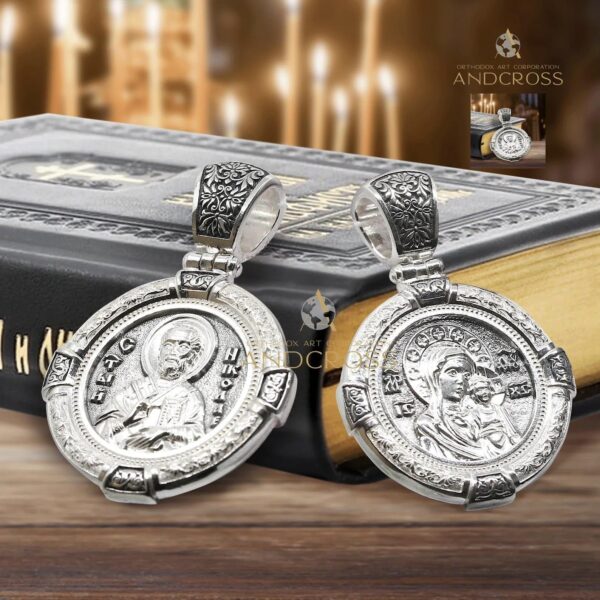
Andcross Orthodox online store offers a wide range of Orthodox products - gift sets, icons, icon cases, books, monastery candles, jewelry and much more. Some of the products of our own production, as well as from other suppliers - monasteries, temples, masters of the entire Orthodox world.
Andcross Orthodox Online Store - Established in 1999

The Church does not measure time as a row of ordinary dates moving toward the next obligation. She receives each day as a gift for repentance, prayer, and remembrance of God. A liturgical calendar guide helps an Orthodox Christian enter that sacred rhythm at home: to know when the Church fasts, when she rejoices, which saint is commemorated, and how the Gospel is being proclaimed through the year.
For a family building an icon corner, a recent convert learning the cycle for the first time, or someone choosing a meaningful feast-day gift, the calendar turns good intentions into a faithful pattern. It also calls for humility. Local parish practice, the blessing of one’s priest, and the calendar followed by one’s jurisdiction should always guide personal observance.
The Orthodox calendar brings together several cycles of worship. Some dates are fixed, returning on the same civil date each year. Others move with Pascha, the Feast of feasts. Alongside them are weekly commemorations, daily saints, fasts, and readings appointed for the Divine Liturgy.
This is why a calendar can look full even on a weekday. A small notation may mark a martyr, venerable father, wonderworker, or holy hierarch whose life strengthens the Church’s memory. Over time, reading these names is not merely a way to collect religious information. It teaches us that holiness has been lived in every age, land, vocation, and trial.
The calendar is also not a private rulebook. Orthodox life is ecclesial. The services at your parish reveal the feasts in their fullest form through hymnography, Scripture, fasting, confession, and the Eucharist. A home calendar supports that worship; it does not replace it.
The fixed calendar includes many of the Great Feasts and beloved commemorations observed on the same date annually. Among them are the Nativity of Christ on December 25, Theophany on January 6, the Meeting of the Lord on February 2, the Transfiguration on August 6, the Dormition of the Theotokos on August 15, and the Nativity of the Theotokos on September 8.
In many Orthodox communities, these dates may appear 13 days later on the civil calendar because the parish follows the Julian calendar for fixed feasts. Thus, Christmas may be celebrated on January 7 by civil reckoning. This is not a different Nativity or a disagreement about the faith. It is a difference of calendar use. Before planning a fast, feast-day meal, or gift, confirm the practice of the recipient’s parish.
Pascha governs the movable portion of the year. Its date changes, and with it move Great Lent, Palm Sunday, Holy Week, Ascension, Pentecost, and All Saints Sunday. The Sundays leading toward Great Lent prepare the heart gradually: humility in the Sunday of the Publican and Pharisee, repentance in the Sunday of the Prodigal Son, judgment and mercy on Meatfare, and forgiveness on Cheesefare Sunday.
Then comes Great Lent, a season not of spiritual self-improvement but of returning to God. Fasting, prayer, almsgiving, and forgiveness belong together. The calendar helps explain why certain weeks have particular services, why foods are set aside, and why the Church’s prayers become more sober and insistent.
Holy Week stands at the center of the year. The Bridegroom services, the Mystical Supper, the Lord’s Passion, the burial of Christ, and the radiant proclamation of Pascha cannot be reduced to a long weekend. They are the Church’s passage with Christ from the Cross to the Resurrection.
Orthodox fasting is best understood as a discipline of freedom and love. It is not a dietary contest, and it should never become a reason to judge another person. Health, age, pregnancy, travel, family circumstances, and work may require adjustments. A priest can give a blessing suited to the person rather than an abstract standard.
The four principal fasting seasons are Great Lent, the Apostles’ Fast, the Dormition Fast, and the Nativity Fast. The calendar also generally marks Wednesday and Friday as fast days, remembering the betrayal and Crucifixion of Christ. Yet there are fast-free weeks and festive periods when the normal Wednesday and Friday fast is lifted.
A good Orthodox calendar identifies these distinctions, but symbols and abbreviations should be read carefully. A strict fast may differ from a day when wine, oil, fish, or other foods are permitted. Practices can vary by jurisdiction and by pastoral blessing. If you are new to the faith, begin faithfully and simply rather than attempting a severe rule without guidance.
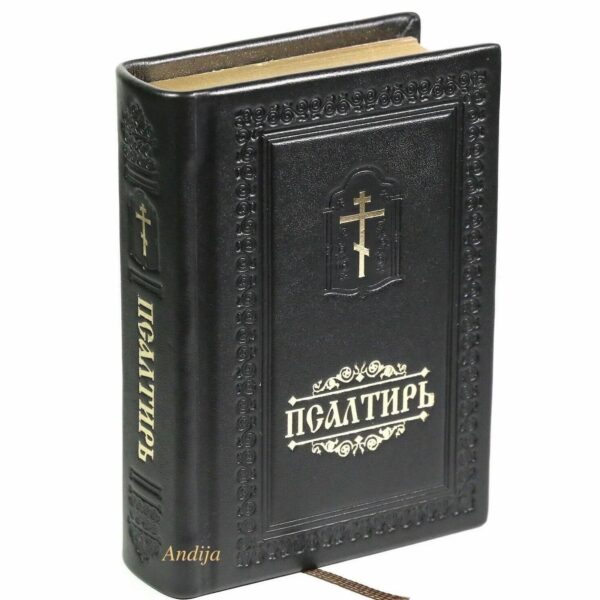
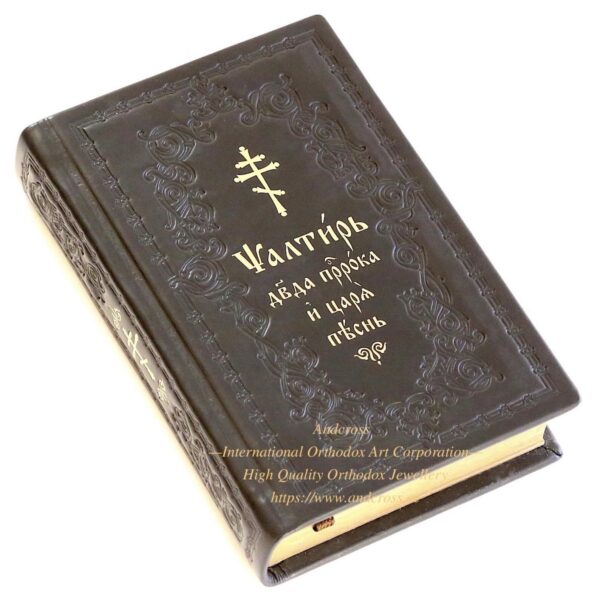
Prayer makes fasting fruitful. A Psalter, prayer book, candle, or small icon of Christ and His saints can help give a fast day its proper center. The purpose is not to make the home feel austere for its own sake, but to make room for attention, gratitude, and mercy.
The most useful calendar is one you will actually consult. Place it near the family icon corner, on a desk where morning prayers are said, or beside a kitchen table where the day’s meals are planned. A wall calendar offers a visible rhythm; a parish bulletin or printed church calendar may give more local detail.
Begin each morning by looking at the date and the commemoration. If a saint’s life is available in your prayer book or calendar, read a few lines. Speak the saint’s name with reverence. A short prayer such as, “Holy saint of God, pray for us,” is a modest and fitting beginning.
On major feasts, prepare in a concrete way. Attend Vigil or Divine Liturgy when possible. Light the lampada before the icon corner. Read the Gospel passage for the feast. If you are giving an icon, cross, or prayer book, the feast may offer a natural occasion, especially for a namesday, baptismal anniversary, wedding, or the beginning of a child’s Christian education.
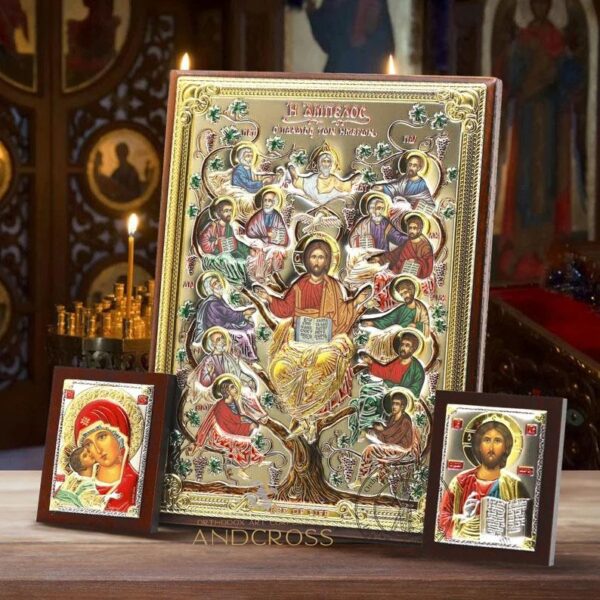
It is wise to distinguish between an icon chosen for devotion and an object chosen simply for decoration. Canonical iconography, careful craftsmanship, and a proper place of prayer honor the person depicted. A gift-ready icon or cross can be beautiful, but its deeper purpose is to direct the heart toward Christ, His Most Pure Mother, and the communion of saints.
For many Orthodox Christians, the commemoration of a patron saint is a spiritual birthday. A namesday is an opportunity to attend the Divine Liturgy, ask prayers of the saint, receive or offer a blessing, and share a modest festive meal according to the day’s fasting rule.
Families can use the calendar to remember loved ones with particular tenderness. Write baptismal names and namesdays in a household calendar. Keep a list of the departed near the icon corner and bring their names for commemoration when your parish receives them. Memorial Saturdays, especially those appointed before Great Lent and around Pentecost, remind us that the Church’s prayer embraces both the living and the departed.
This practice can be especially meaningful for those separated from an Orthodox homeland or parish community. A saint’s day, a familiar feast, or a candle lit before an inherited icon becomes a faithful thread connecting generations.
Not every Orthodox calendar presents the same level of detail. Some focus on daily saints and feast days; others include Scripture readings, fasting instructions, tones, liturgical colors, and service notes. For daily household use, clarity matters more than complexity. For chanters, clergy, or serious students of the services, a fuller church calendar may be needed.
When comparing calendars, look for the jurisdiction or tradition it follows and whether dates are given according to the Old Calendar or New Calendar. Check how it marks Pascha-based observances and fasting permissions. If a date seems inconsistent with your parish, do not assume an error at once. First determine whether the two calendars are using different civil reckonings.
A printed calendar remains valuable even when digital reminders are convenient. Its presence makes the Church year visible. Yet no calendar can substitute for the counsel of your priest, particularly regarding fasting, preparation for Holy Communion, or family circumstances.
The calendar’s deepest gift is not better scheduling. It is the gradual conversion of ordinary time. A Wednesday becomes a remembrance of the Cross. A saint’s name becomes a request for intercession. A feast becomes more than a date because it gathers the household into prayer and carries the mind toward the life of Christ.
Keep your calendar near the place where you pray, return to it without anxiety when you have forgotten it, and let the Church lead one day at a time. Faithfulness often begins with that small act: seeing the holy day before you and answering it with a prayer.



Use this form to find things you need on this site