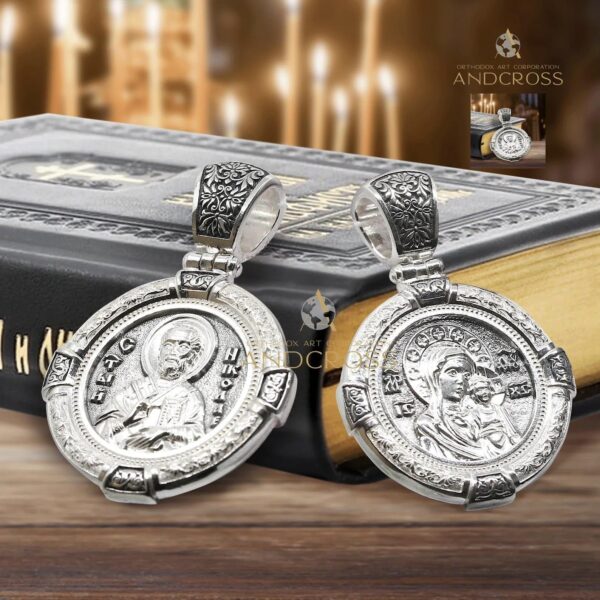
Andcross Orthodox online store offers a wide range of Orthodox products - gift sets, icons, icon cases, books, monastery candles, jewelry and much more. Some of the products of our own production, as well as from other suppliers - monasteries, temples, masters of the entire Orthodox world.
Andcross Orthodox Online Store - Established in 1999
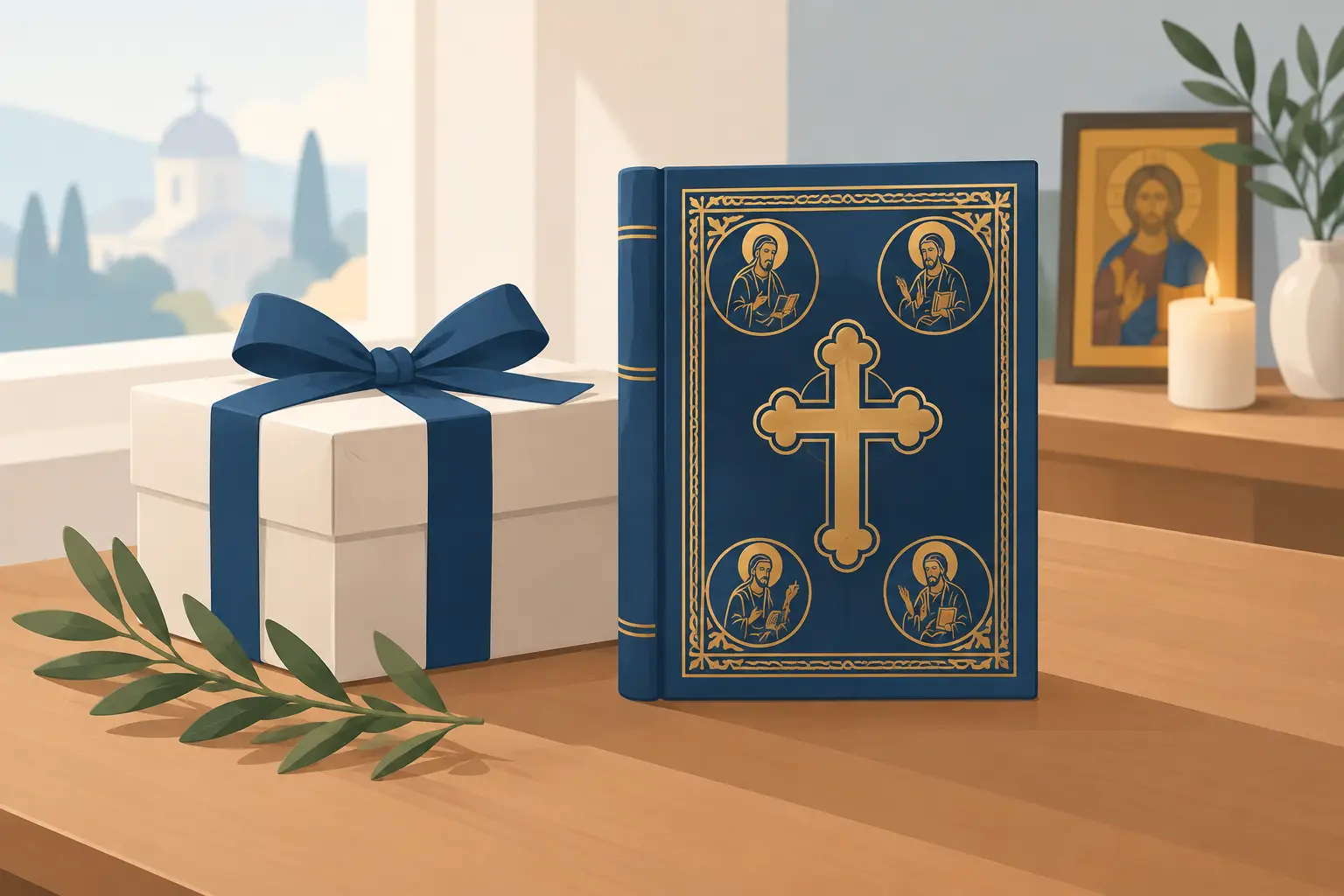
A Gospel book is not simply a beautiful volume for a shelf. It bears the words of Christ and, in the life of the Church, calls its reader to hear, believe, repent, and live by those words. For that reason, an Orthodox Gospel book gift deserves more care than an ordinary book purchase. The right choice can become a companion for morning prayer, a treasured baptismal remembrance, or a fitting offering for a priest, deacon, reader, or Orthodox home.
The first question is not, “Which cover is most impressive?” It is, “For whom is this Gospel being given, and how will it be used?” That answer guides everything else: the edition, language, size, binding, and degree of ornament.
In Orthodox tradition, the Holy Gospel holds a unique place. During the Divine Liturgy, the Gospel Book rests upon the Holy Table and is carried in procession, kissed with reverence, and proclaimed as the living word of the Lord. A liturgical Gospel intended for church use is therefore different in purpose from a personal Gospel given for reading at home.
For a priest, deacon, or parish, a large altar Gospel may be appropriate. These editions are often made with substantial covers, canonical iconography, metal decoration, and a dignified presence suited to the sanctuary. Before selecting one, confirm the language, text tradition, dimensions, and local parish practice. Some churches need a particular liturgical edition, while others may already have a Gospel Book reserved for services. A gift chosen without this care, however beautiful, may not be usable.
For a layperson or family, a smaller Gospel is usually the wiser choice. It should be comfortable to hold, readable in daily prayer, and durable enough to remain in use for many years. A compact edition can be especially meaningful for a convert beginning an Orthodox library, a godchild approaching adulthood, or a family establishing an icon corner.
A baptism, chrismation, wedding, name day, feast day, graduation, or memorial offering each carries a different emphasis. At baptism or chrismation, a personal Gospel speaks of the newly received Christian life. For a wedding, it reminds a couple that their home is to be built around Christ. For a memorial occasion, it offers a lasting invitation to prayer and remembrance rather than a passing gesture.
A Gospel Book may contain the four Gospels in their biblical order, selections arranged for liturgical readings, or a complete service edition with ecclesiastical divisions and rubrics. These are not interchangeable.
A personal edition is best for someone who will read the Gospels privately, follow a reading rule, or keep the book near the family icon corner. Look for clear, well-set type and a translation or language the recipient can genuinely understand. English is often the most practical choice for Orthodox Christians in the United States, especially for children, converts, and mixed-language families.
Yet language can also honor family inheritance. A Russian, Church Slavonic, Greek, Romanian, Serbian, or other traditional-language Gospel may be deeply cherished by someone who prays and worships in that language. The trade-off is simple: a heritage edition may carry profound cultural and spiritual meaning, but it should not become a book the recipient cannot read. When possible, a readable personal Gospel and a more formal heritage or liturgical volume can serve different purposes.
An altar Gospel is a sacred church furnishing, not merely an enlarged book. Its covers may depict Christ, the Evangelists, the Crucifixion, the Resurrection, or traditional ornament derived from Orthodox metalwork. Silver-plated, gold-plated, or finely embossed covers can be fitting where the craftsmanship supports reverence rather than display.
If the gift is for a church, ask discreetly before ordering. Confirm the preferred size, whether the parish follows Greek, Slavic, Antiochian, Romanian, or another usage, and whether the clergy require a particular text. A thoughtful donor respects both the beauty of the offering and the practical needs of the altar.
A fine Gospel cover can make a gift memorable for generations. Hand-applied metalwork, an icon of Christ, traditional repoussé-style relief, gilded details, enamel accents, and a strong binding all give the book a sense of permanence. For a major occasion, a gift case can protect the volume and make the presentation worthy of the sacred text within.
Still, ornate is not always better. A heavily decorated Gospel can be ideal for an altar, a priest’s anniversary, or a family heirloom. For a young adult leaving home, a simpler leather-bound or cloth-bound book may invite more frequent use. The most faithful gift is one that will be opened.
Consider the recipient’s home and devotional life. A family with an established icon corner may appreciate a larger, richly made Gospel displayed with icons and a vigil lamp. Someone traveling often may value a smaller edition that fits in a bag. A reader with impaired vision may need larger print more than precious metal ornament.
The best Orthodox gifts are personal without becoming overly casual. A Gospel Book should reflect the recipient’s place in the Church and their actual needs.
For a child or teenager, choose a durable, accessible edition and consider whether the parents will read it with them. For a godchild, the Gospel can become a spiritual marker of the bond between godparent and child. A short handwritten inscription on a separate card is often better than writing directly in a formal liturgical volume, particularly if the book may later be used in church.
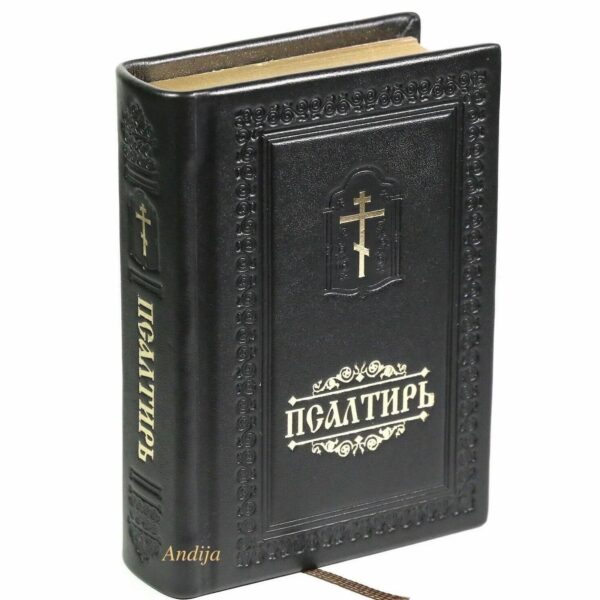
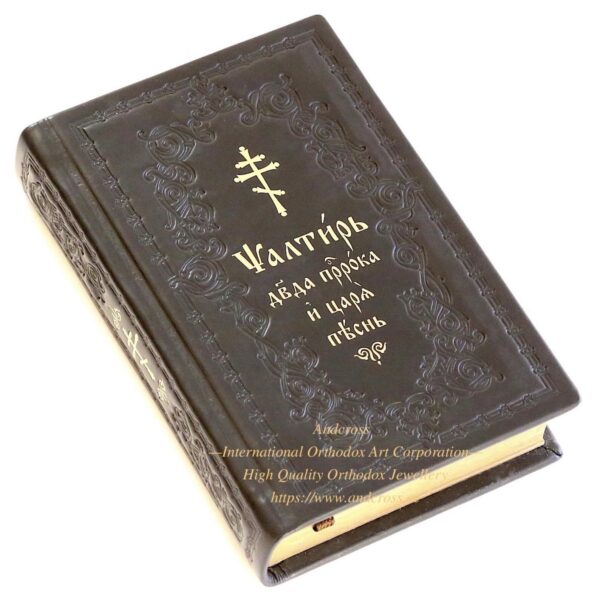
For a newly baptized or chrismated Orthodox Christian, select an English edition that supports regular reading. A prayer book or Psalter may complement it well, but the Gospel should remain the heart of the gift. There is no need to overwhelm a new Orthodox Christian with an elaborate library all at once.
For clergy, consult first. A priest may welcome a Gospel Book for home study, while a parish may need a service Gospel of a specified format. For a bishop, monastery, or temple, it is especially fitting to ask what is needed and whether a blessing should be sought before presenting the gift.
For someone grieving, simplicity is often most appropriate. A well-made Gospel, offered quietly with the promise of prayer, carries more comfort than excessive presentation. The words of Christ remain when ordinary consolation fails.
Online photographs cannot always convey weight, texture, or scale, so read the specifications carefully. Dimensions matter greatly: a book that appears modest on screen may be large enough for an altar, while a smaller volume may be intended for personal reading. Review the stated language, cover material, binding method, page condition, and whether a case is included.
When choosing metal-covered editions, distinguish between solid precious-metal work, silver plating, gold plating, and decorative alloy elements. Each has a different price, appearance, and care requirement. Silver can develop a natural patina over time; gold-plated details should be handled gently and cleaned only according to the maker’s instructions. A well-crafted cover should protect the book without making it difficult to open and read.
Gift-ready packaging is not a small matter for a sacred present. A fitted case or protective box preserves the Gospel during shipping and storage, especially when it is being sent across the country or abroad. For a commissioned or premium piece, confirm production time before planning a baptism, feast-day, or anniversary presentation.
The value of an Orthodox Gospel Book does not rest only in its binding, metalwork, or rarity. Its true purpose is fulfilled when the recipient opens it and encounters Christ’s words. A beautifully made volume can help a household give the Gospel an honored place, but no outward adornment replaces prayerful reading.
If you are uncertain, choose clarity over excess: a canonical Orthodox edition in the recipient’s language, made with care and suitable for regular use. Present it respectfully, perhaps with a simple request that the Lord guide and protect the recipient through the words of the Holy Gospel. Such a gift does not end when the wrapping is opened. It begins there.



Use this form to find things you need on this site