Andcross Orthodox online store offers a wide range of Orthodox products - gift sets, icons, icon cases, books, monastery candles, jewelry and much more. Some of the products of our own production, as well as from other suppliers - monasteries, temples, masters of the entire Orthodox world.
Andcross Orthodox Online Store - Established in 1999

A frame does more than finish an icon. It helps set apart the sacred image within the home, catches the light of a vigil lamp or candle, and can become part of a family’s prayer life for generations. When choosing silver versus gold icon frames, the best choice is not simply the more expensive metal. It is the frame that honors the icon’s character, serves its place in your icon corner, and suits the occasion for which it is given.
For Orthodox Christians, an icon is not household decoration. It is a holy image that directs the heart toward Christ, the Mother of God, the saints, and the life of the Church. A well-made frame should support that purpose with reverence, traditional workmanship, and materials worthy of the image it surrounds.
Silver and gold have long been used in Orthodox sacred art. Their presence recalls the honor shown to holy persons and sacred things, but neither metal changes the holiness of an icon itself. The icon’s spiritual purpose comes from the person depicted, the Church’s tradition, prayer, and the faithful veneration offered before it. Precious metal is an offering of beauty and care, not a measure of greater grace.
Gold has a particular place in iconography because it reflects divine light. In painted icons, a gold background often signifies the uncreated light and heavenly reality that cannot be reduced to an ordinary earthly setting. A gold or gold-plated frame can continue this luminous effect. It is especially fitting around icons of Christ Pantocrator, the Theotokos, the Resurrection, feast-day icons, and wedding icons intended to become cherished family heirlooms.
Silver has its own quiet dignity. Its cool, clear tone can emphasize the gravity of an icon without drawing excessive attention away from the holy face and hands. Silver frames are often especially beautiful for icons of saints, guardian angels, baptismal icons, and smaller images kept near a bedside or carried as a meaningful gift. The restrained brightness of silver suits both traditional Russian and Byzantine-inspired settings.
The choice often comes down to the atmosphere you hope to create. Gold brings warmth, radiance, and ceremonial richness. Silver brings calm, clarity, and a more reserved beauty. Both can be deeply traditional when the craftsmanship respects canonical imagery and proportion.
The colors, background, and size of the icon should guide the choice. An icon with a bright gold background may look naturally complete in a gold-plated frame, particularly if the halo, Gospel cover, or garments already include gold details. The frame creates visual continuity and gives the piece a unified presence in the prayer corner.
Yet gold is not always the answer for a gold-background icon. A silver frame may create a gentle contrast that allows the icon’s central image to stand forward. This can be effective on detailed icons where a richly ornamented gold frame might compete with fine painting, inscriptions, or architectural scenes.
Silver is especially well suited to icons with cooler colors: blue, deep green, white, and burgundy often look striking beside a silver border. It can also complement icons made in a more austere style, including images of monastic saints, prophets, and confessors. For an icon of St. Seraphim of Sarov, St. John of Kronstadt, St. Xenia of St. Petersburg, or a guardian angel, silver may feel prayerful and personal rather than formal.
For a large central icon, such as Christ the Teacher or the Kazan Mother of God, gold can provide the visual weight needed for a prominent wall or icon corner. In a small apartment prayer space, however, a collection of heavily gilded frames can become visually crowded. Mixing metals thoughtfully is often more harmonious than choosing one finish for every icon.
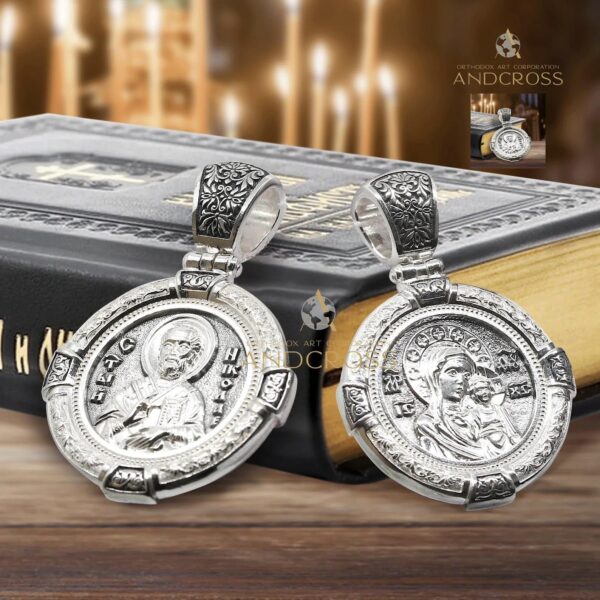
The words silver and gold may describe several different forms of workmanship. A solid sterling silver frame, commonly marked 925, contains 92.5 percent silver and has genuine value, durability, and a substantial feel. It may be polished to a bright finish, given a soft satin surface, oxidized to bring out engraved detail, or decorated with enamel and stones.
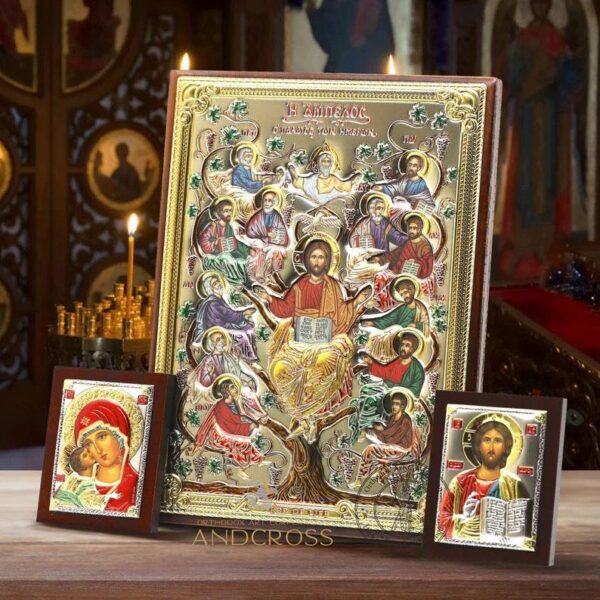
Gold icon frames are frequently made from silver with gold plating or gilding. This offers the rich appearance of gold while preserving the precision possible in hand-worked silver. Gold-plated silver is a fitting and traditional choice for gift icons, especially when the frame includes chased ornament, floral motifs, vine patterns, crosses, or a carefully formed halo.
When comparing pieces, look beyond the color. Ask whether the frame is sterling silver, silver-plated metal, brass with gold plating, or another base material. Examine whether the icon is protected by glass, whether the backing is secure, and whether the frame is made to fit the image without covering important inscriptions or painted details. Fine sacred workmanship is visible in clean edges, balanced ornament, secure fittings, and a frame that respects the icon rather than overpowering it.
An oklad, sometimes called a riza, deserves special consideration. This is a metal covering shaped around the icon, leaving the faces and often the hands visible. A properly made oklad can be a remarkable expression of Orthodox reverence, especially when fashioned in silver or gold-plated silver. It should follow the contours of the image carefully and must never obscure essential features, inscriptions, or the theological meaning of the icon.
A home icon corner is formed slowly, through prayer, feast days, baptisms, weddings, memorial gifts, and the quiet accumulation of meaningful holy images. For this reason, it is wise to choose a frame that will remain beautiful beside future icons as well as the ones already present.
If your icon corner includes warm wood, brass candleholders, and a hanging lamp with gold tones, gold-plated frames may feel especially natural. Their reflection can bring gentle warmth to the space, particularly in evening prayer. If the setting includes silver candleholders, cool-toned fabrics, or a simpler wooden shelf, silver frames may create a more peaceful and consistent appearance.
Do not feel obliged to match every frame exactly. Orthodox homes have always contained icons received at different times and from different places: a wedding icon from parents, a monastery icon from pilgrimage, a patron saint icon received at baptism, and a small travel icon carried through difficult years. A prayer corner should be ordered and cared for, but it need not look like a showroom. Its beauty comes from devotion and faithful use.
For a pair of wedding icons, matching frames are usually appropriate. Silver frames give the pair a refined, enduring character, while gold-plated frames create a more festive and heirloom-like presentation. For a baptismal gift, consider the family’s style and the icon’s intended place. A silver guardian angel icon is often a graceful choice for a child, while a gold-plated icon of the Theotokos or the child’s patron saint can become a treasured milestone gift.
Silver naturally develops tarnish over time. This is not a defect, but it does require gentle care. Keep the icon away from excess humidity, avoid harsh household cleaners, and use a soft dry cloth for ordinary dusting. If polishing is needed, work carefully around engraved details, enamel, glass, and the icon’s edges. Aggressive polishing can remove intentional darkened patina that gives an engraved silver frame depth.
Gold-plated frames should be treated even more gently. Do not use abrasive cloths, polishing compounds, or strong chemical cleaners. A soft microfiber cloth is usually sufficient. Icons should also be protected from direct moisture, heat vents, and prolonged direct sunlight, which can affect painted surfaces as well as frame finishes.
When an icon is kept in a gift box between feast days or before it is presented, wrap and store it so the surface is not scratched by other metal objects. Care is a practical expression of reverence, especially for an icon that may one day be passed to children or godchildren.
Gold is often chosen for major occasions: weddings, anniversaries, ordinations, significant feast days, and family gifts meant to mark a lasting spiritual bond. Its warm brilliance communicates celebration and honor. Silver is equally worthy for baptisms, name days, memorial remembrances, house blessings, and personal devotional gifts. Its reserved character can make it especially suitable when the gift is intended for daily prayer rather than display.
Budget also matters, and there is no spiritual value in choosing beyond one’s means. A carefully made silver-plated or gold-plated icon, selected with knowledge of the recipient’s patron saint and presented prayerfully, can carry far more meaning than an expensive object chosen only for its price. The finest gift is one that invites the recipient to stand before Christ in prayer.
Choose the frame that allows the sacred image to speak clearly. Whether its light is silver or gold, let it serve the icon, the prayer corner, and the faithful remembrance of God that the icon is meant to nourish.



Use this form to find things you need on this site